December 2018 · Bali · Travel notes
Fruit in Bali: what it costs and where to buy it
16 min read · Max Listov
Hi, this is Max Listov. I love fruit: it is most of what I eat. On this page I go through the fruit you can find in Bali from October to December 2018, what it costs and where it is best to buy. Every price and every variety here is as of December 2018.
In this story 24 · contents
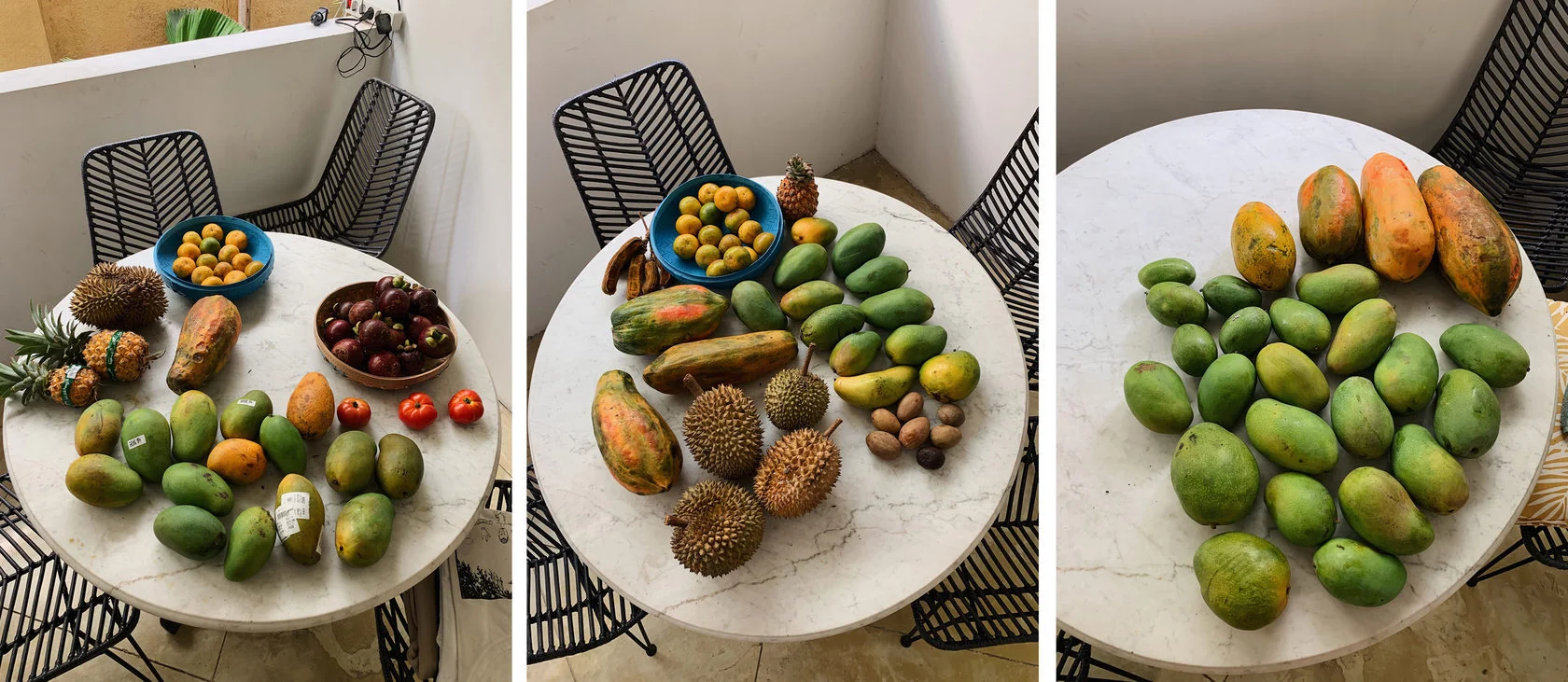
Mango
Of course the list starts with mango, the best known tropical fruit of all. In October and November Bali has a great choice of mangoes, but towards the middle of December people began telling me the season was ending, and good ones took a little longer to find.
There are about ten varieties here, from 8,000 to 50,000 rupiah a kilo (36 to 220 rubles a kilo).
There are about ten varieties here, from 8,000 to 50,000 rupiah a kilo (36 to 220 rubles a kilo).
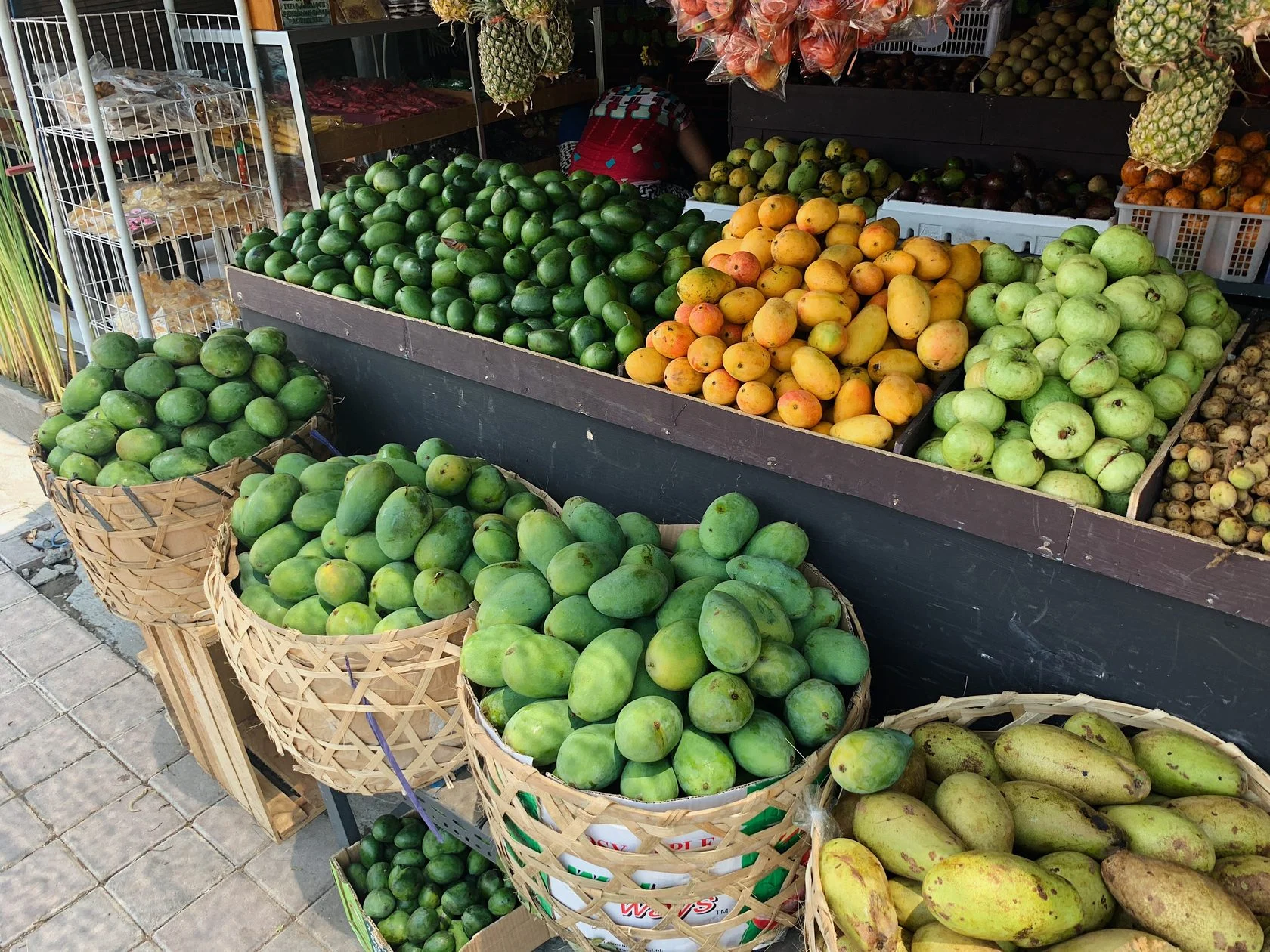
To its left: Harum manis
Above: the green Lalijiwa
Above and to the right: the yellow Mangga Podang
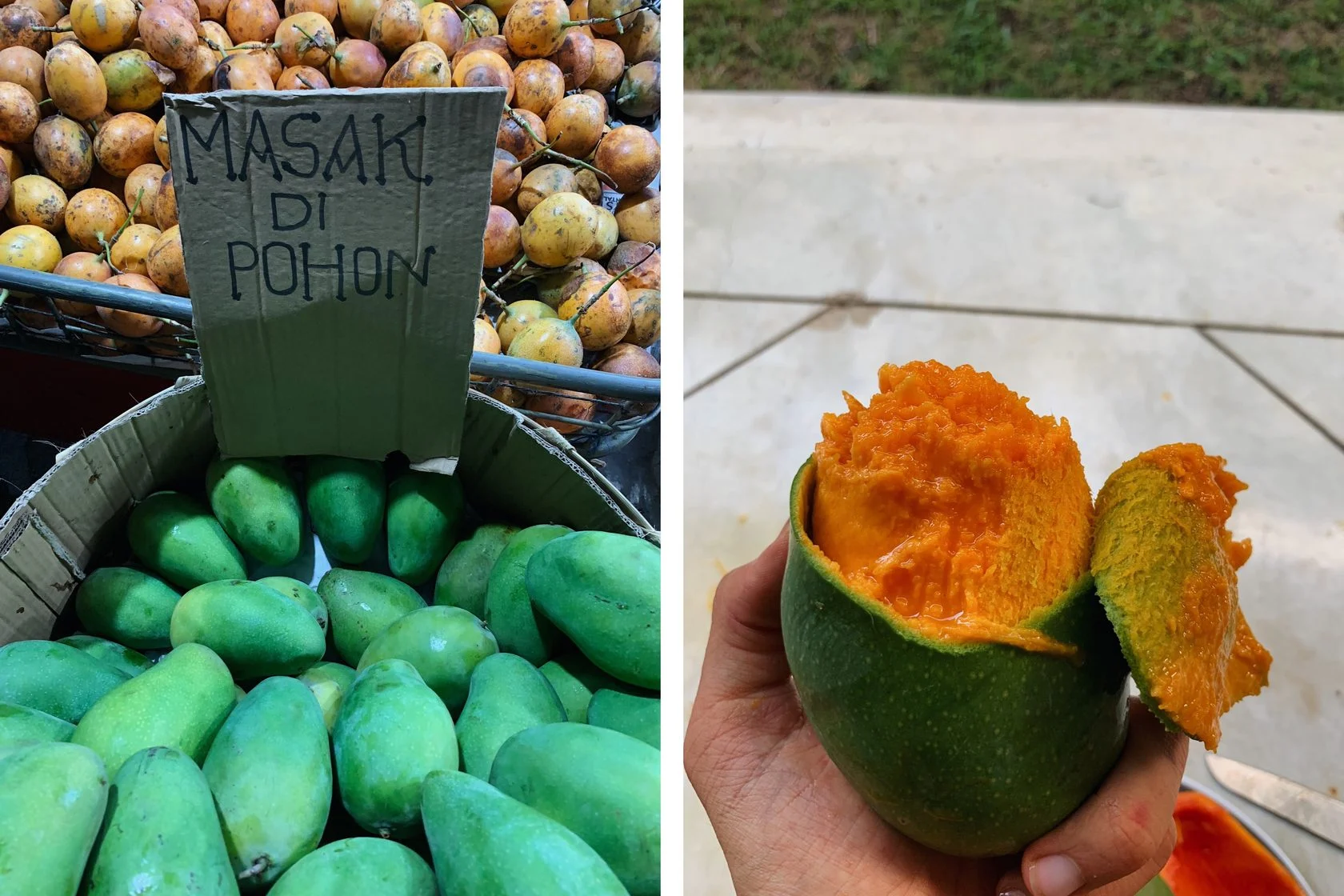
Masak Di Pohon is the most expensive and the tastiest mango I found in Bali. Masak Di Pohon is Indonesian for “ripened on the tree”, which makes you think the other varieties are picked early and left to ripen without the tree.
The fruit stays green, has almost no smell next to the others and the thickest skin of everything listed below, but inside there is the sweetest honey and caramel flesh with no fibre at all (even if you gnaw it down to the stone), filling and with a lovely aftertaste.
You will not find it everywhere: it often turned up at Pepito and at some fruit stalls.
Price: 15,000 rupiah a kilo at stalls and 35,000 at supermarkets (70 and 160 rubles a kilo).
Harum manis is the most common one and also madly good, the classic Indonesian variety. An always-green mango with a fairly dense skin you can barely push a finger through. Ripe ones mostly smell sweet, unlike the previous variety; the texture is very tender, with no fibre, and the taste is its own, a little floral, a little caramel.
Pick fruit that is not quite soft (it may be overripe) and not rock hard (the kind a finger cannot dent at all), and that smells.
This is the strain of mango my diet is built on.
Price: 12,000 to 15,000 rupiah a kilo (50 to 70 rubles a kilo) at fruit stalls.
Pick fruit that is not quite soft (it may be overripe) and not rock hard (the kind a finger cannot dent at all), and that smells.
This is the strain of mango my diet is built on.
Price: 12,000 to 15,000 rupiah a kilo (50 to 70 rubles a kilo) at fruit stalls.
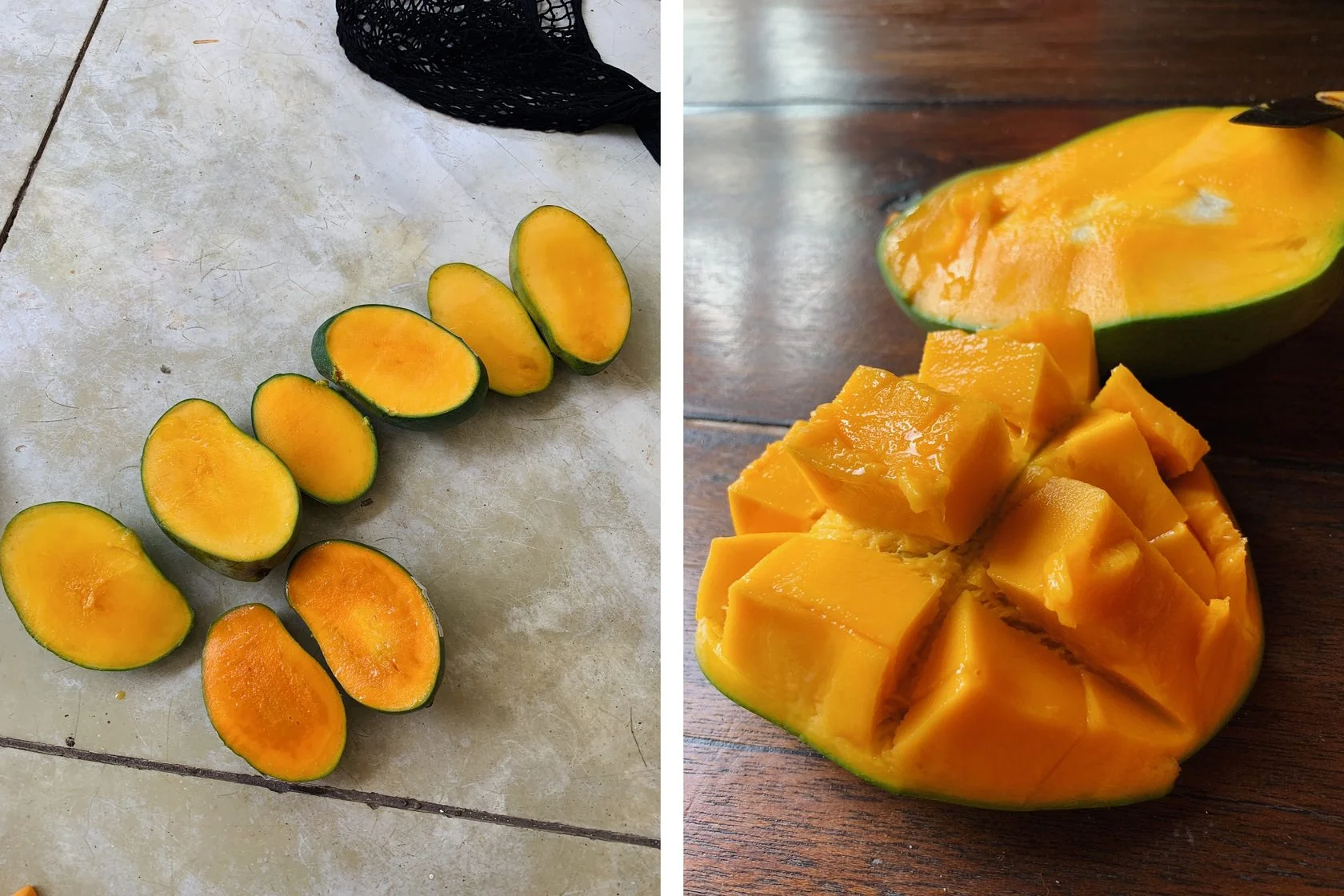
Gedong Gincu: jelly-like, sweet and sour, with a thin skin.
Mangga Podang: yellow and elongated, the taste is somewhere between dried apricot and apricot jam. The texture is mostly pleasant, jelly-like, without fibre, though near the stone there are almost always some. After a couple of tries I knew it was not mine and stayed with the varieties above. Very often overripe.
Mangga Manila: I only ever saw these as unripe as it gets, hard as stone.
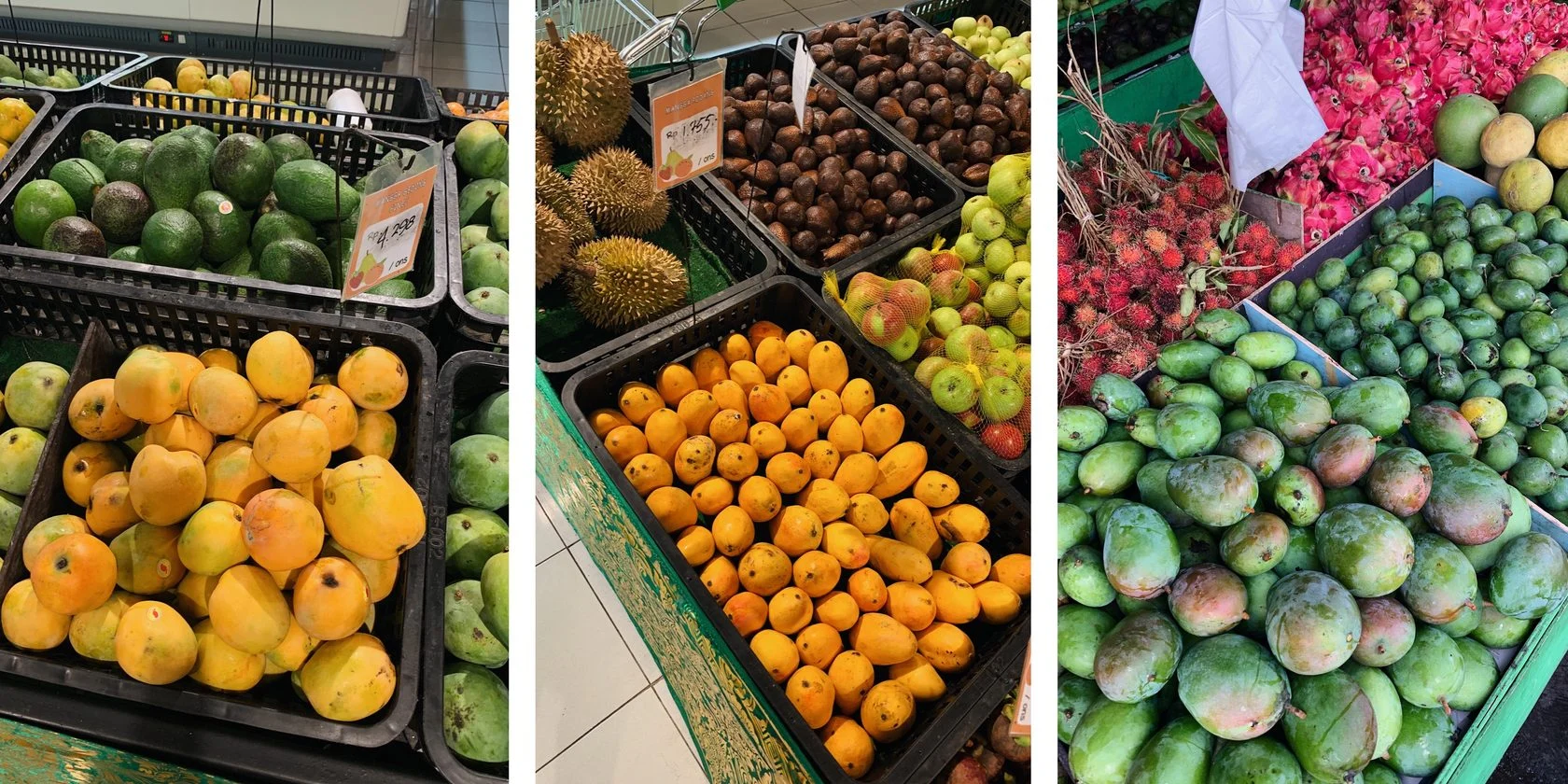
Mangga Golek: elongated, with very tender, juicy flesh and a thin skin. It can be fibrous or very “jelly-like”. I gave it plenty of chances, but the taste was always a little off, as with every yellow mango in Bali.
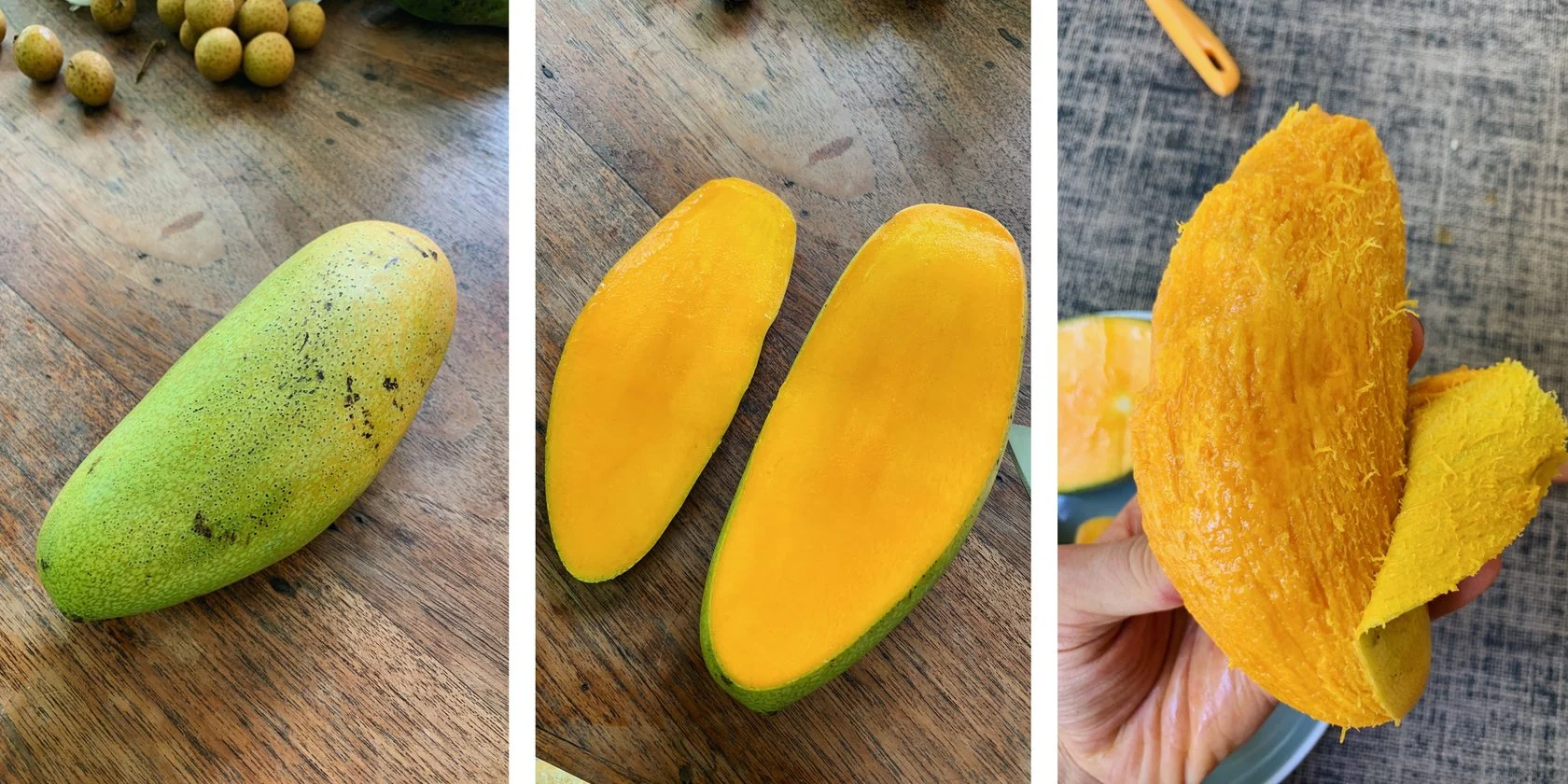
Lalijiwa: small green mangoes, firm, with a dense skin, but very fragrant, with an unusual tropical taste a bit like fir and passion fruit. When ripe they are much sweeter than everything above, like honey. I buy them often too, as much as Harum Manis.
Price: 8,000 rupiah a kilo (35 rubles a kilo).
Price: 8,000 rupiah a kilo (35 rubles a kilo).
Right: Lalijiwa
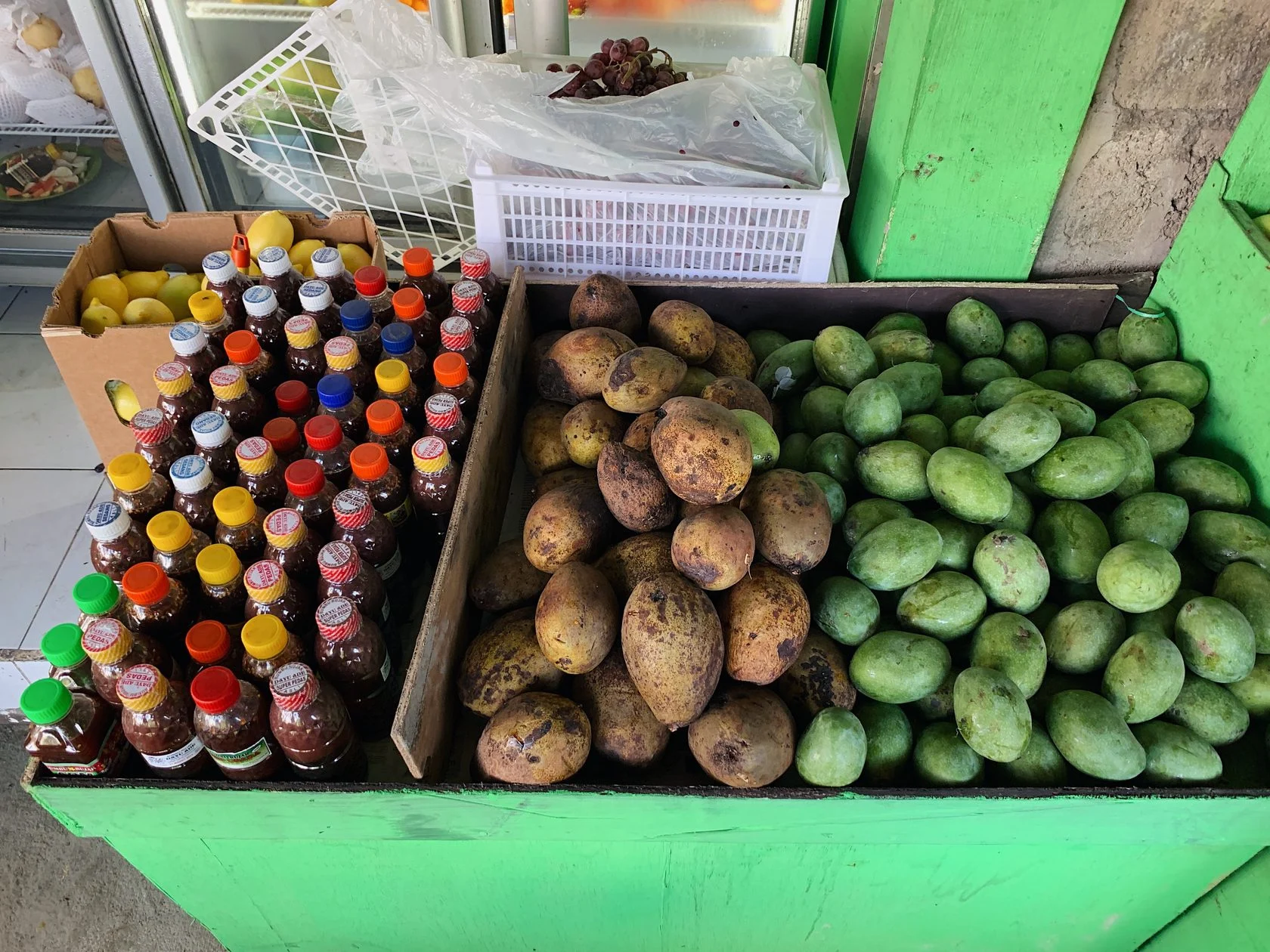
Mangga Wani is the famous Indonesian white mango which, as far as I know, grows nowhere else. It comes in many sub-varieties, with different tastes, smells and textures. The first ones I got were overripe, the next unripe, and by giving the new fruit one more chance each time I found the right one: it is in the photo below.
The texture is very fibrous in places, so do not bite it: suck the juice out with your lips, with the bits of flesh that have no fibre. The smell is odd, sometimes halfway between a fragrant borscht and raspberry, sometimes just one of them; in the end I settled on raspberry. It tastes and feels like vanilla ice cream that smells of raspberry. The skin is very thin and mostly tears off in small pieces when you try to peel it. Not one for every day, for me.
Price: 20,000 to 30,000 rupiah a kilo (80 to 110 rubles a kilo).
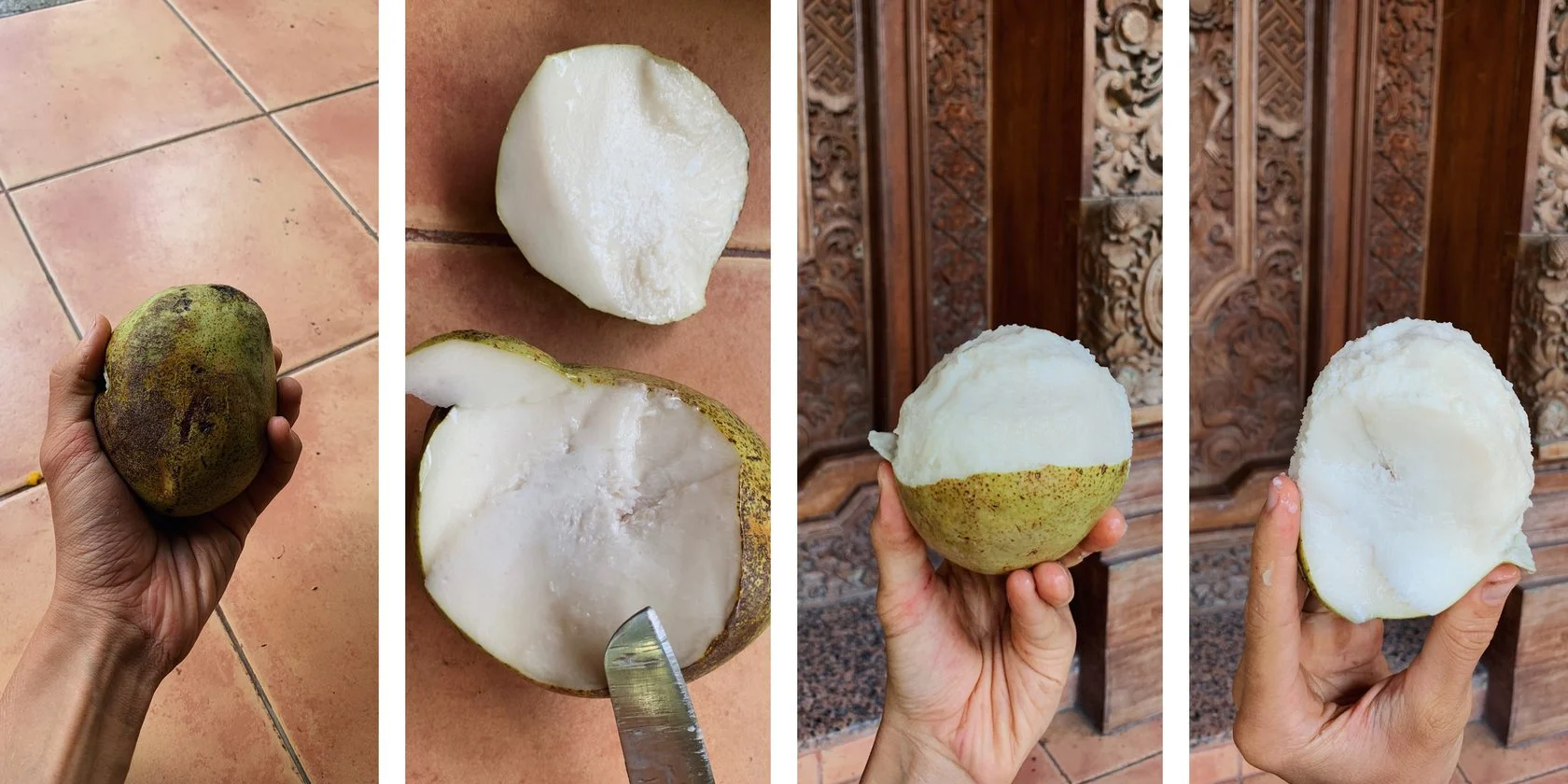
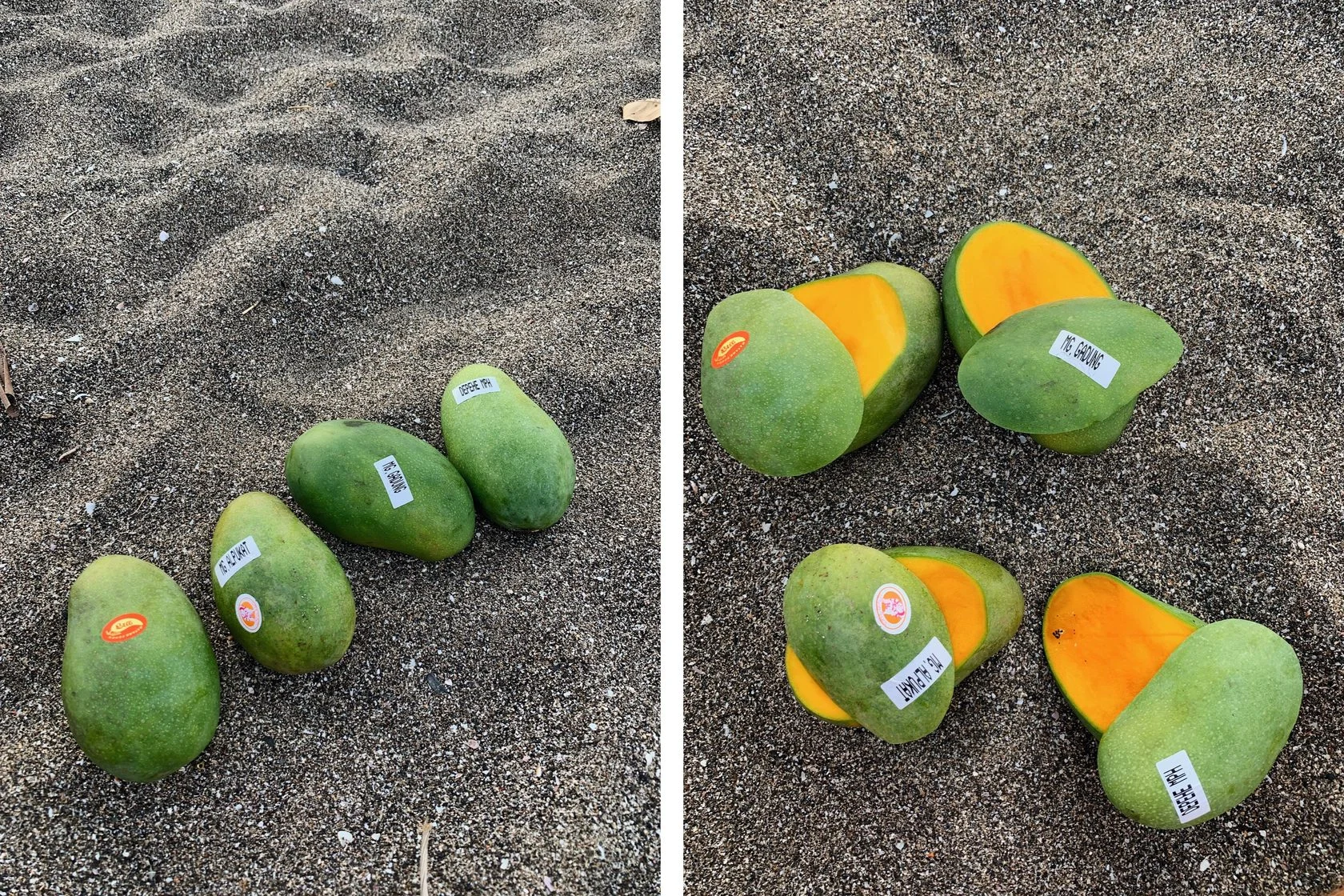
I found about five always-green mango varieties, all alike in look and smell and more or less in colour, but the one with the red sticker, Masak Di Pohon, was clearly ahead, and after it the others had no taste at all.
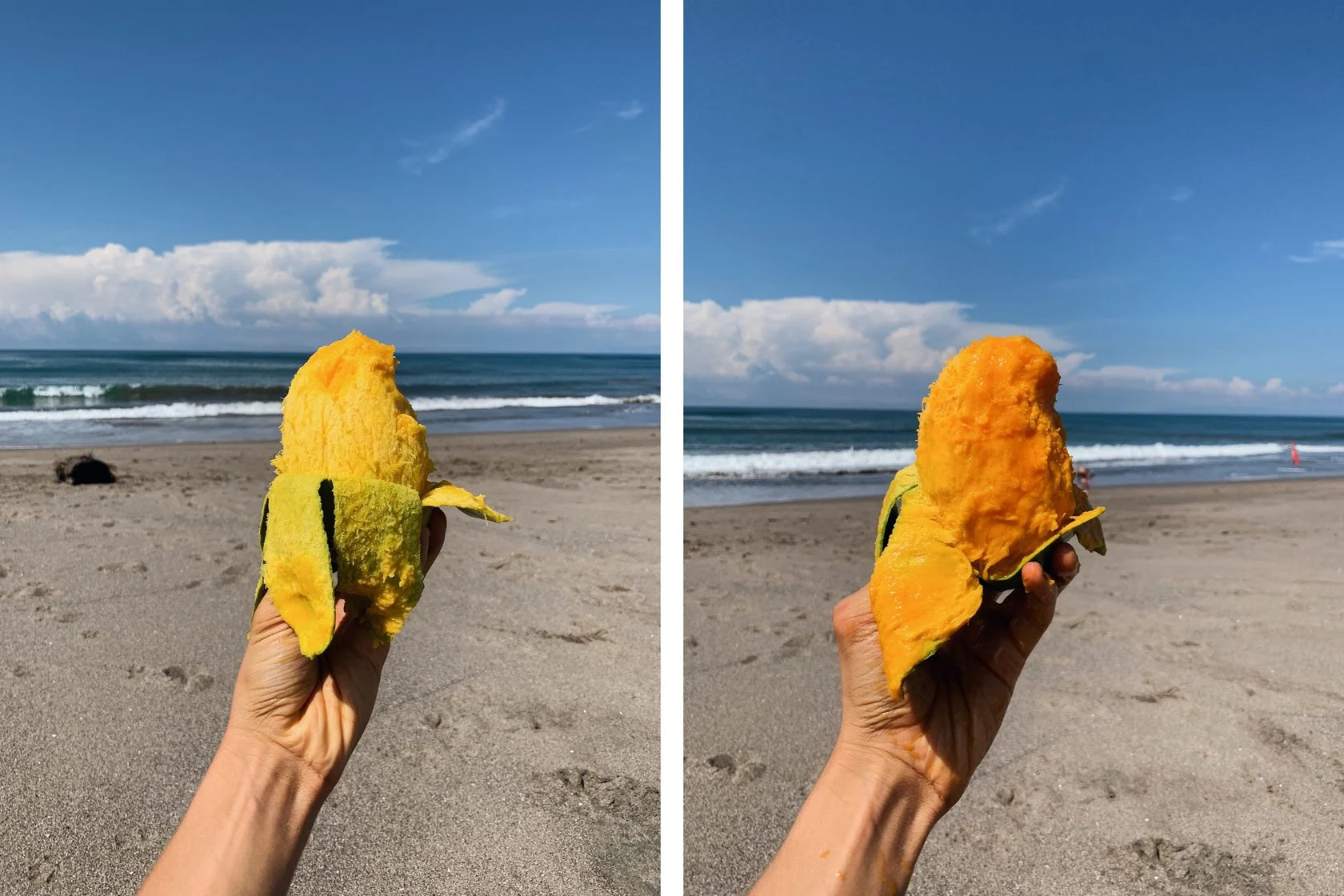
And of course a mango is best eaten with nothing but your mouth and hands, by the ocean, when the juice is already running down your elbows and all over you… and then a dip in the cool water, where the waves wash the sticky mango juice off : )
Papaya
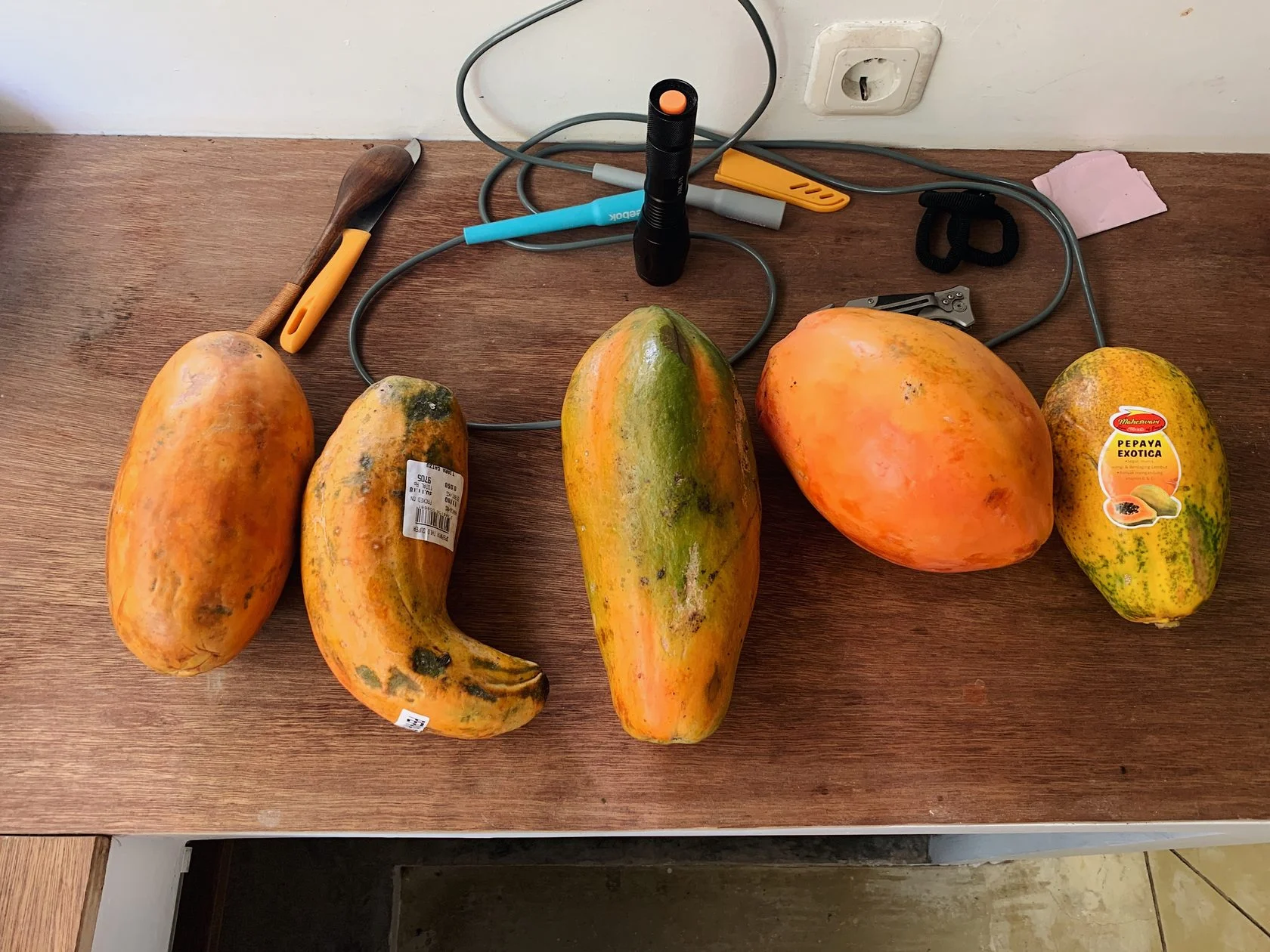
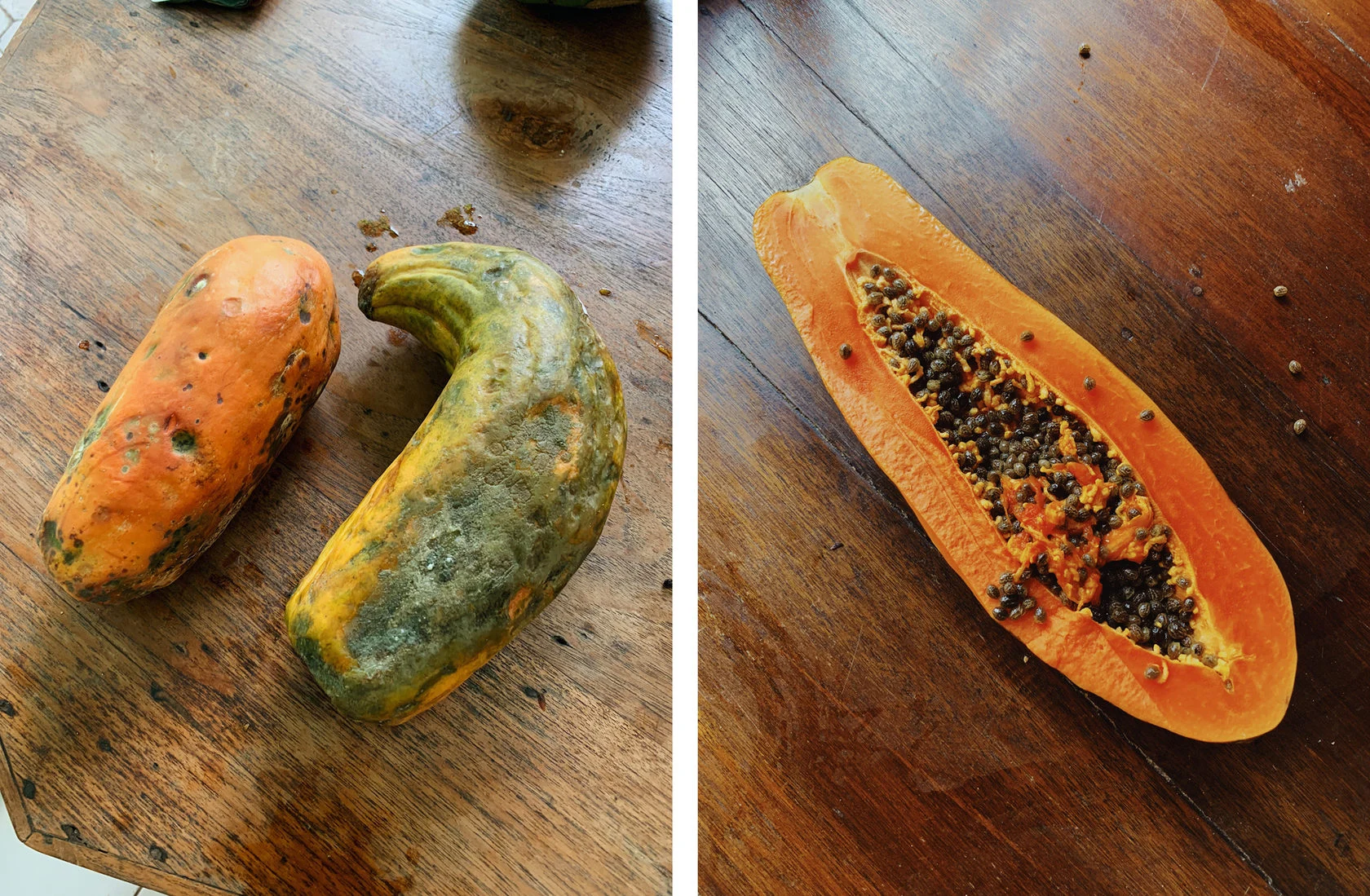
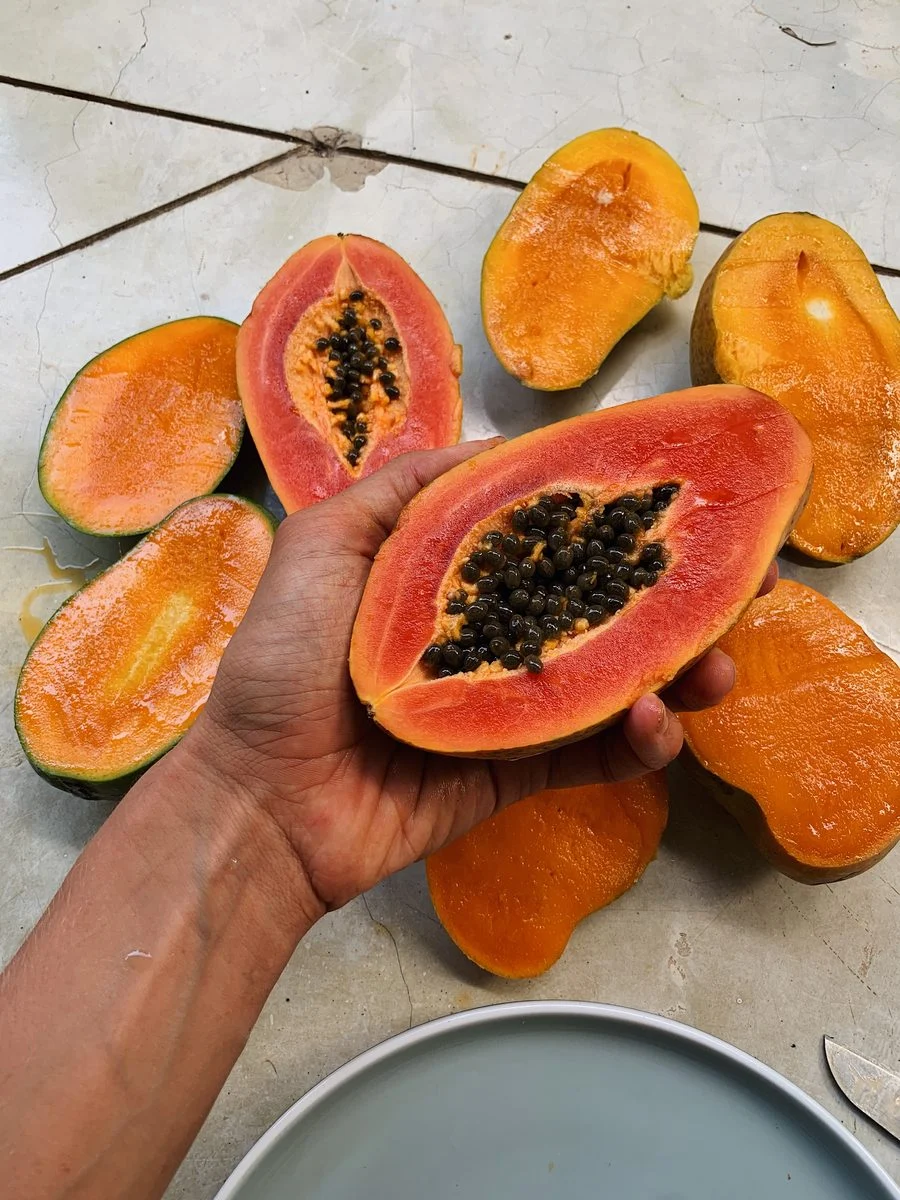
In this photo I gathered every papaya variety you can find in Bali.
- Papaya California
- Papaya Super
- Papaya Local
- Papaya Local, the “round” one
- Papaya Exotic/Aloha/Hawaii
Any of these papayas can be mega sweet and tasty or completely bland: it depends on how ripe it is and on the fruit itself. Choose the ones that smell sweet before you cut them, and not the biggest.
California does not mean it is really from Cali, that is just the name of the variety. Importing papayas from the US to Indonesia would clearly not be the best idea : )
California does not mean it is really from Cali, that is just the name of the variety. Importing papayas from the US to Indonesia would clearly not be the best idea : )
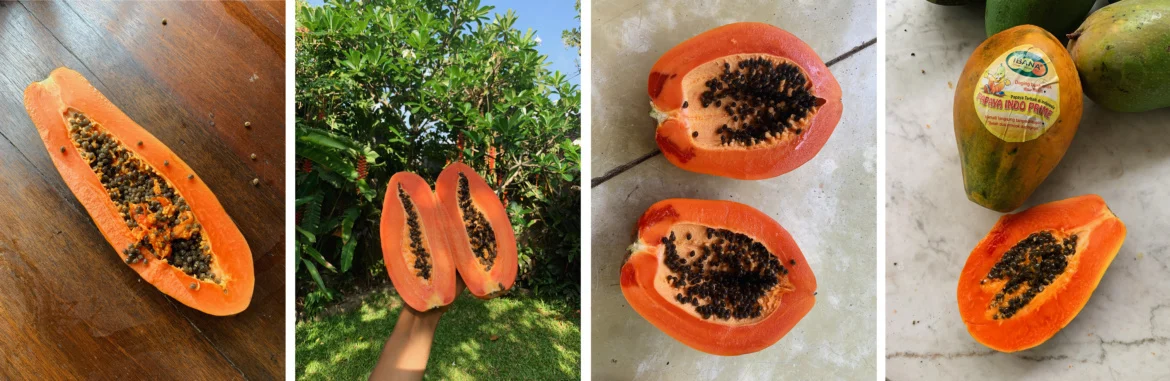
Every supermarket except Tiera Gatzu always sells them green and unripe; look for good ones at fruit stalls.
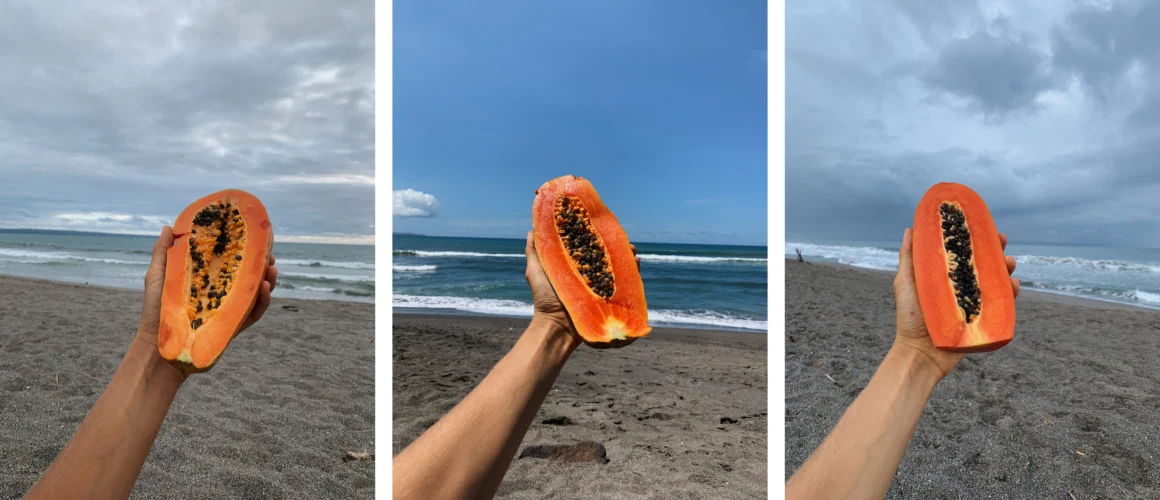
This variety, the smallest papaya, Papaya Exotica, is my clear favourite: the most unusual, sweet, with a note of passion fruit. Sold only in supermarkets, most often at Frestive and Tiera Gatzu.
Durian
And here we come to the “king of fruits”, the one that changes how you see all other food. Once you have tried a ripe durian (not overripe and not underripe!), life is not the same: every taste fades next to it. Here is what you can find here.
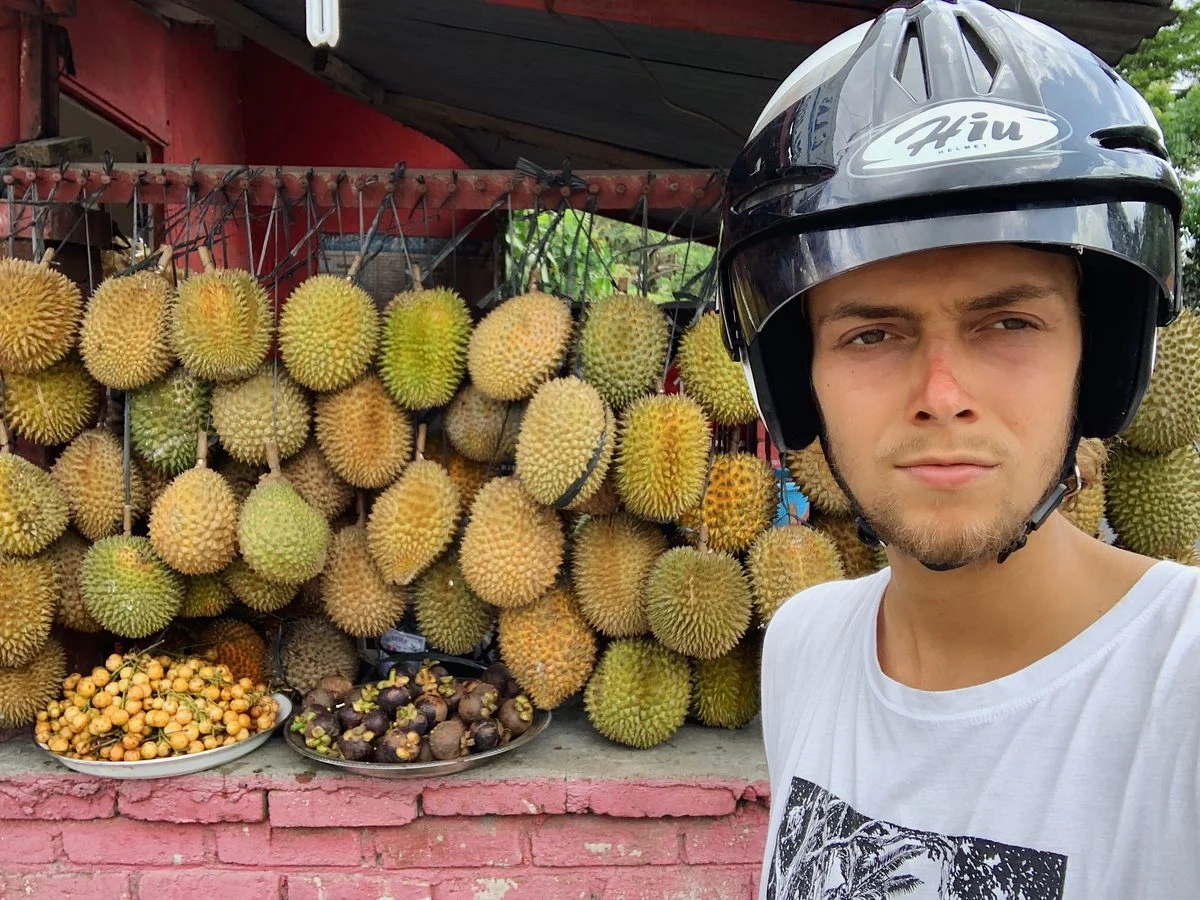
Bali has no durian culture at all: people here do not know them, and most cannot even pick a good one.
There are two main varieties:
There are two main varieties:
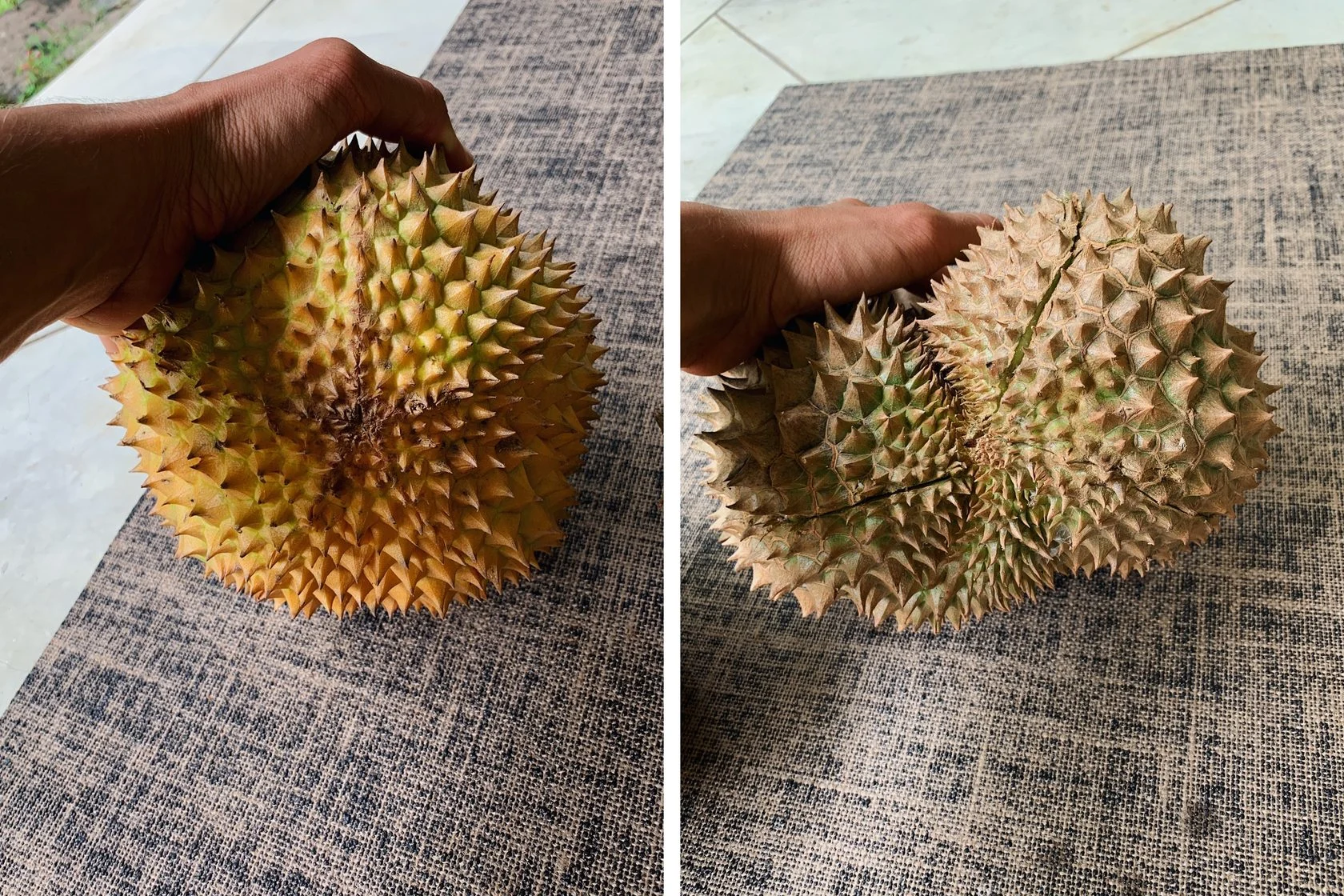
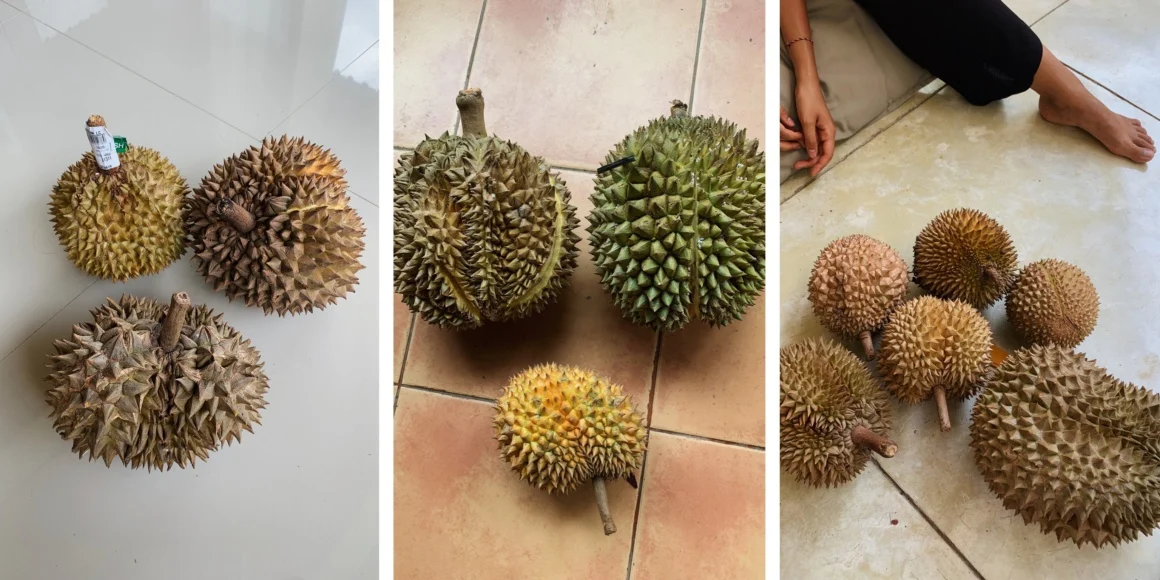
- Durian Local/Bali: the left fruit in both photos.
- Durian Bangkok/Kane: the right fruit in both photos.
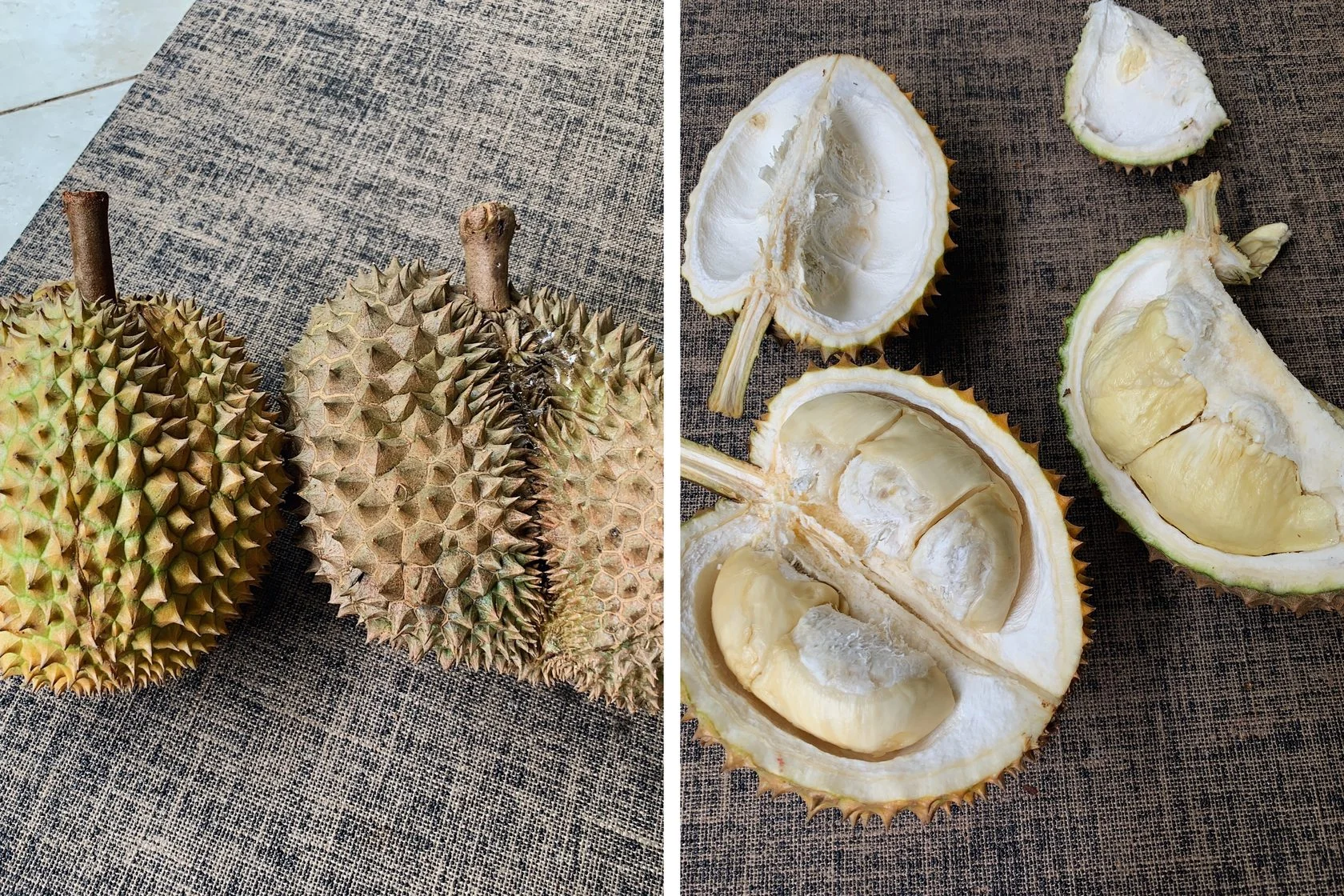
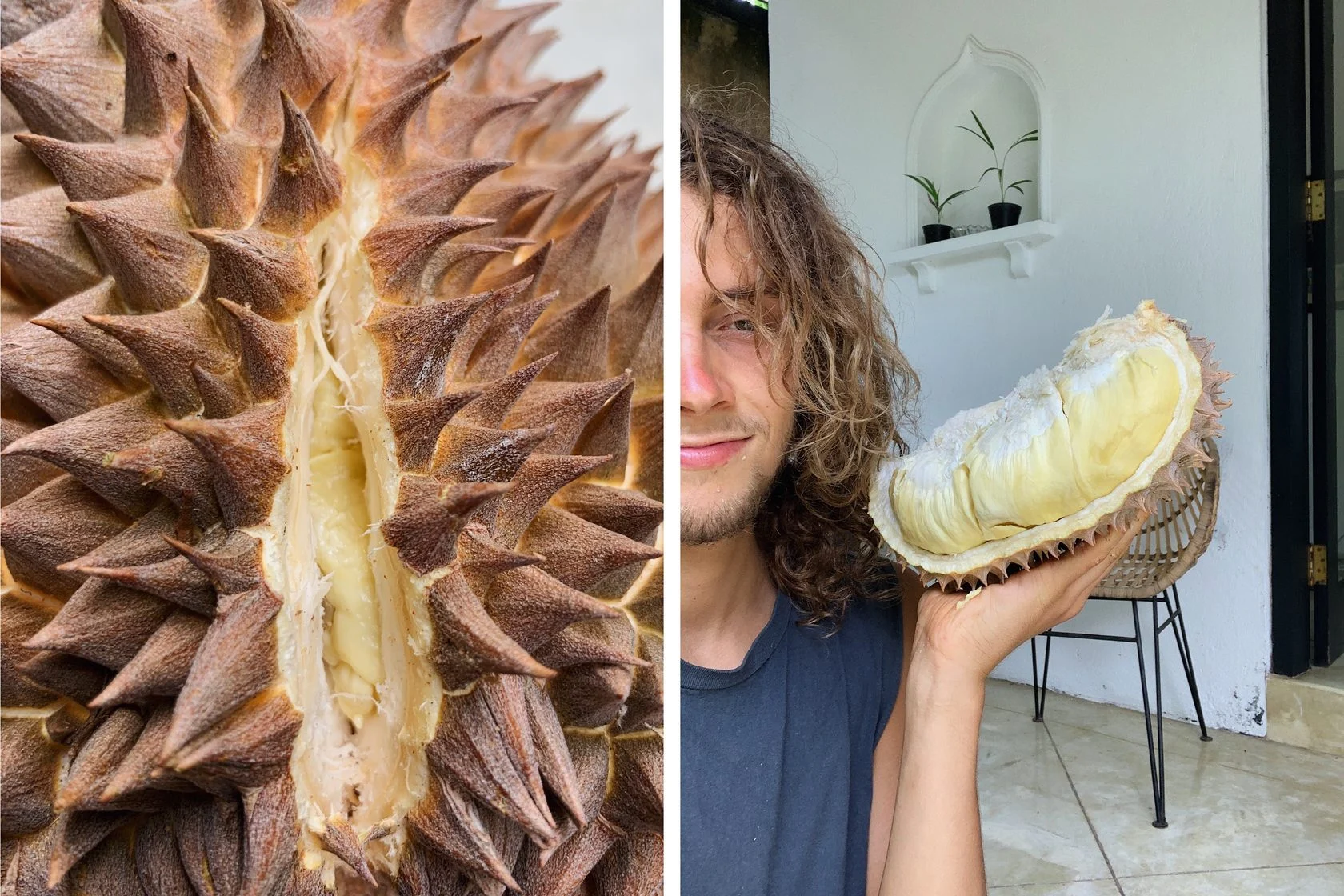
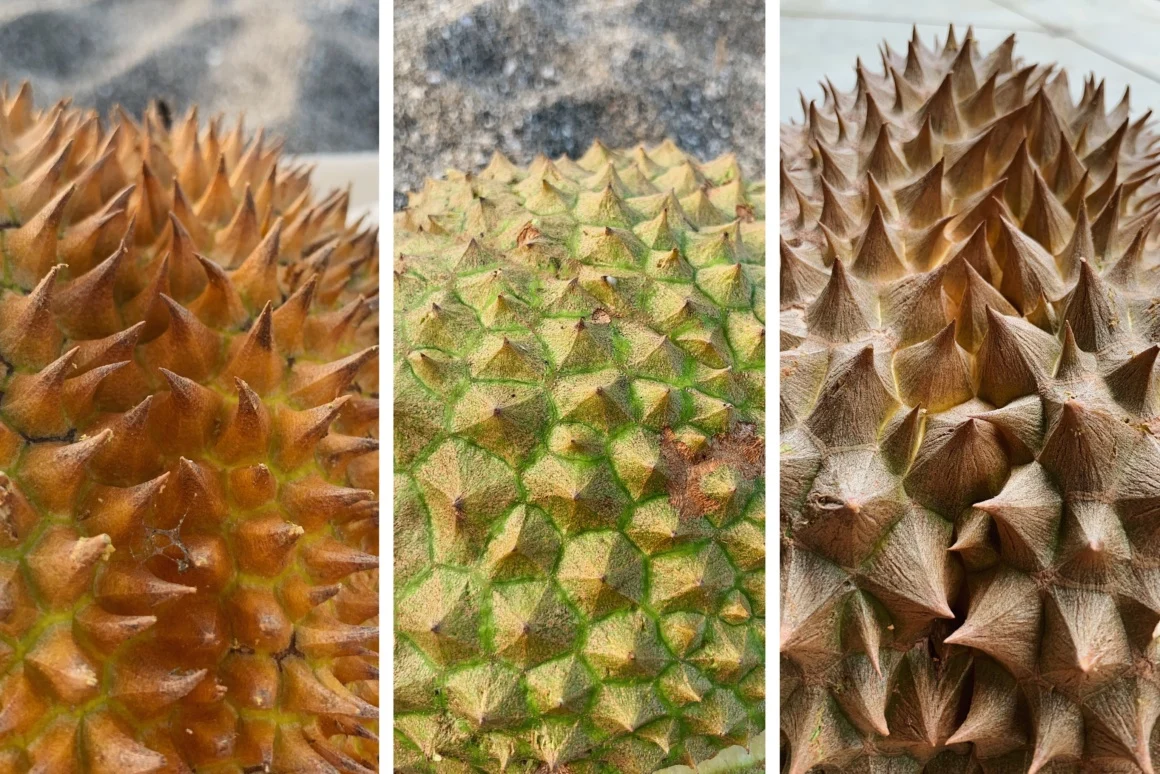
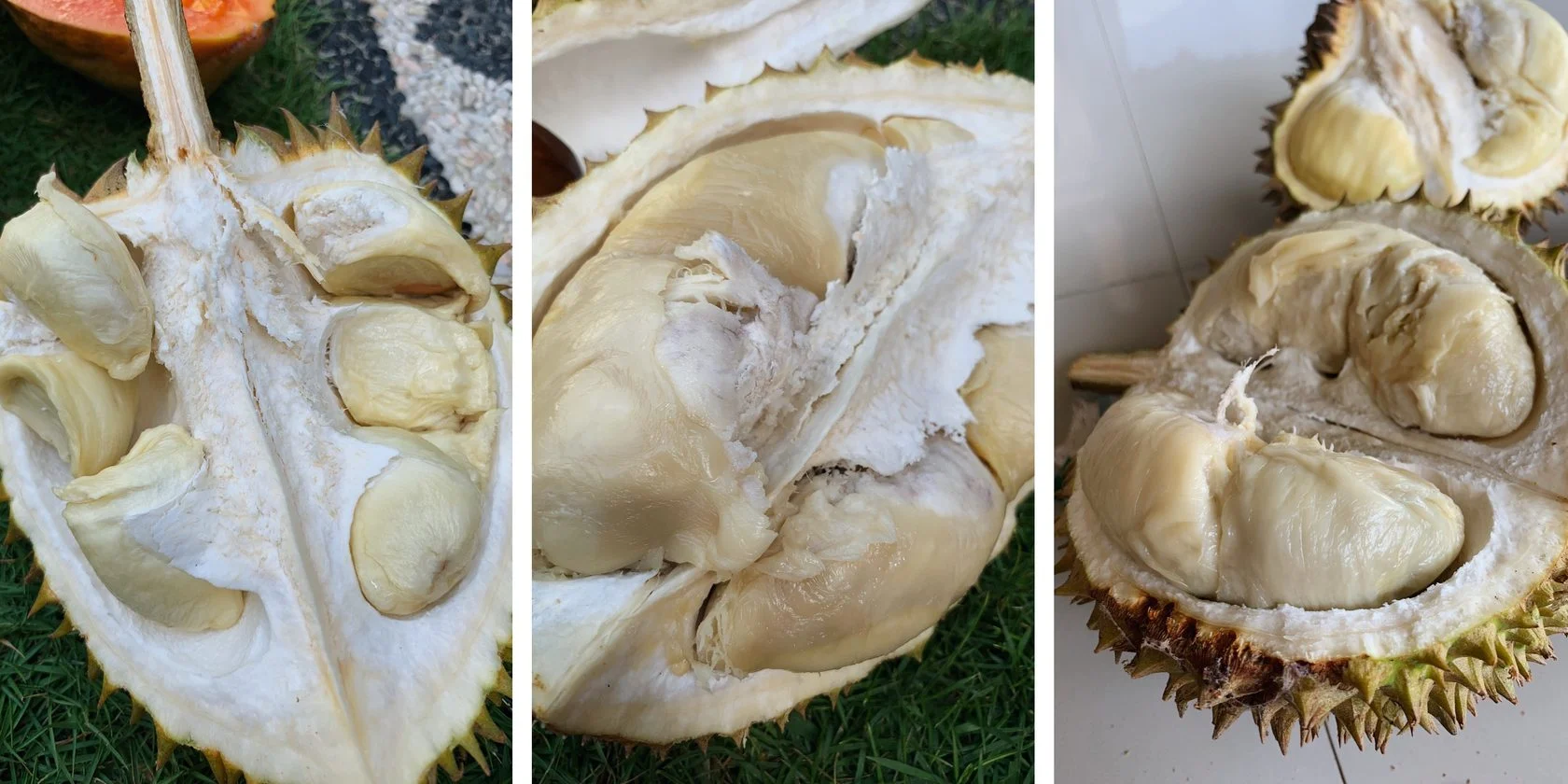
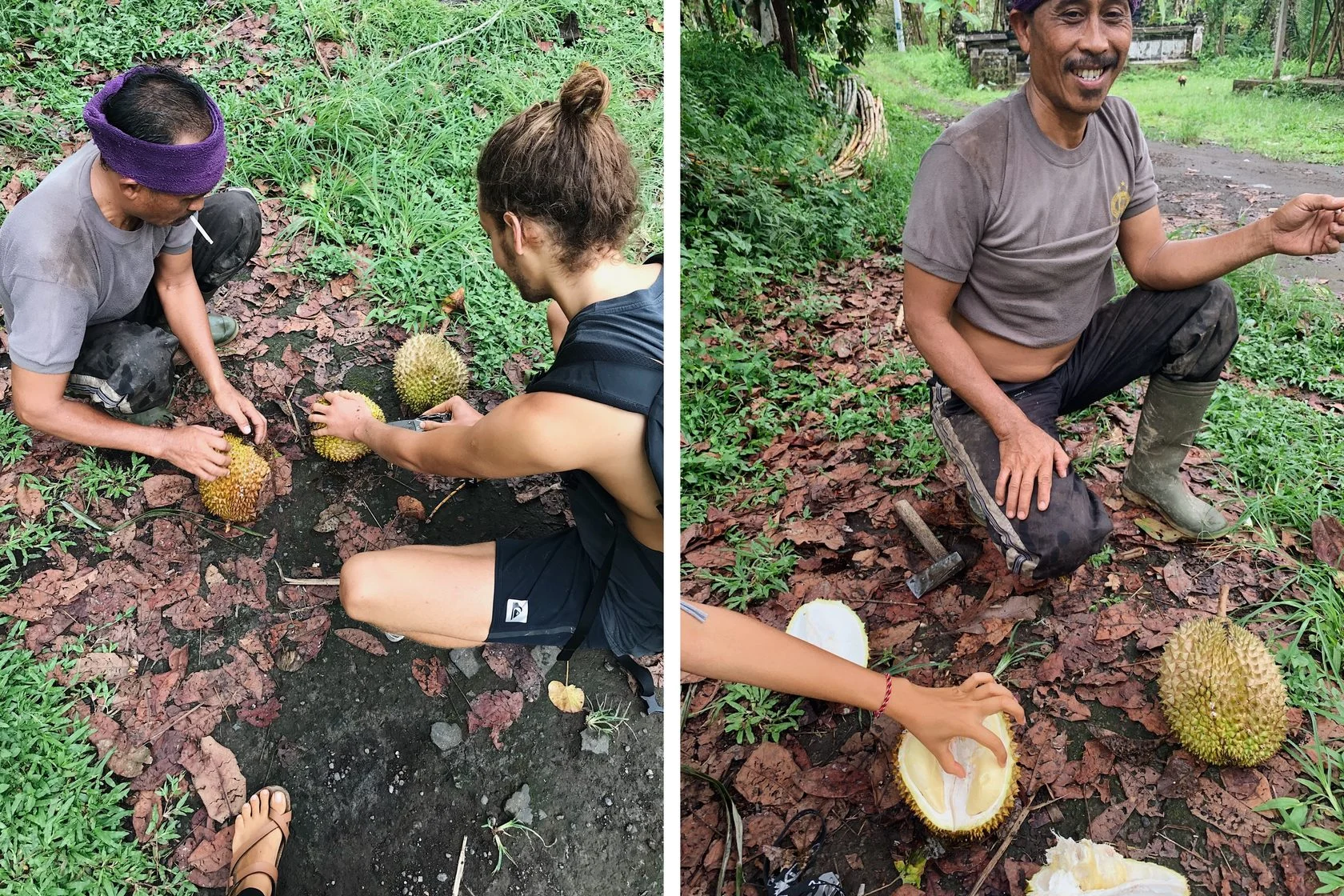
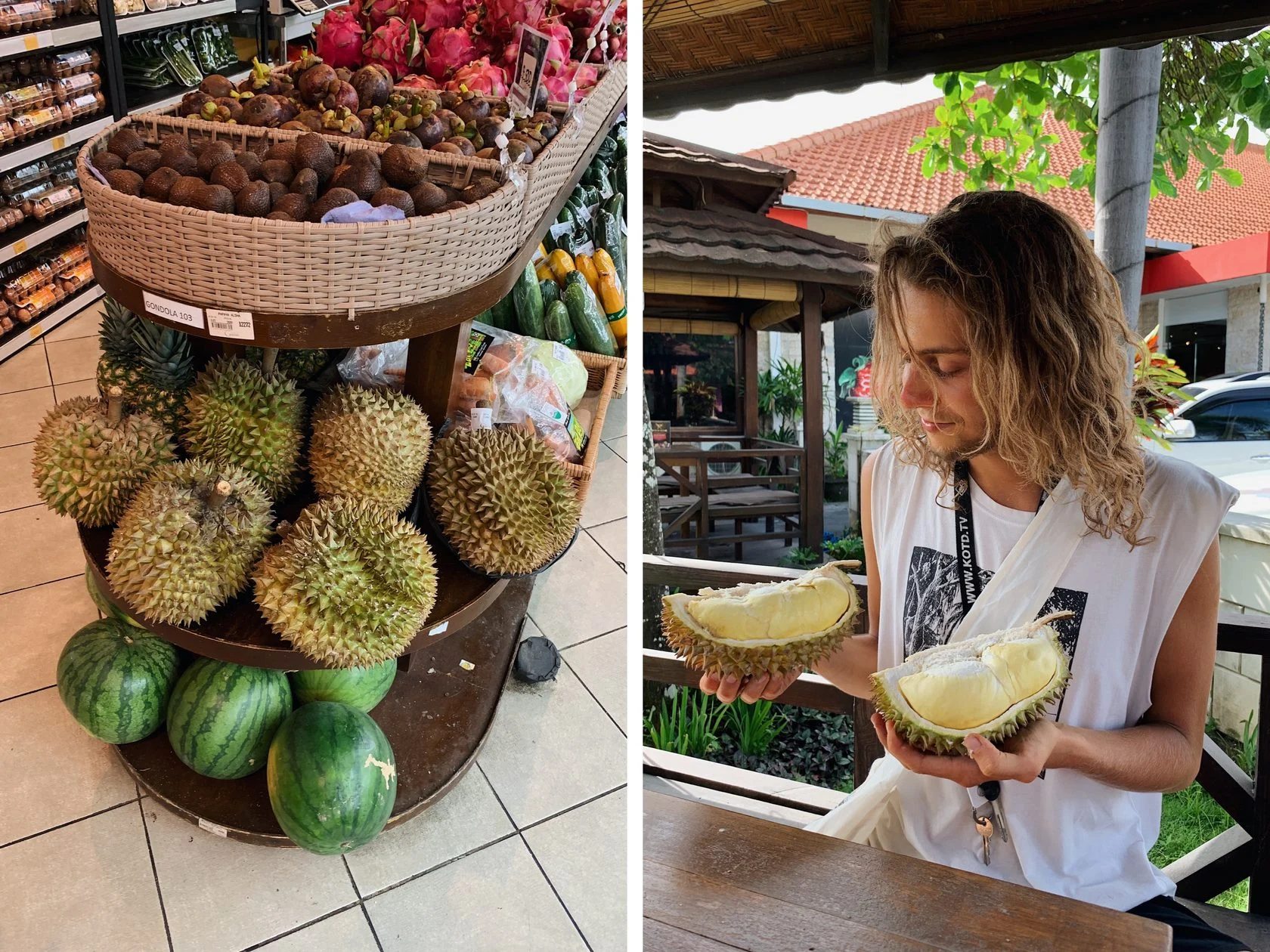
You can tell them apart at once by shape. A “Local” almost always shows five clear lobes underneath, has a more regular, even shape, different spikes and a completely different, sweeter smell. A “Bangkok” is always oddly shaped, with no visible lines underneath (the one in the photo below has lines because it is already slightly open), and its smell is less strong and deeper.
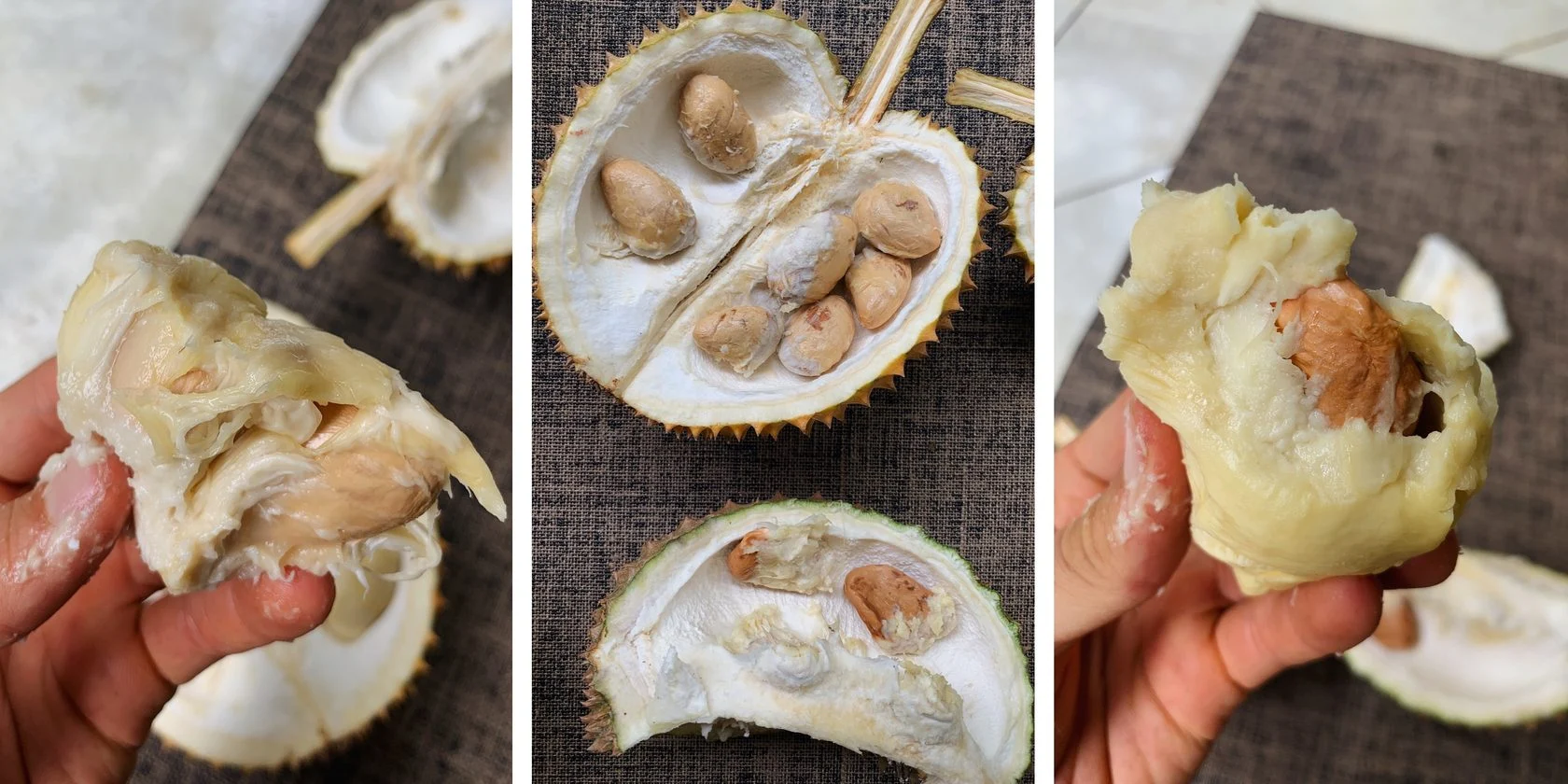
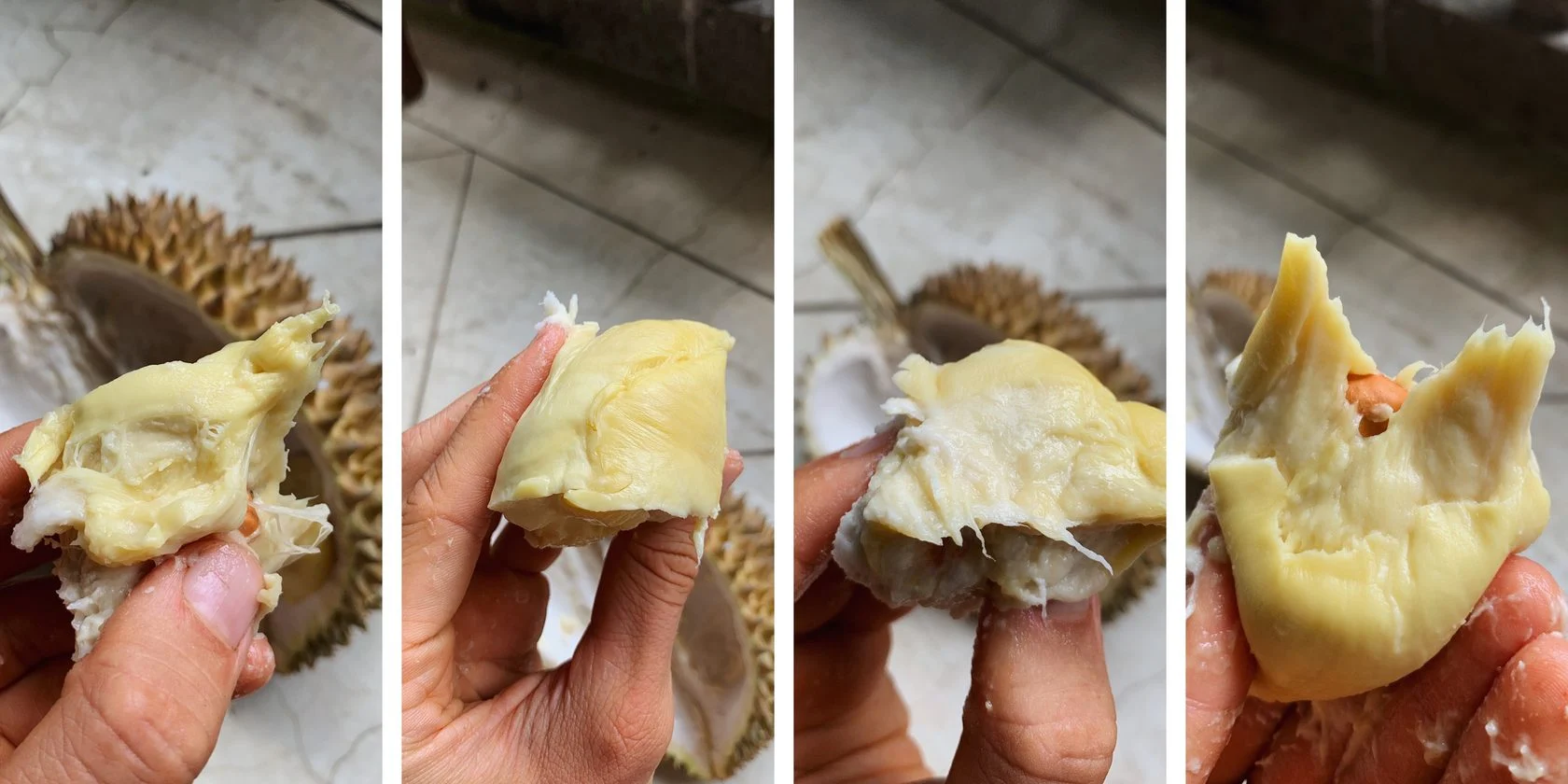
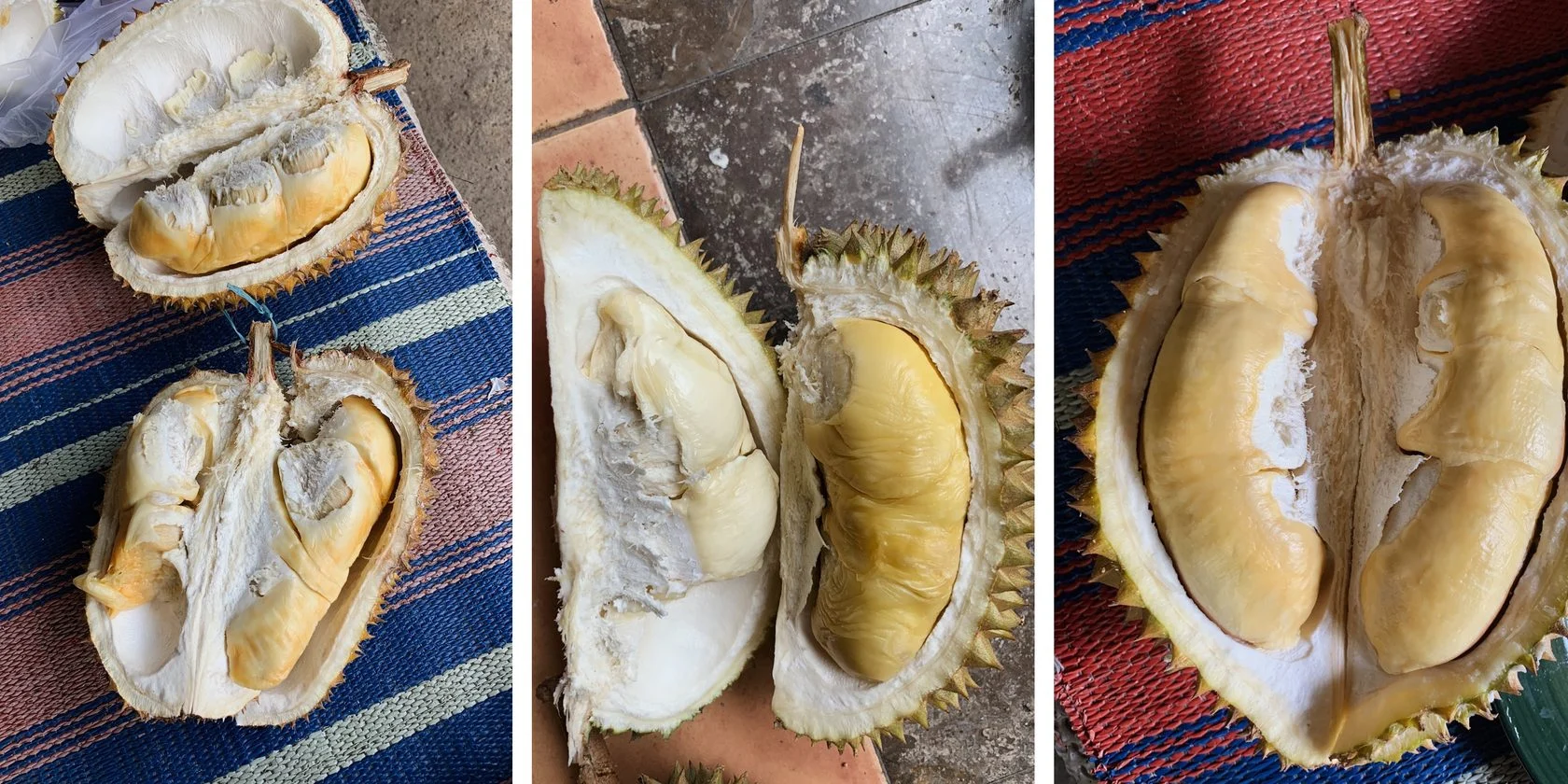
And of course an opened fruit differs at once in its stones and flesh.
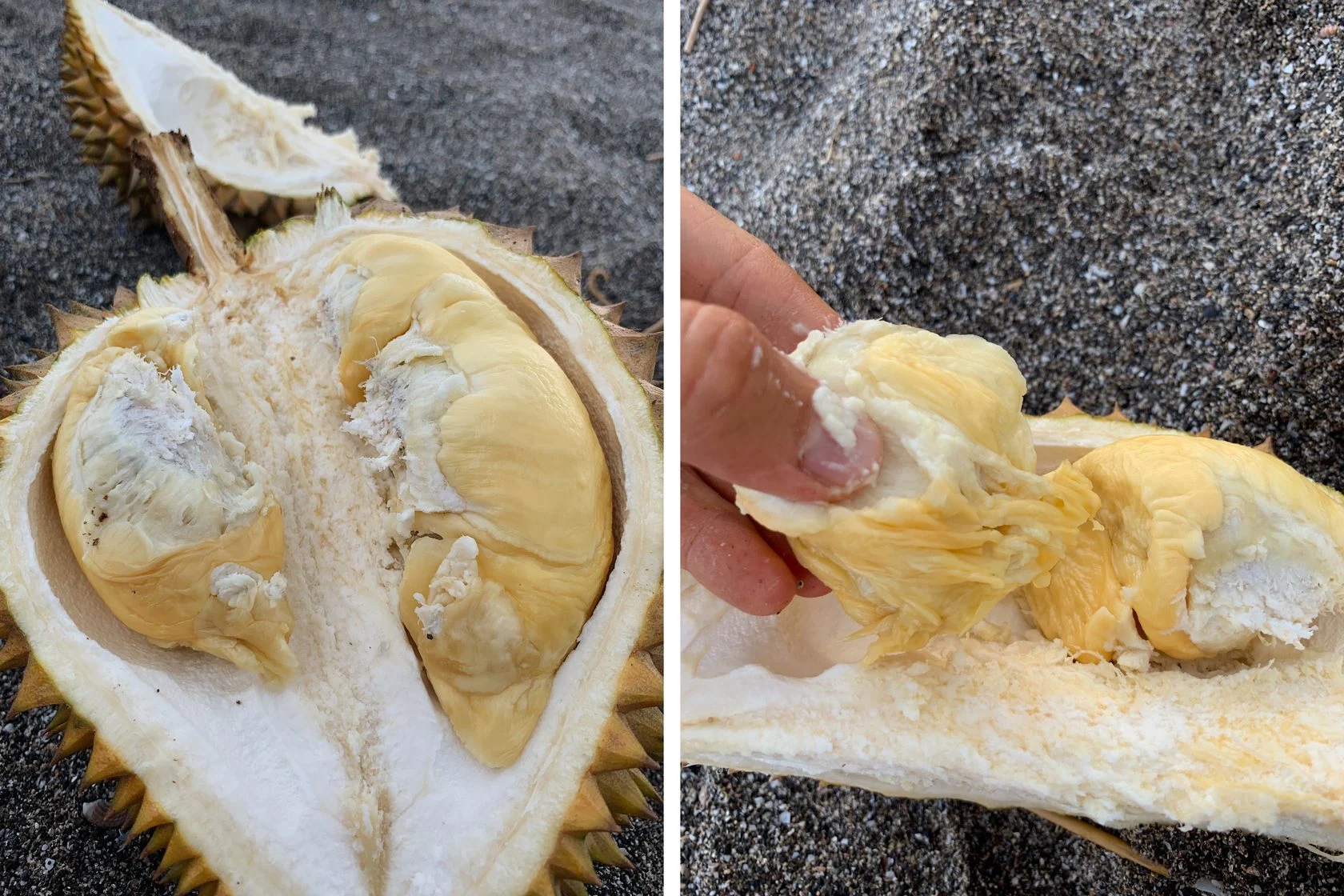
Durian Local: big pale stones. Every fruit tastes like no other, now a little bitter, now sweeter, now gently raspberry and mint. But in texture they clearly lose for me: a good “Local” like the one in the photo below is very hard to find, while a “Bangkok” is much more reliable.
Durian Bangkok: the flesh does not stick to the stones, which are dark and small for the amount you can eat. The texture is layered, with a firmer outer shell. The taste has a light vanilla note, and again every fruit is its own.
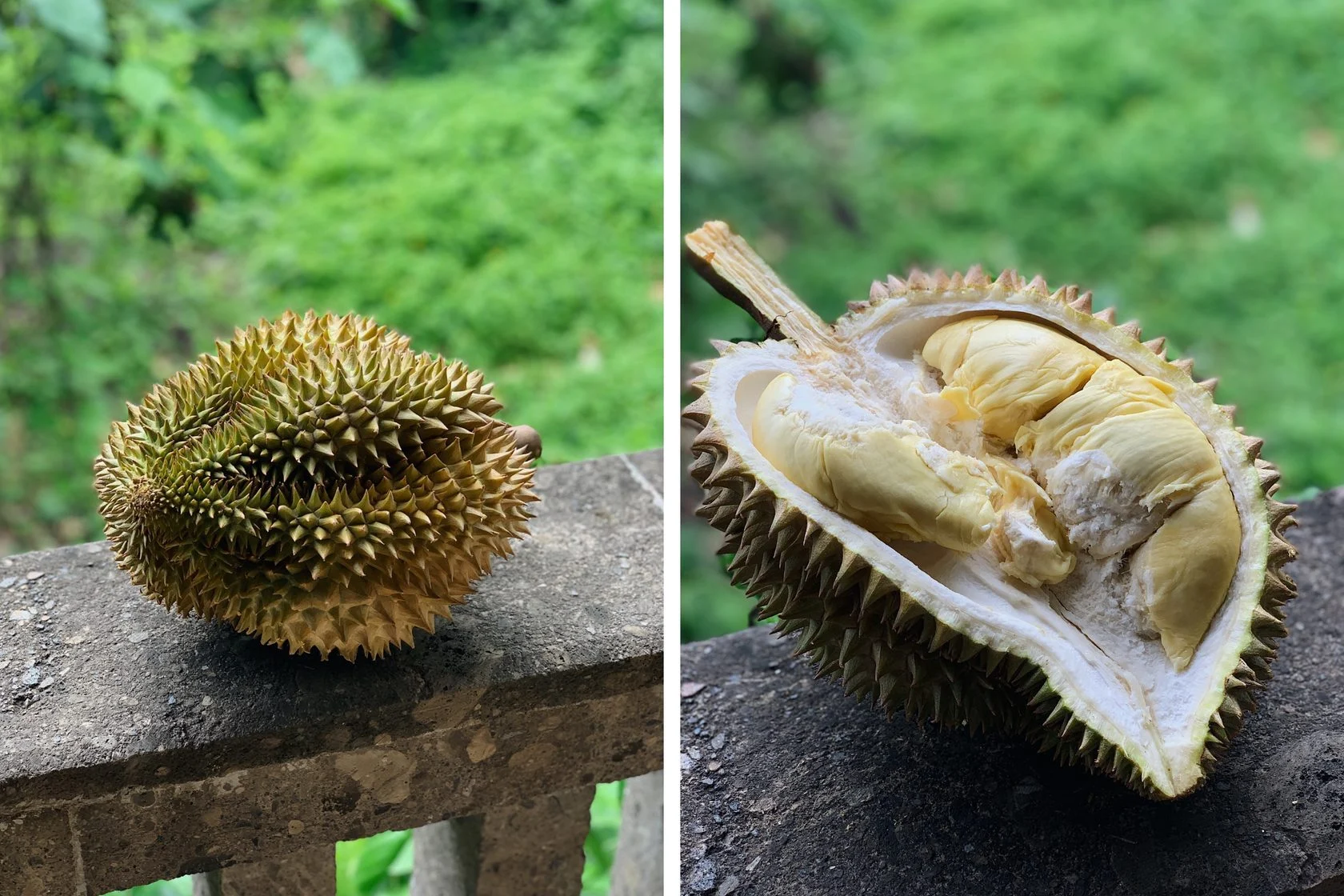
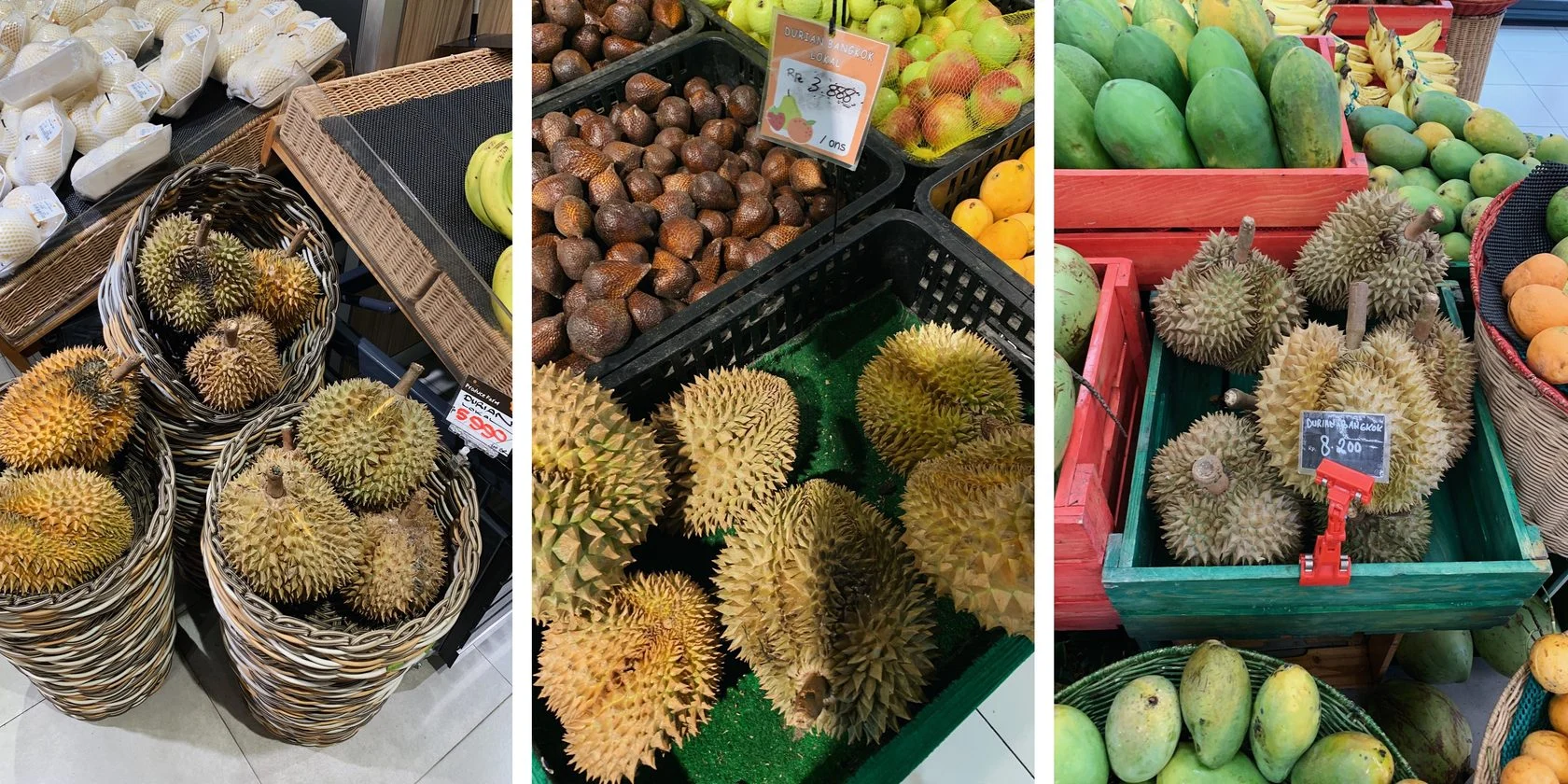
Prices for Durian Bangkok: 35,000 to 90,000 rupiah a kilo (159 to 420 rubles a kilo), more in supermarkets.
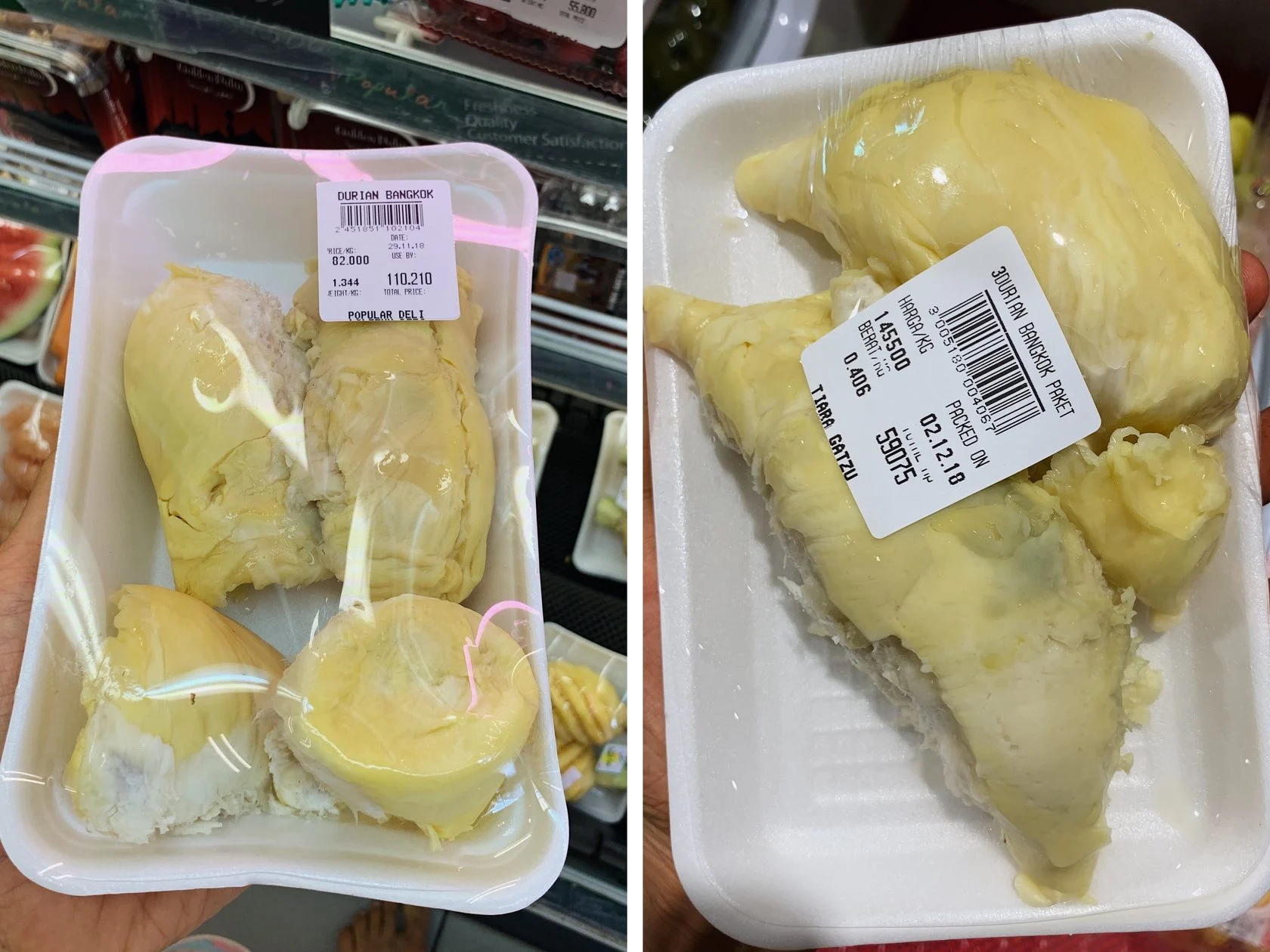
You can also often find them already cut at Pepito, Tiera Gatzu and Canggu Station. In the photo below the left pack is excellent and fragrant (smell is the main test), the right one has gone off, with black spots.
Price for Durian Local/Bali: 10,000 to 100,000 rupiah a fruit (40 to 400 rubles), depending on size.
When choosing a “Local”, mind only the smell (it should be interesting and sweet) and the absence of little holes that worms could have made. The skin can be green and hard or orange and soft: either may hide sweet, tasty flesh. For a “Bangkok” the checklist is longer: the smell must be sweet and pleasant, the fruit must ring when you tap it, and the spikes must be soft when you try to press them together and not prickly under your palm.
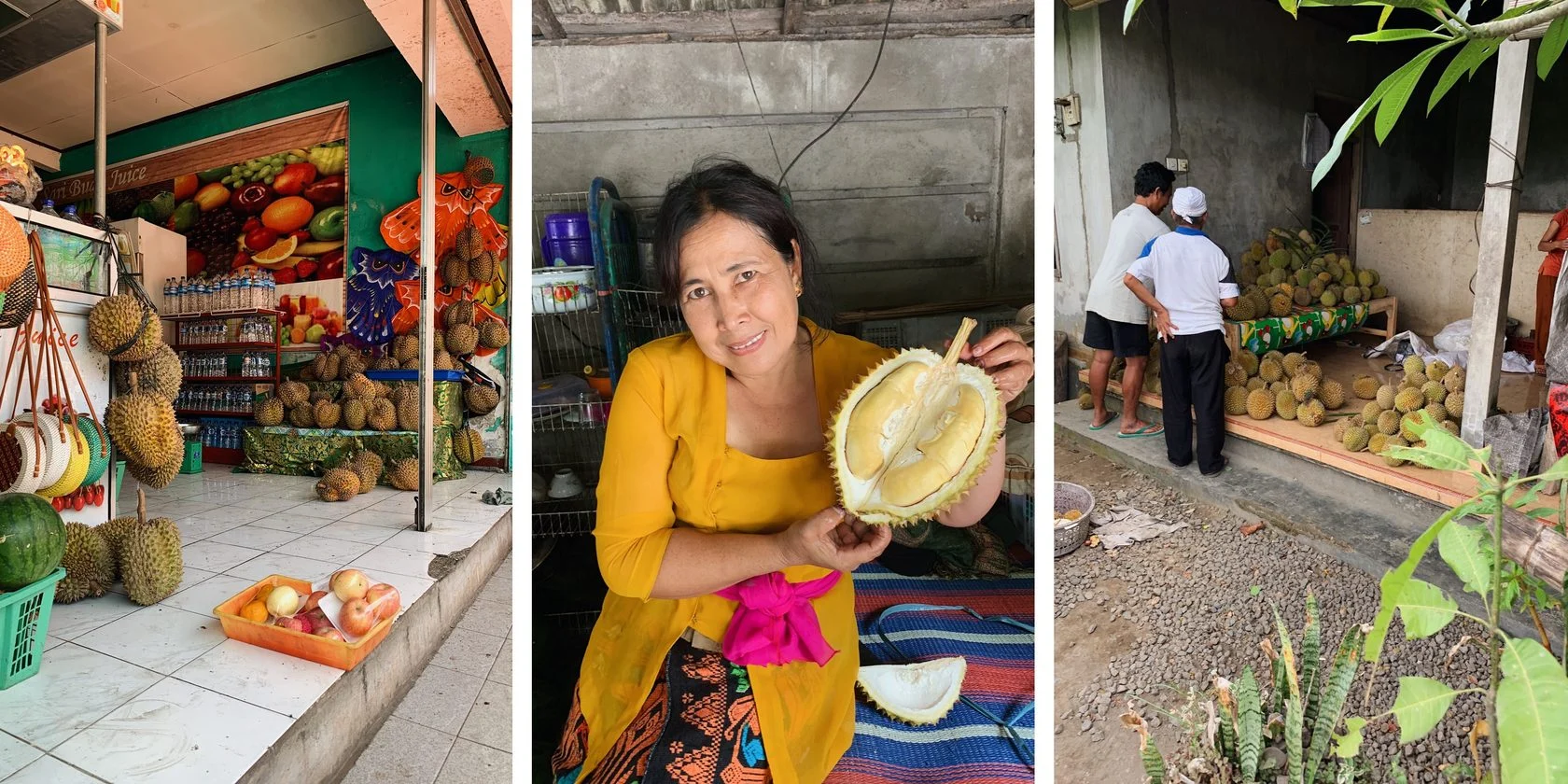
Where to buy?
The only place where you can be 100% sure of eating a wonderful durian of any variety today is Luwus. Type that code word into your navigator and go! The exact spot is at the end of the post.
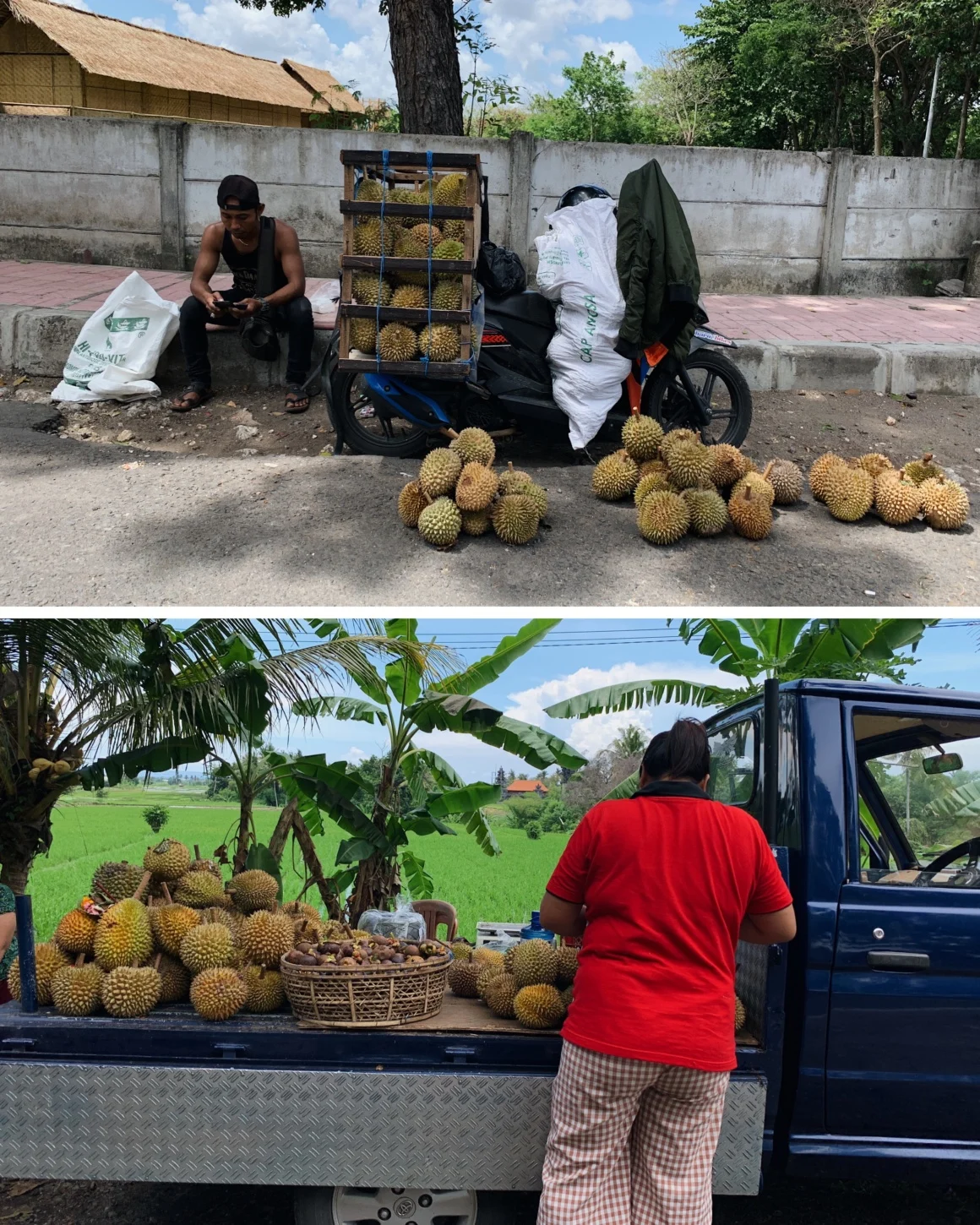
This is what the spontaneous durian spots around the island look like. You cannot predict when they appear, but once you learn their hours you can single out the most regular ones and visit only those. Their locations are at the end of the post. Mostly they sell only “Locals”.
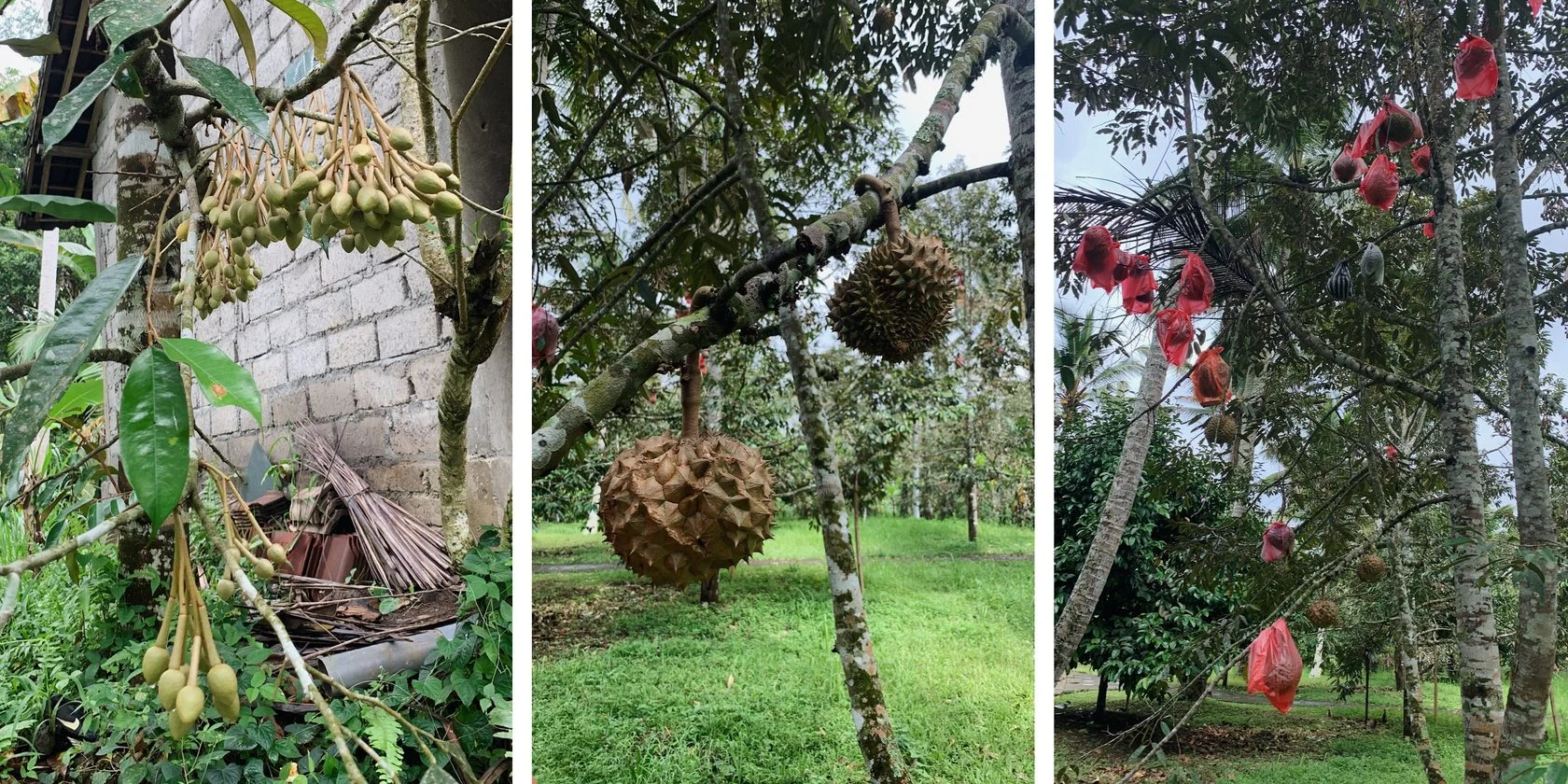
Mangosteen
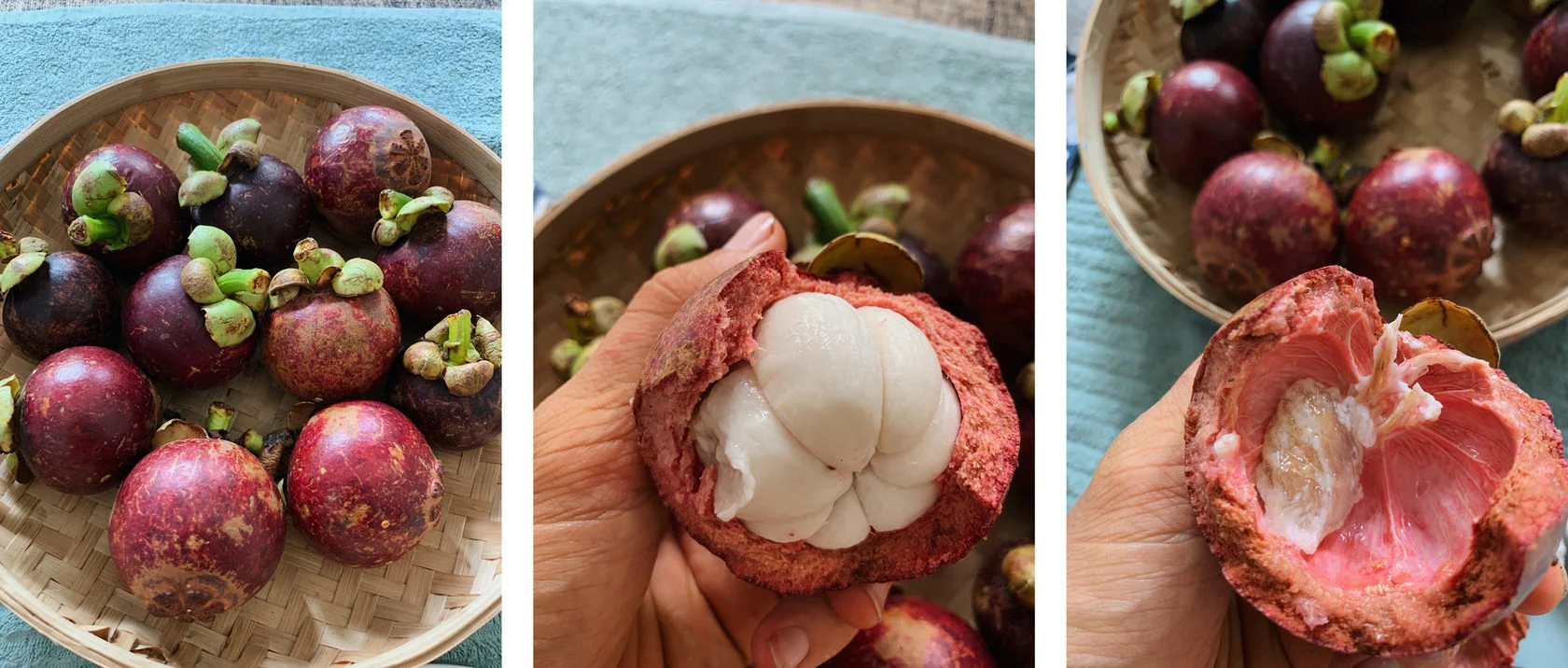
Mangosteens are wonderful here: small stones, flesh that is just sweet enough, fragrant and juicy, and you find them in every shop and stall.
Price: 10,000 to 40,000 rupiah a kilo (45 to 150 rubles a kilo), depending on where you buy and on the size.
Price: 10,000 to 40,000 rupiah a kilo (45 to 150 rubles a kilo), depending on where you buy and on the size.
Tomatoes & avocado
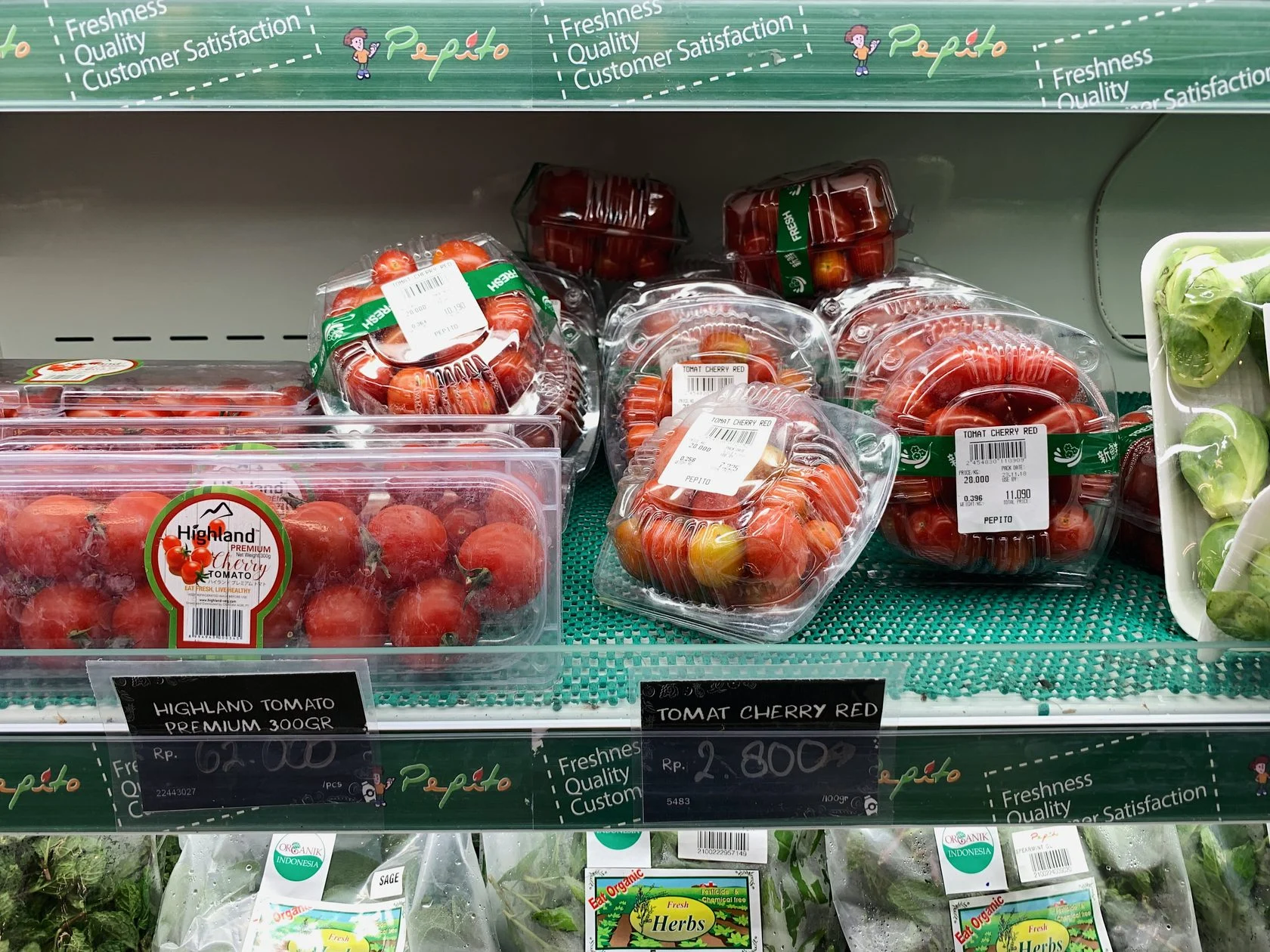
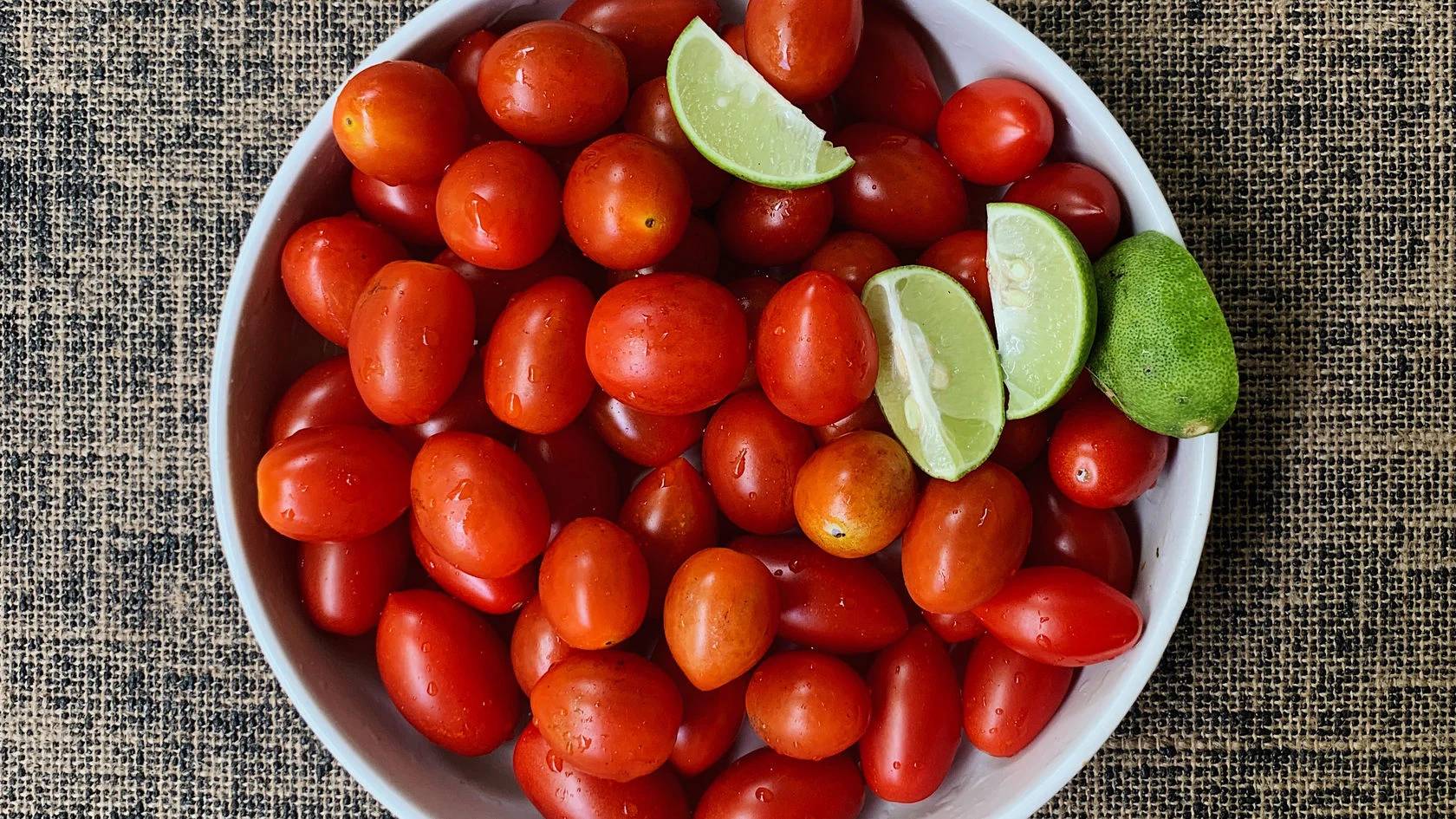
If you try, you can find quite decent cherry tomatoes grown in the north of the island, where they are much easier to find than in the south.
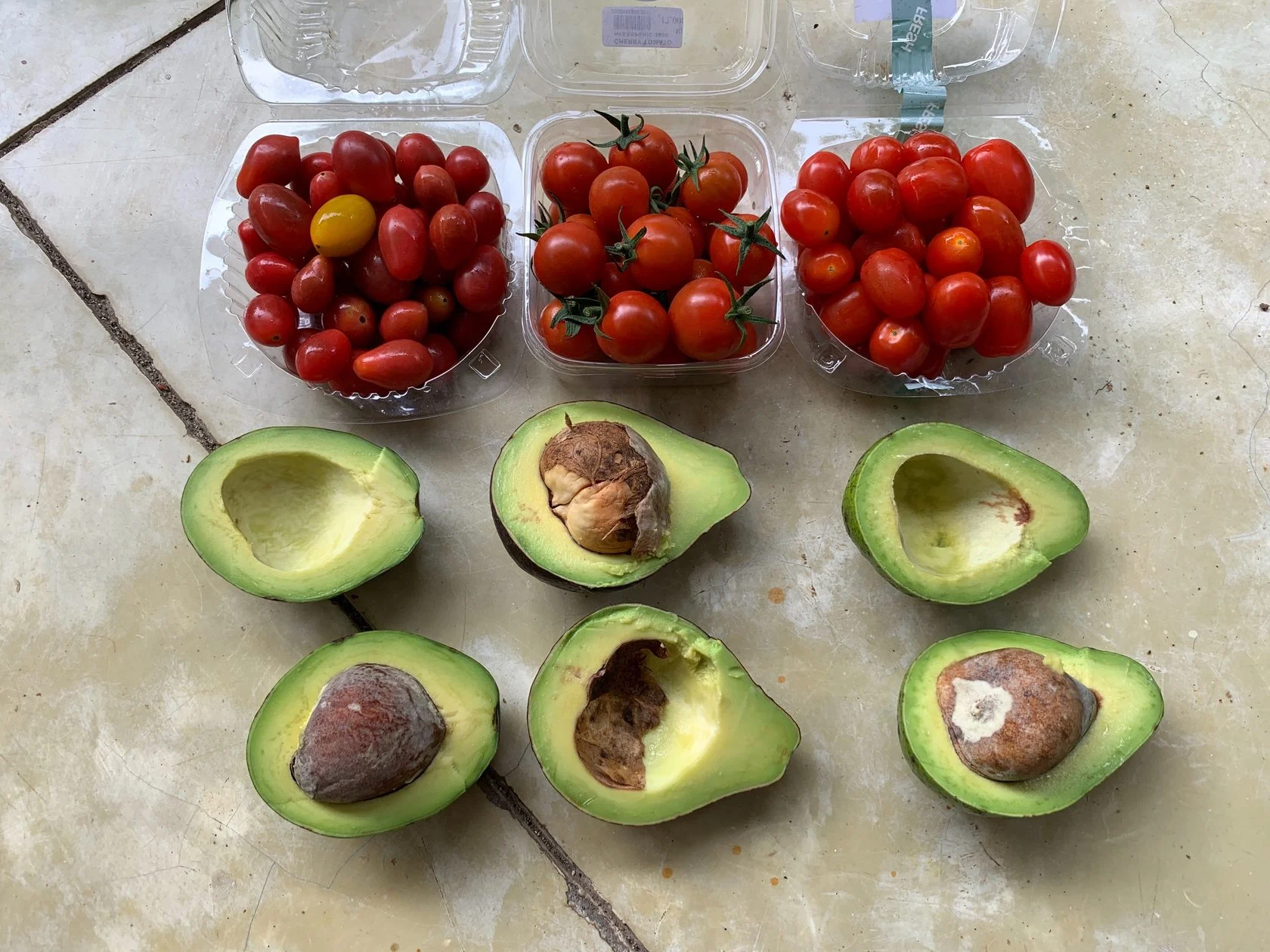
One without the other is money down the drain!
Local tomatoes come in four kinds; everything else is imported.
Prices: 5,000 rupiah a kilo (20 rubles a kilo).
Prices: 5,000 rupiah a kilo (20 rubles a kilo).
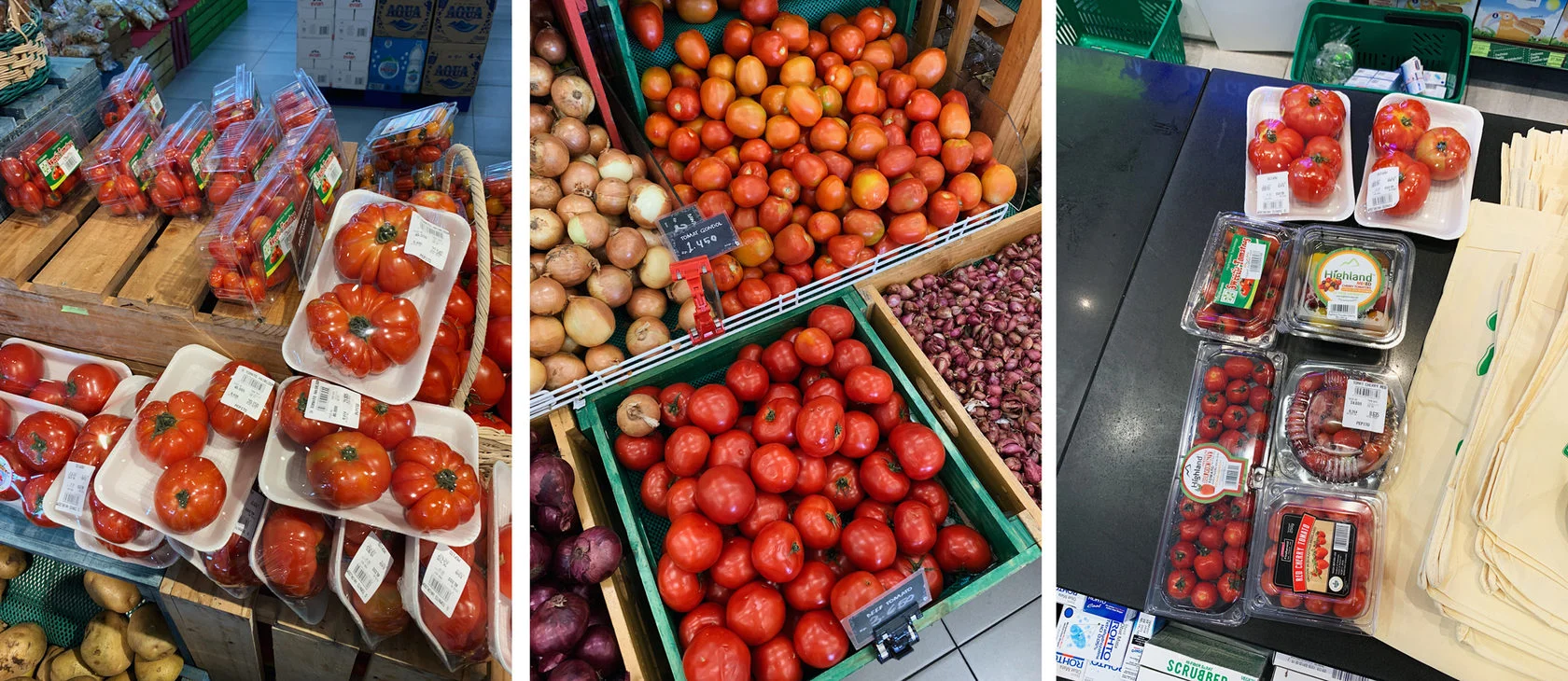
The tastiest always turn out to be the cheapest cherry tomatoes; the rest have no taste at all.
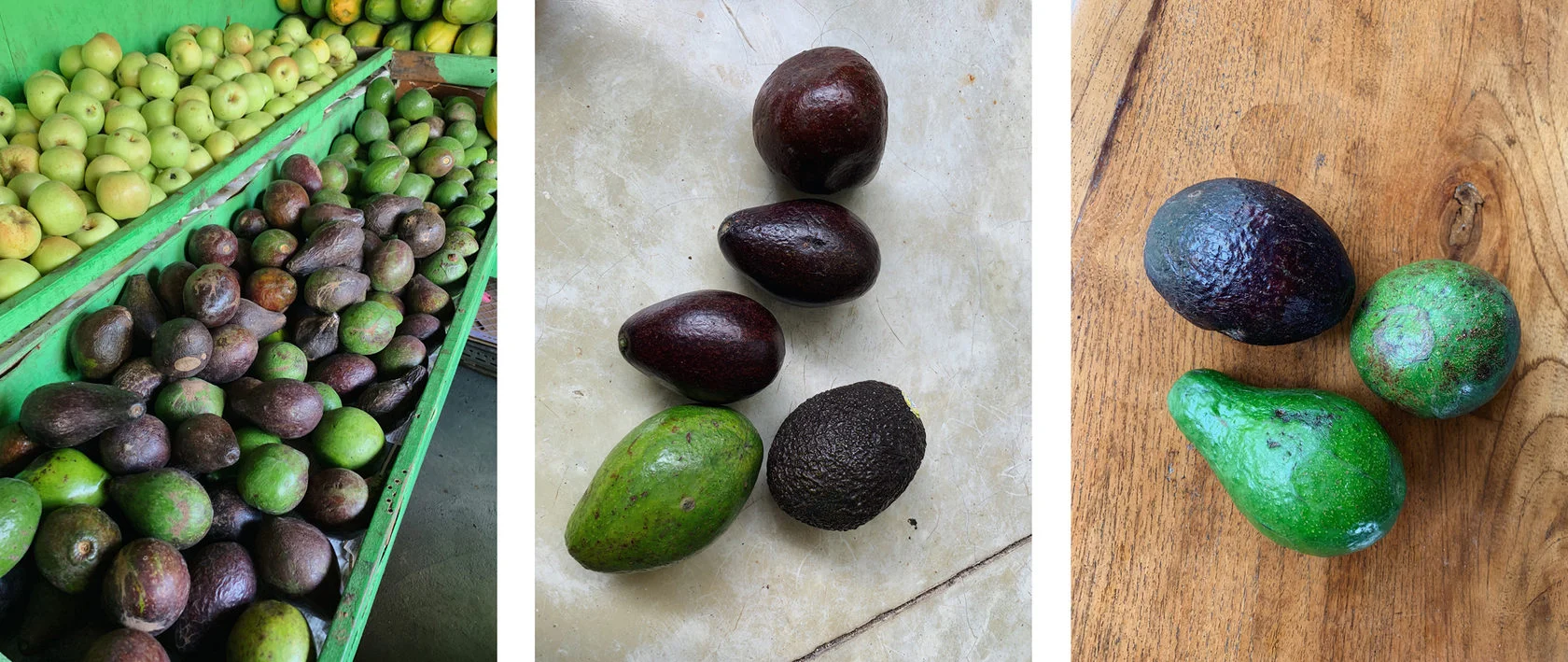
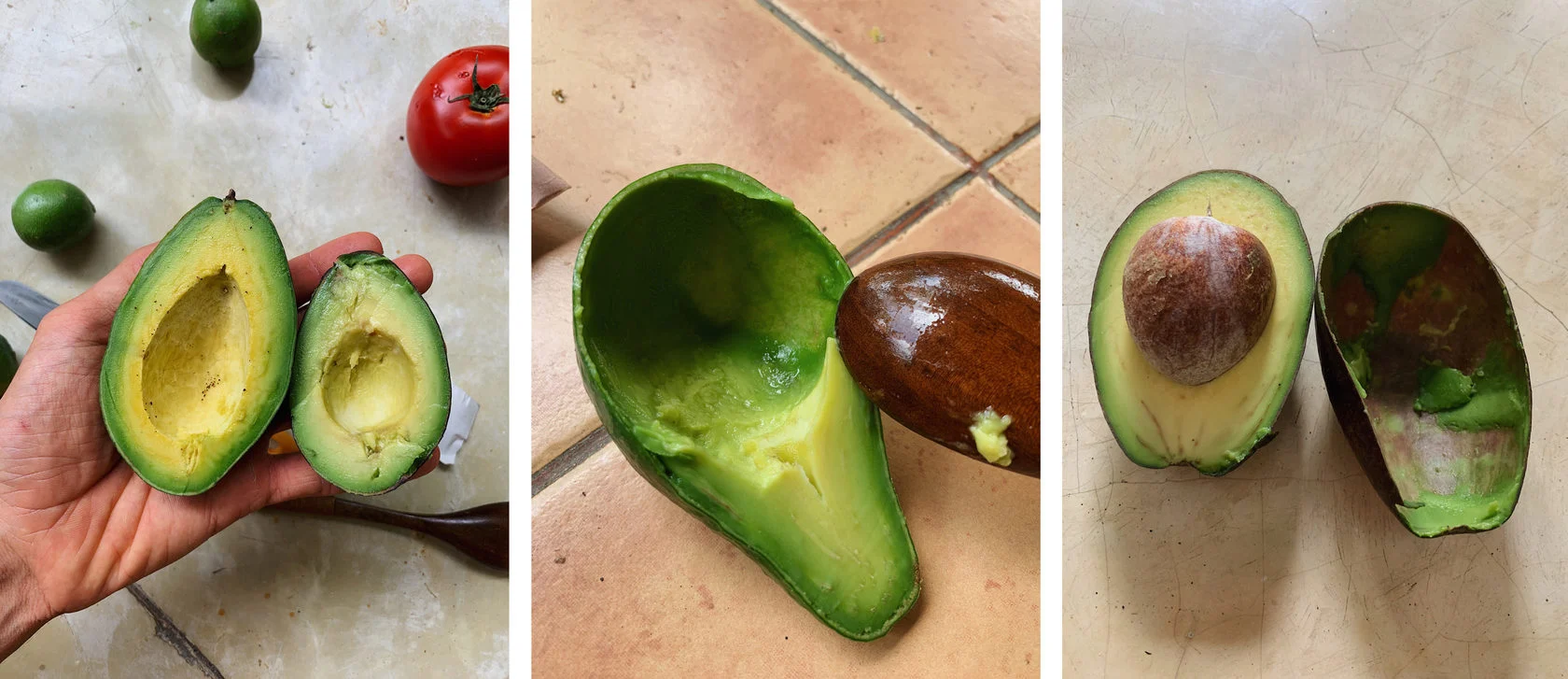
Almost every avocado here is sold unripe. Even if you find a ripe one, it will have no taste: either just fatty or, more often, watery and bland.
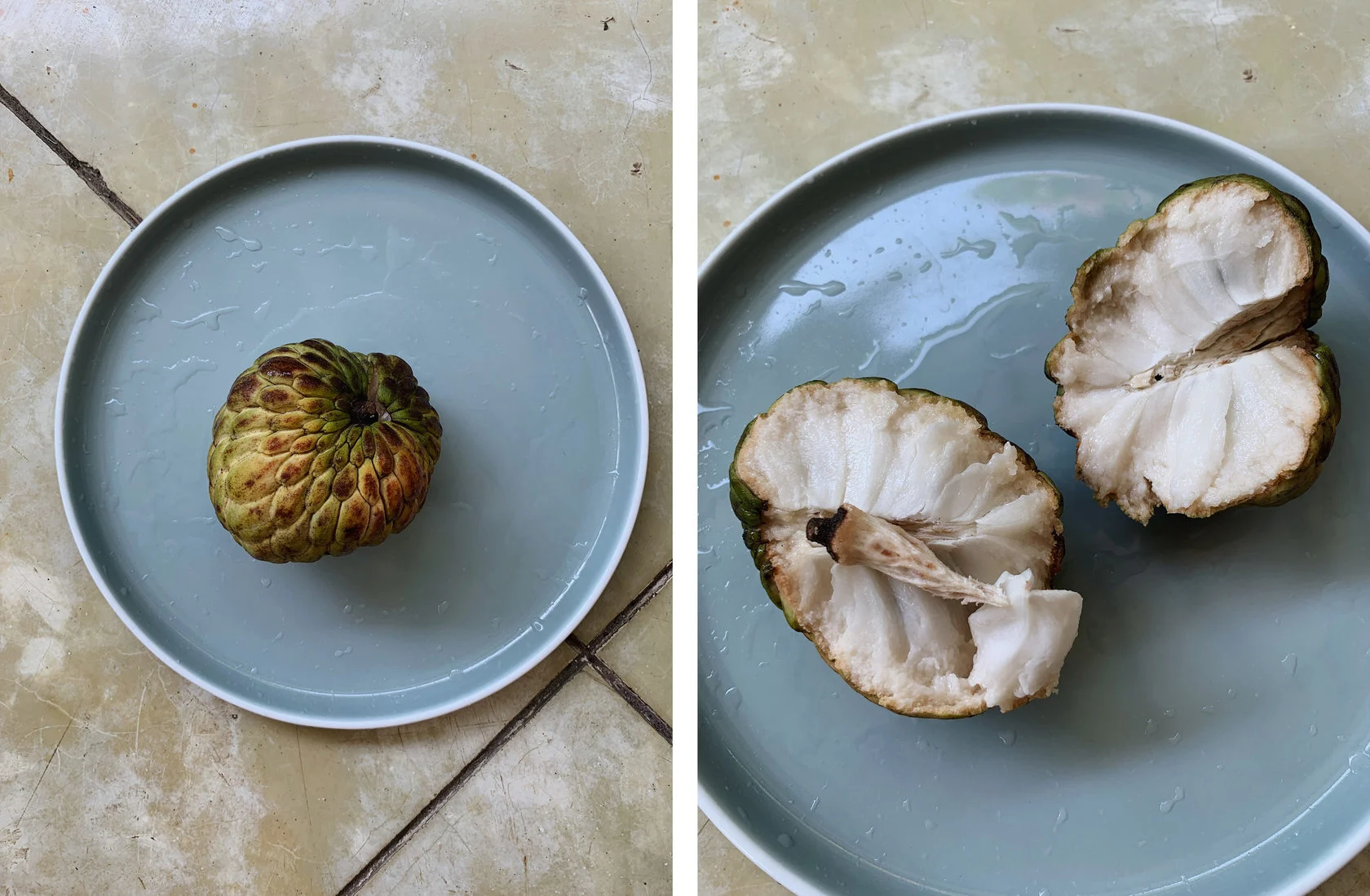
Sugar apple / cherimoya
This fruit turned up at Tiera Gatzu a couple of times, very unripe and hard, but it ripened at home in a couple of days and was simply wonderful. I never saw it in Bali again. I do not remember the price : (
Grapes
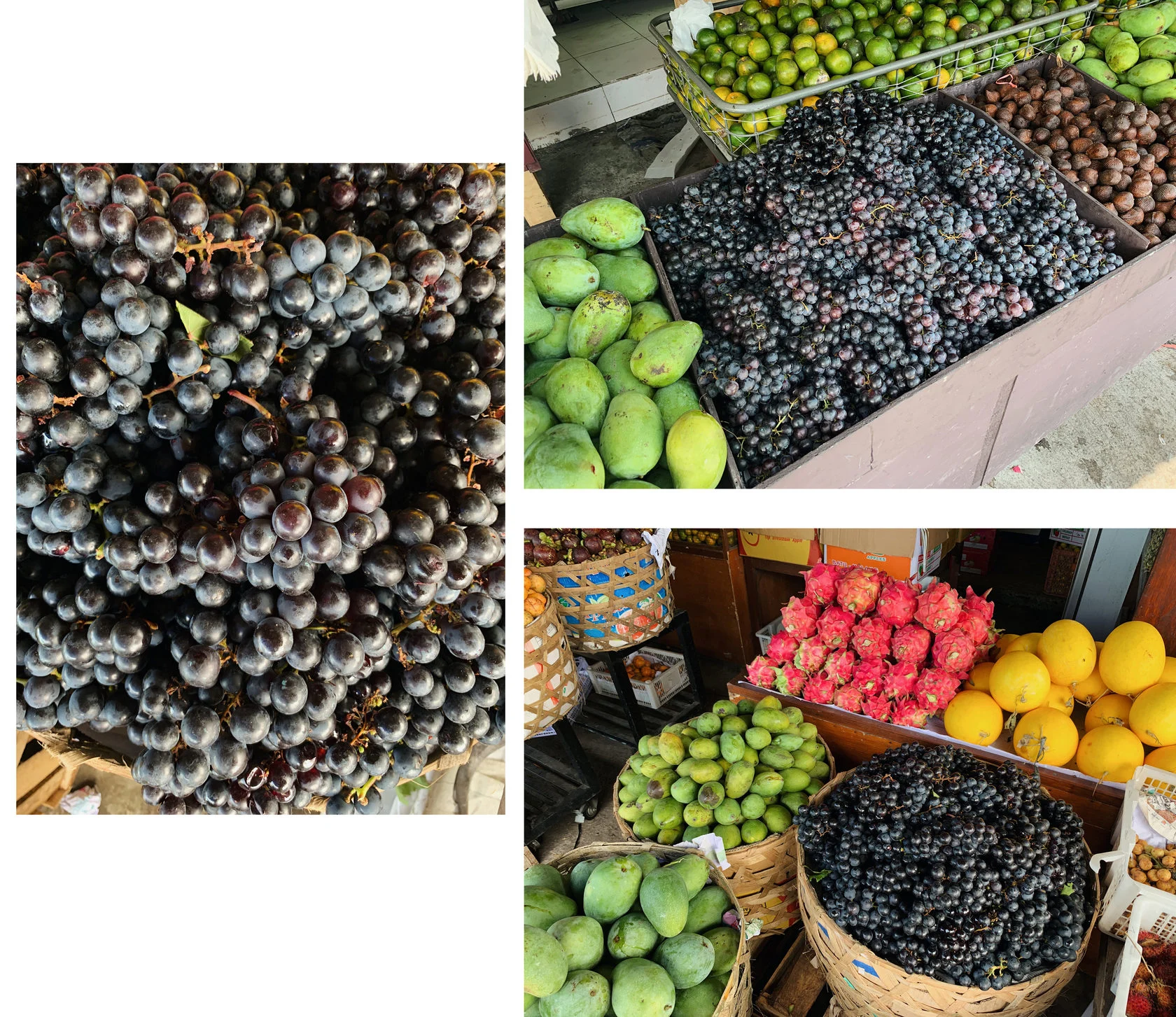
Sweet and sour, sometimes more sweet, juicy and fragrant, with seeds and a rather thick skin you do not feel like swallowing (I always ate only the flesh and spat out the skin and seeds). The texture is a little like Isabella grapes. Sold at many fruit stalls and supermarkets. Supermarkets also have a big choice of imported grapes that “never spoil”.
Price: 10,000 rupiah a kilo.
Price: 10,000 rupiah a kilo.
Jackfruit
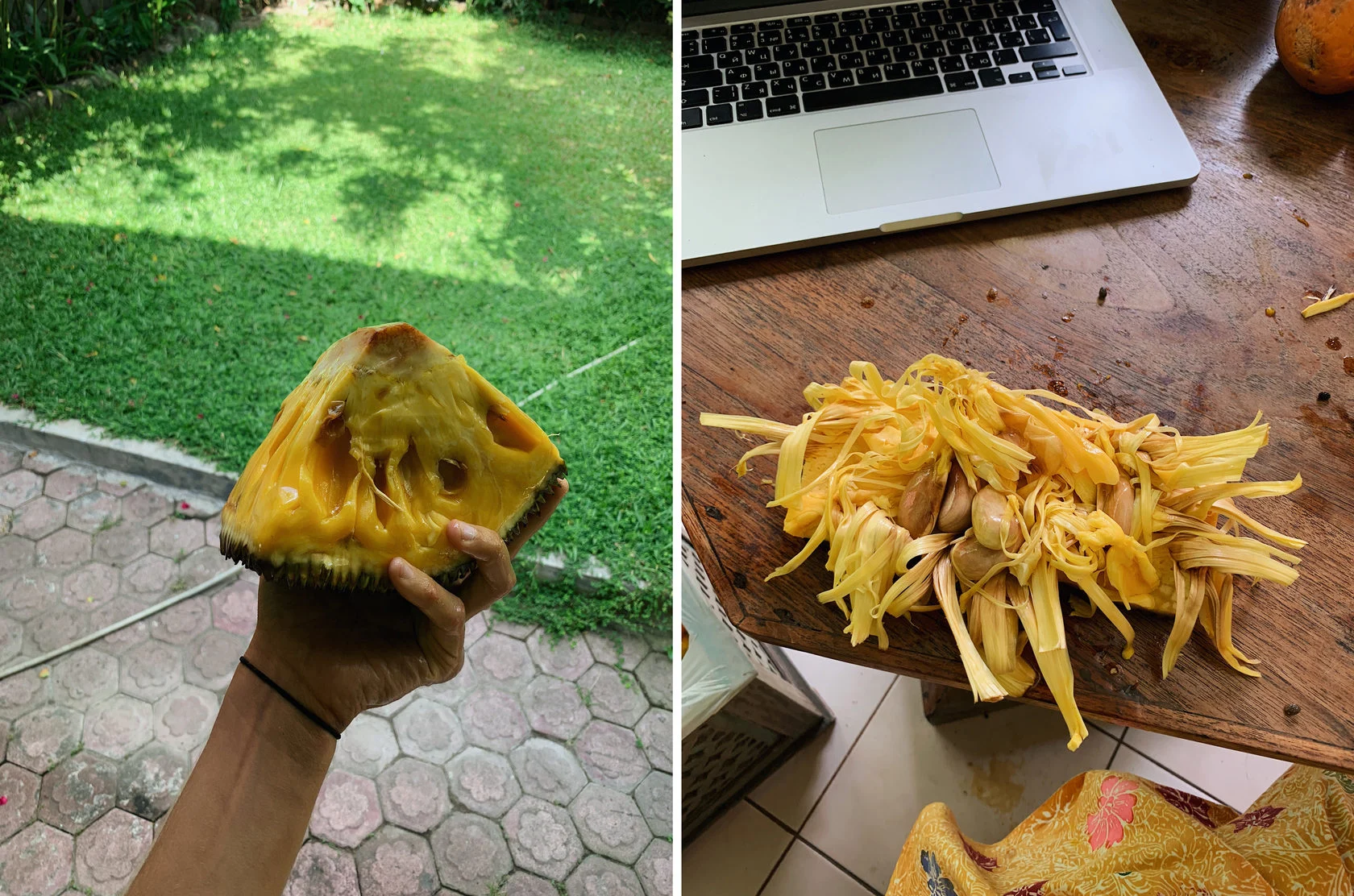
The jackfruit is definitely better than in Thailand: some are a very deep orange with a taste to match, sweet and juicy.
Price: 100,000 to 150,000 rupiah for a whole fruit (400 to 600 rubles).
Price: 100,000 to 150,000 rupiah for a whole fruit (400 to 600 rubles).
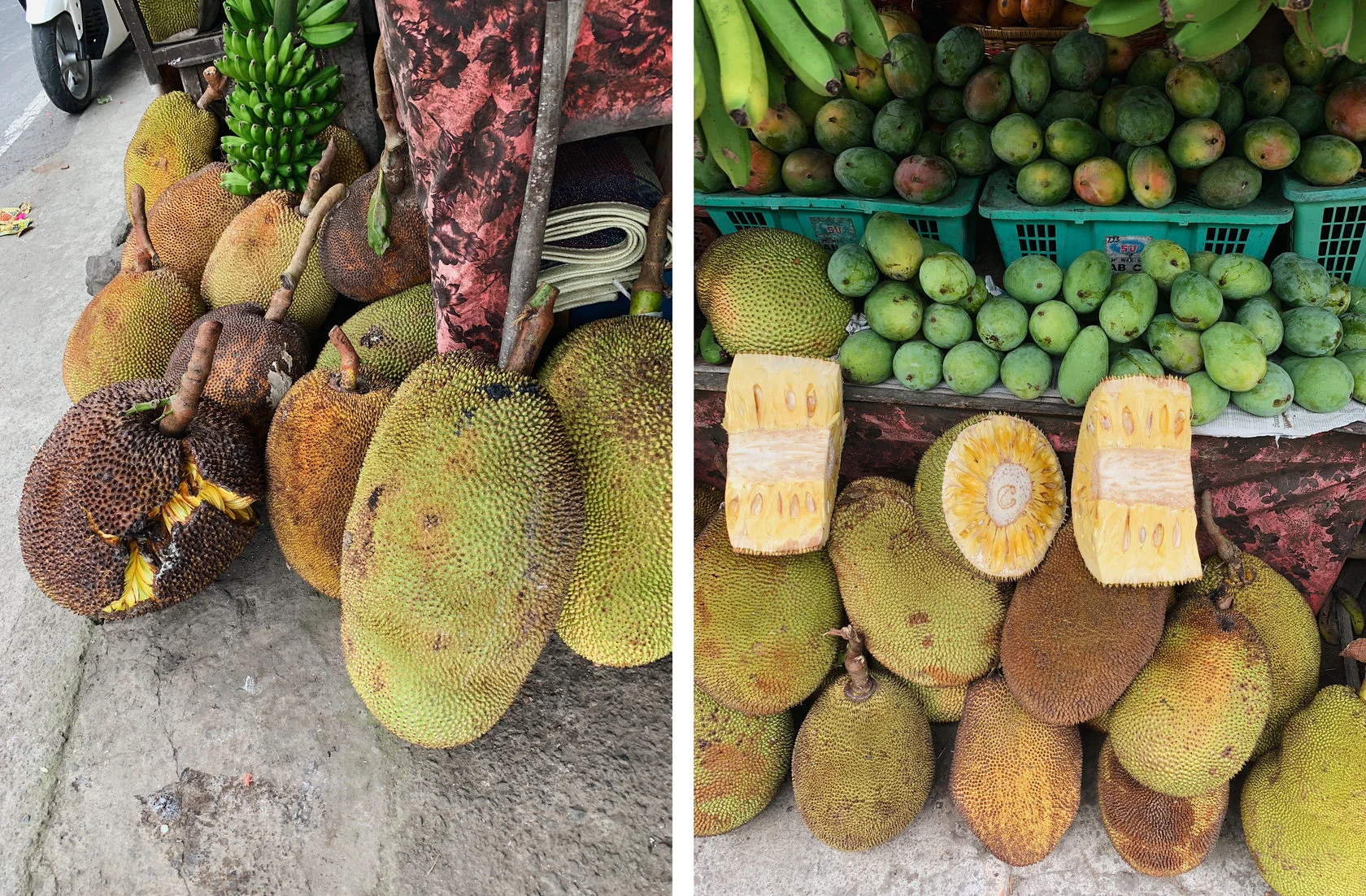
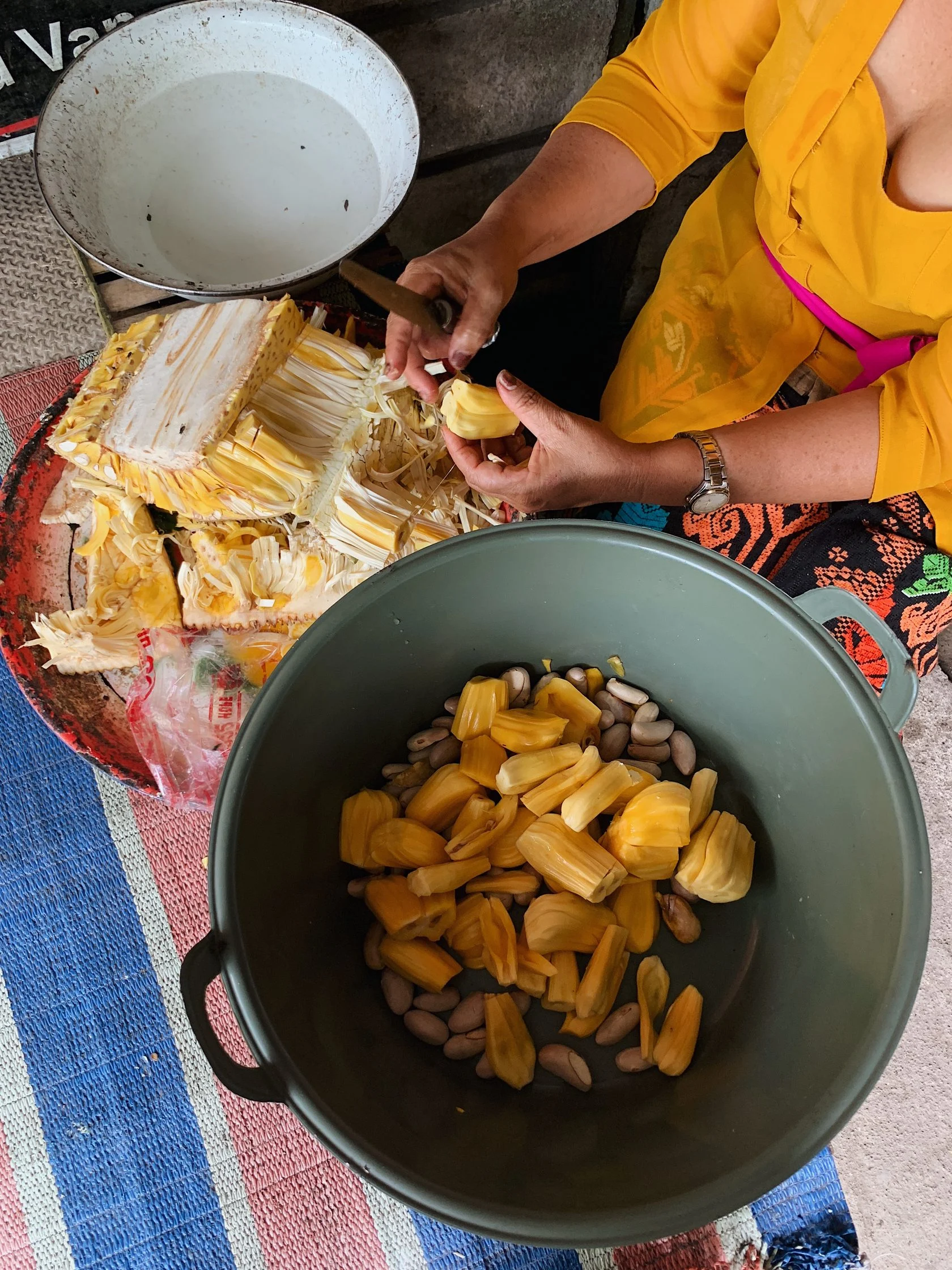
At Pepito they are always overripe and come only cut and cleaned (as in the photo above); at Tiera Gatzu you can buy a piece cut from a big jack and pick out the edible parts yourself.
A piece cost about 30,000 rupiah (130 rubles).
A piece cost about 30,000 rupiah (130 rubles).
Longan (lengkeng)
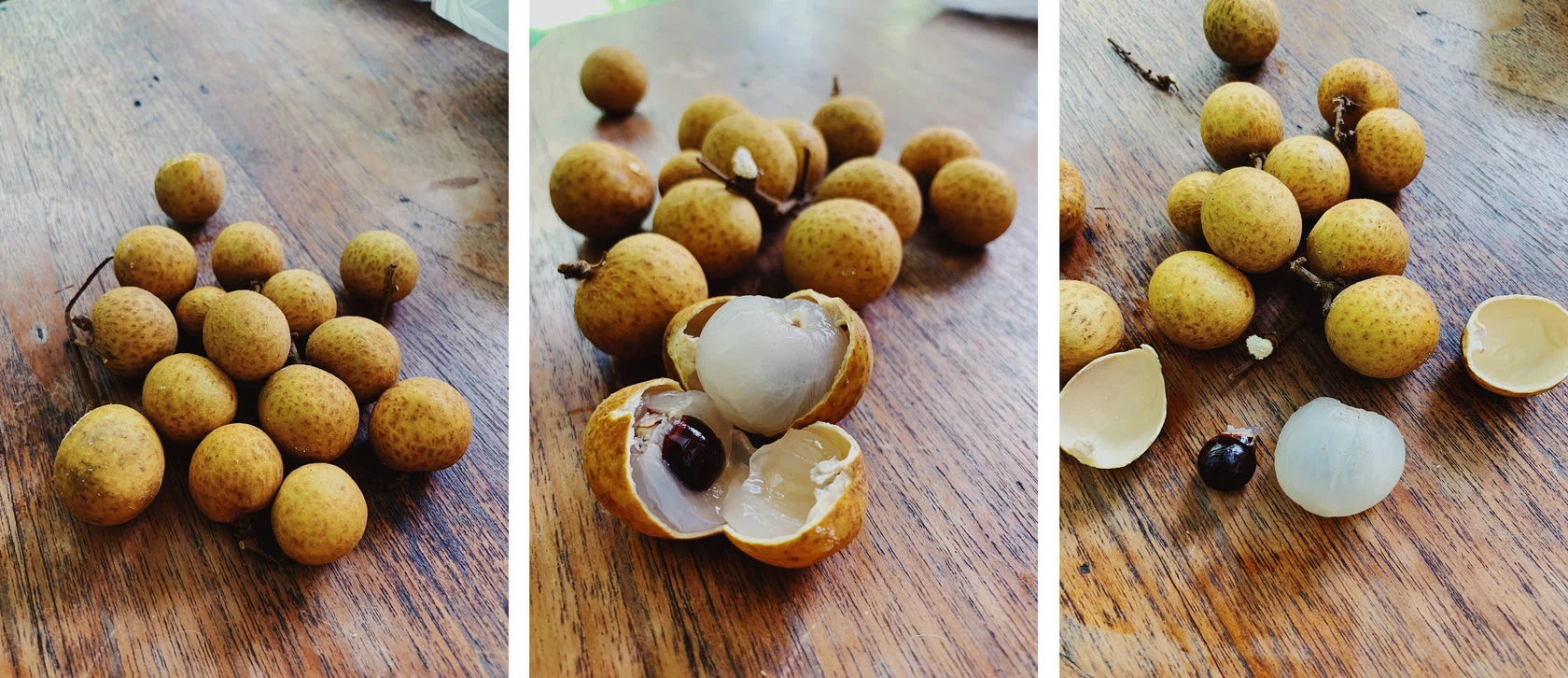
Sold at every stall and every supermarket, juicy and fragrant, no different from the same fruit in other countries.
Mandarins
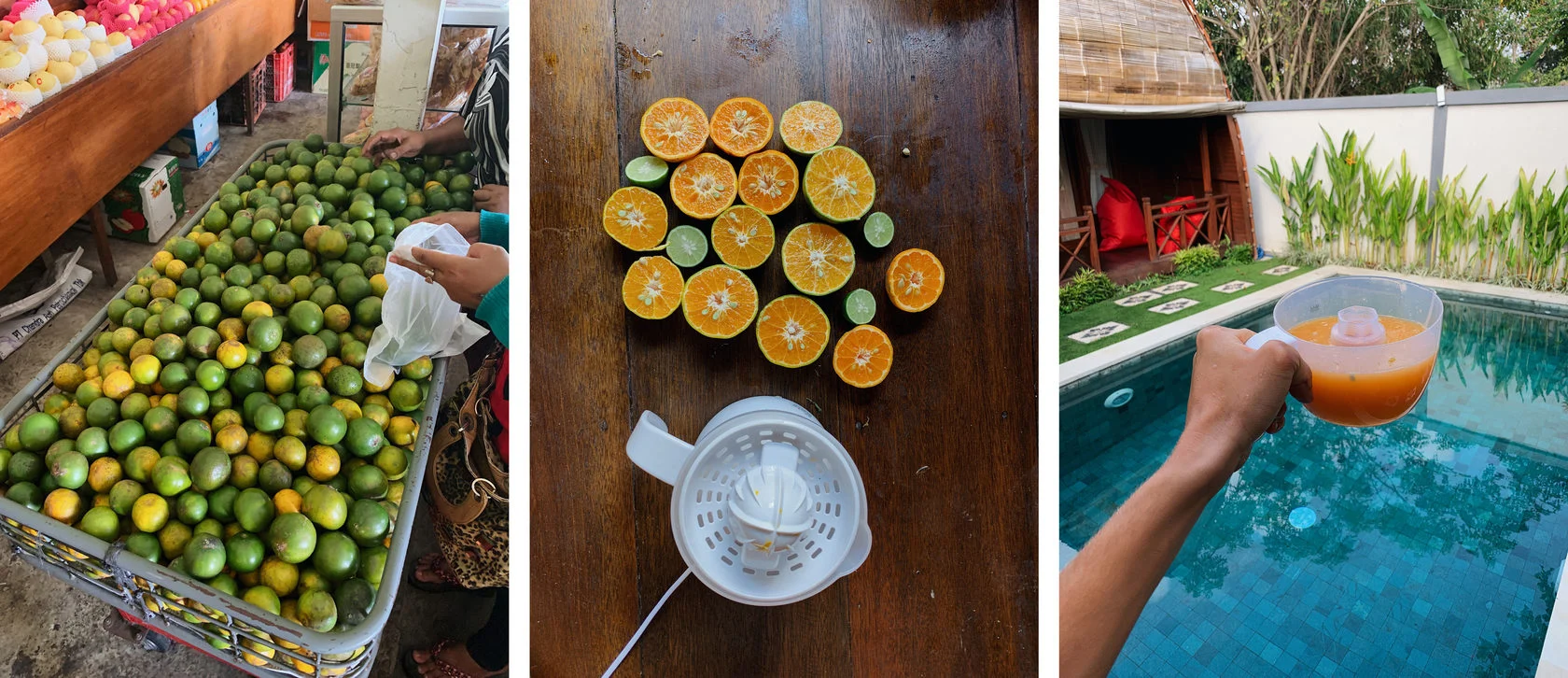
A very dense skin and not much taste: good only for juice, or for chewing the flesh and spitting out the membranes.
Price: 10,000 rupiah a kilo.
Price: 10,000 rupiah a kilo.
Sapodilla
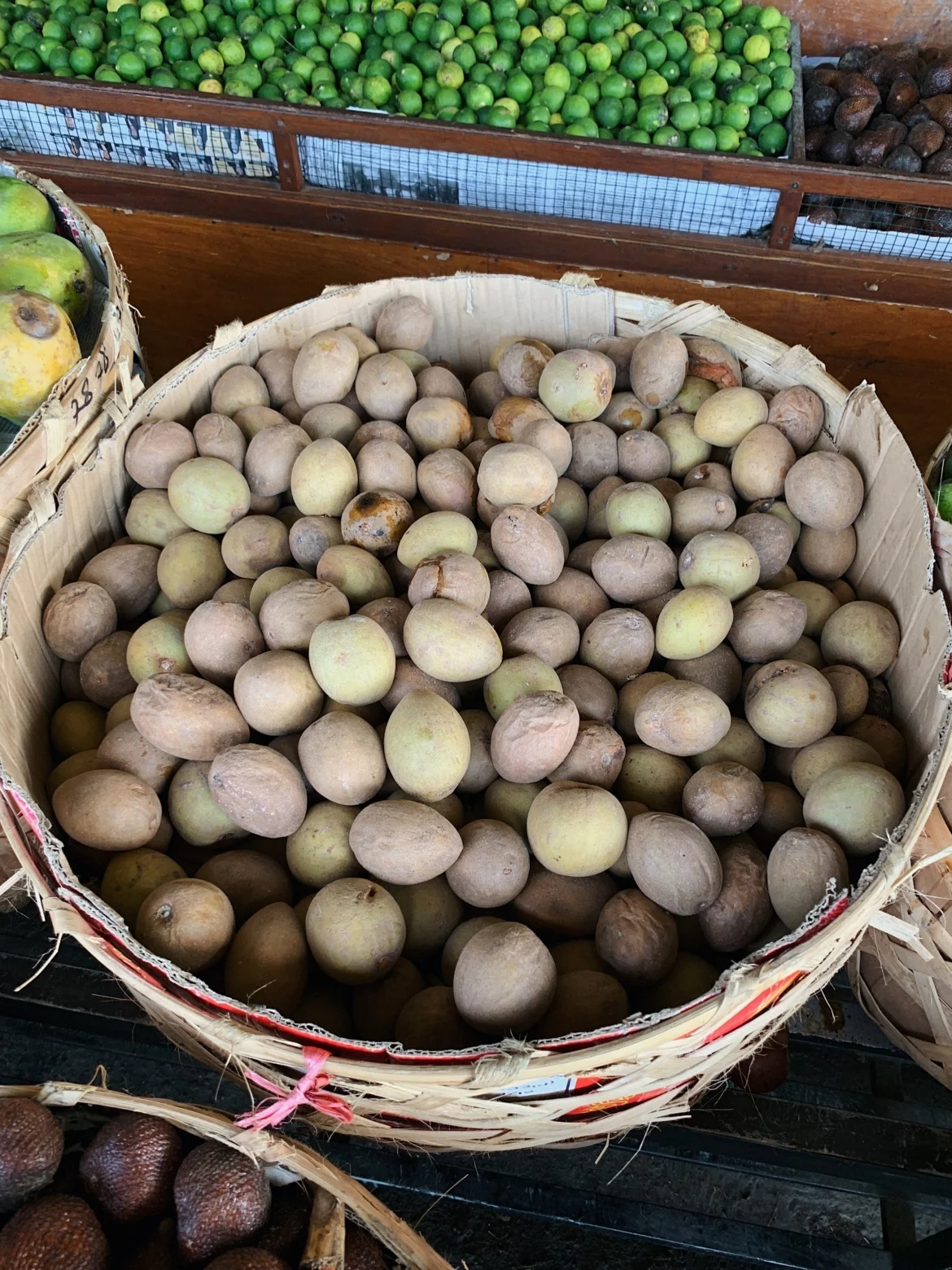
Common, but everywhere it tastes awful next to the honey-sweet Thai one.
Watermelon
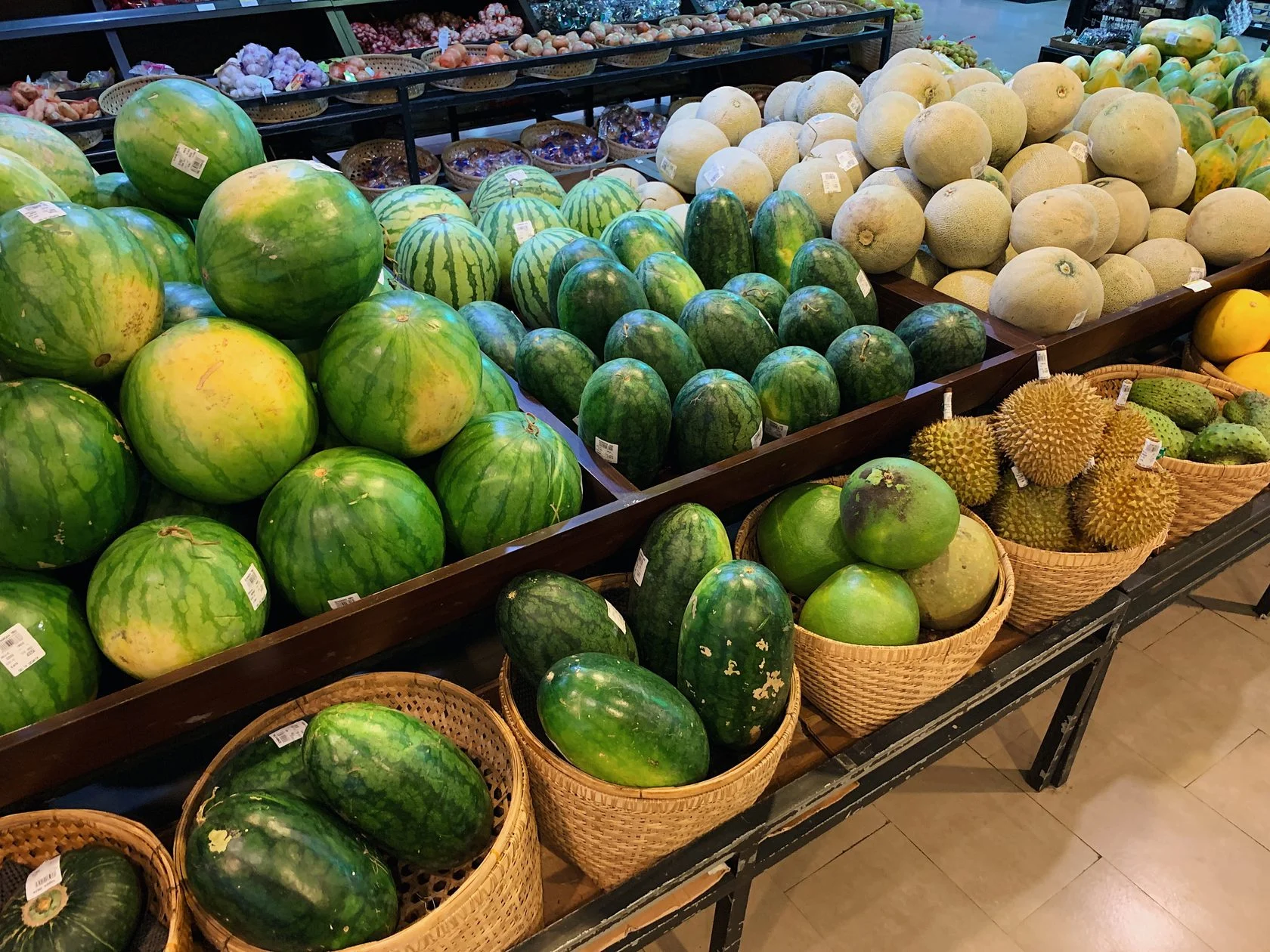
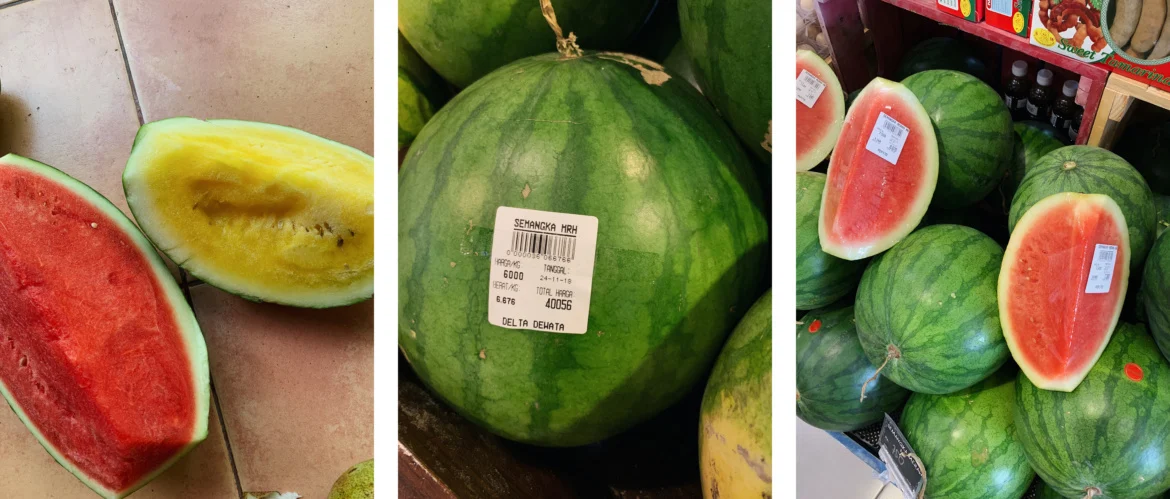
In every stall and every supermarket. There are the classic red ones and yellow ones (long and round). No taste at all, or only a couple of spoonfuls from the very middle.
Update 10.10.19: there are very tasty watermelons here, like the Russian ones.
Update 10.10.19: there are very tasty watermelons here, like the Russian ones.
Melon
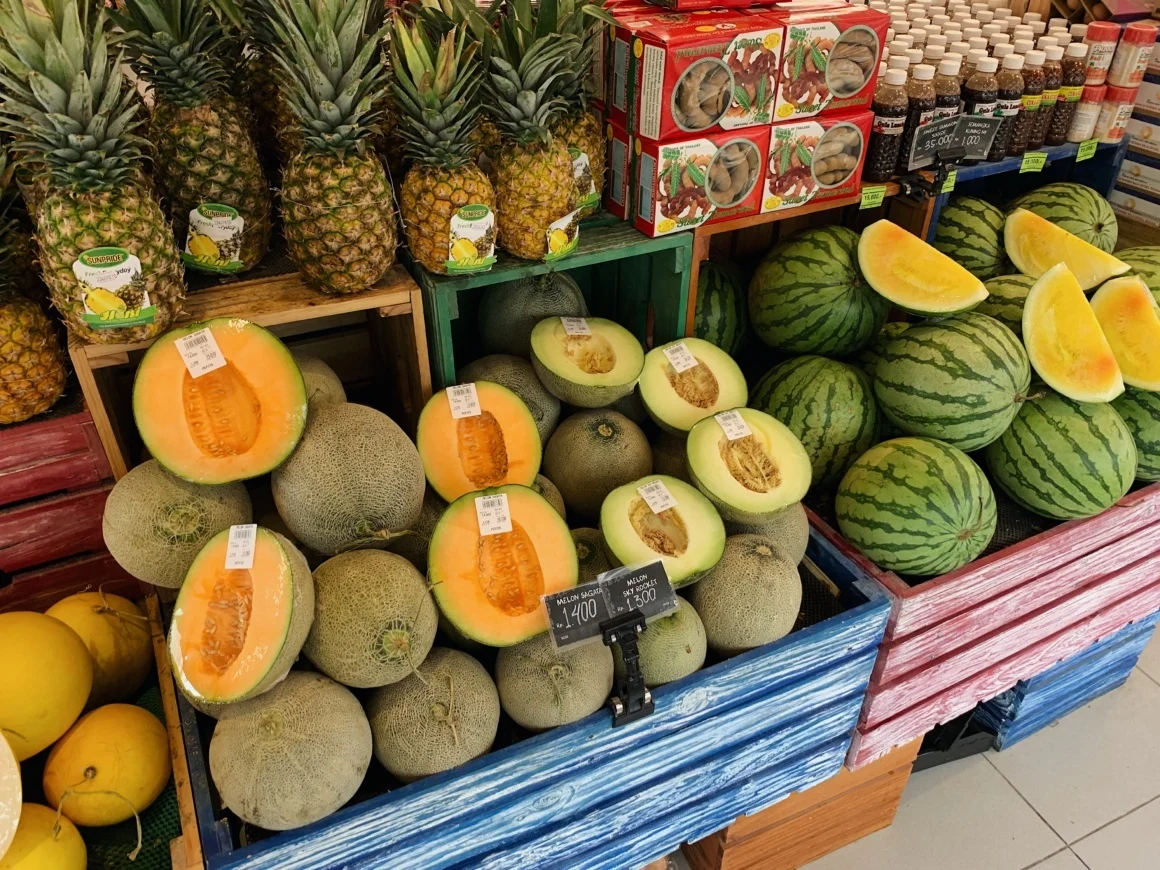
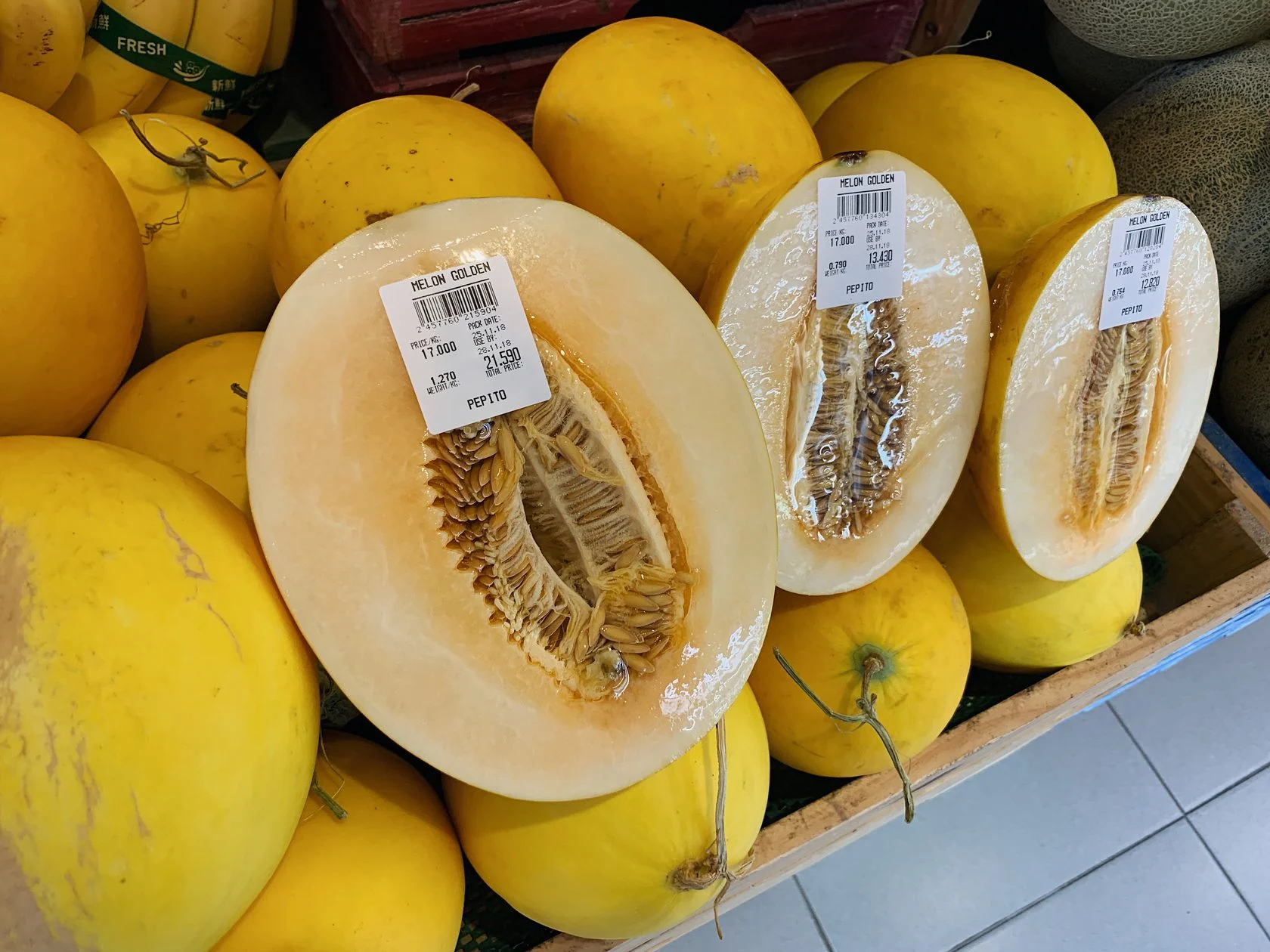
Completely inedible: all unripe and with no smell. I never once met a soft, fragrant, juicy one.
Price: 14,000 rupiah a kilo (50 rubles a kilo).
Price: 14,000 rupiah a kilo (50 rubles a kilo).
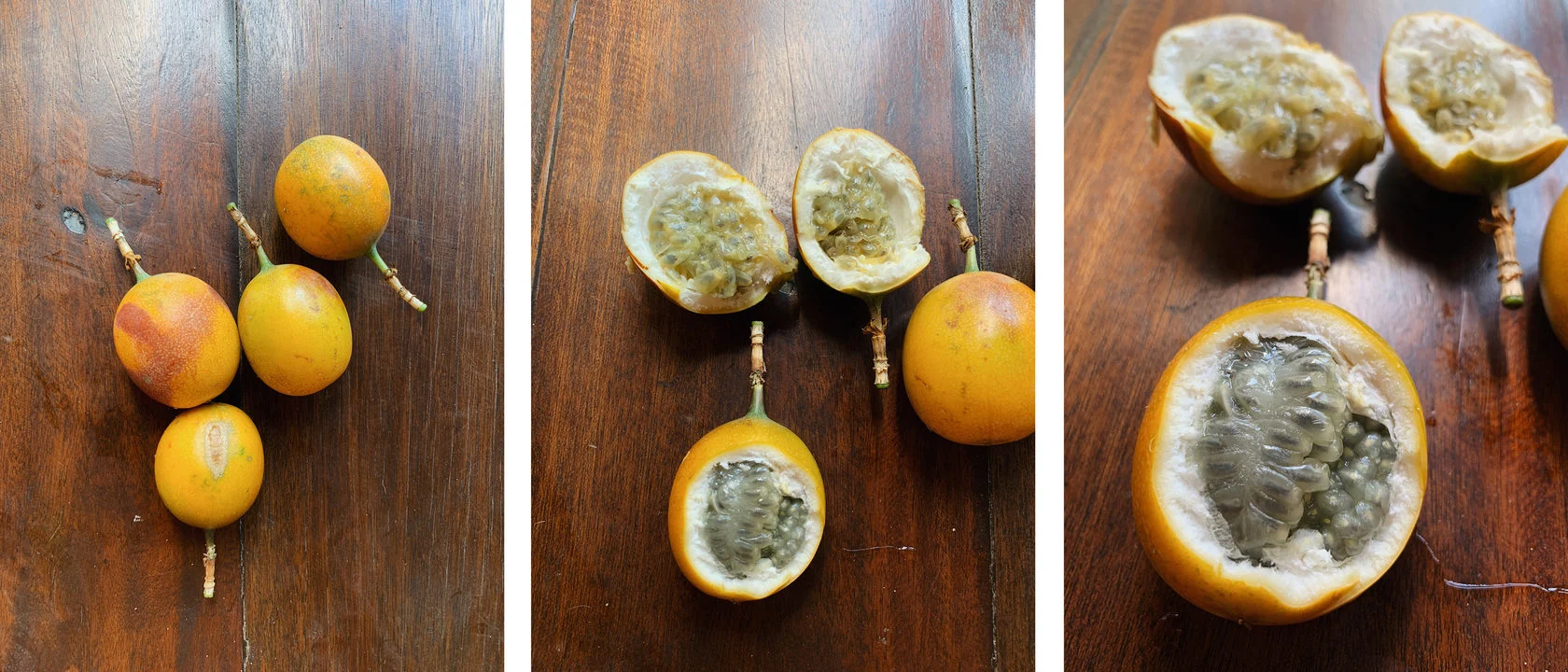
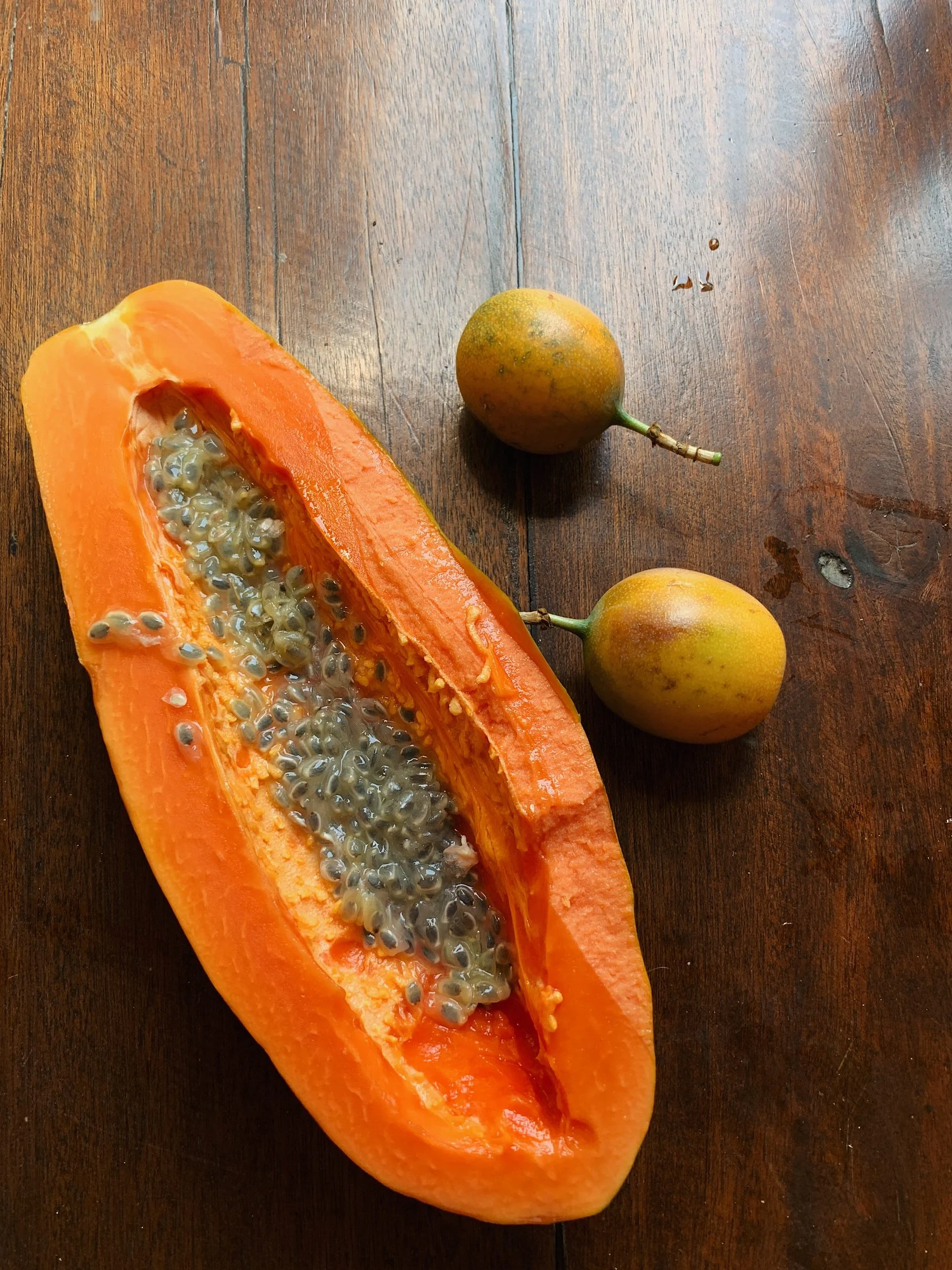
Granadilla
Always and everywhere, sweet and fragrant.
Price: 70,000 rupiah a kilo (350 rubles a kilo) at Pepito.
Price: 70,000 rupiah a kilo (350 rubles a kilo) at Pepito.
Coconuts
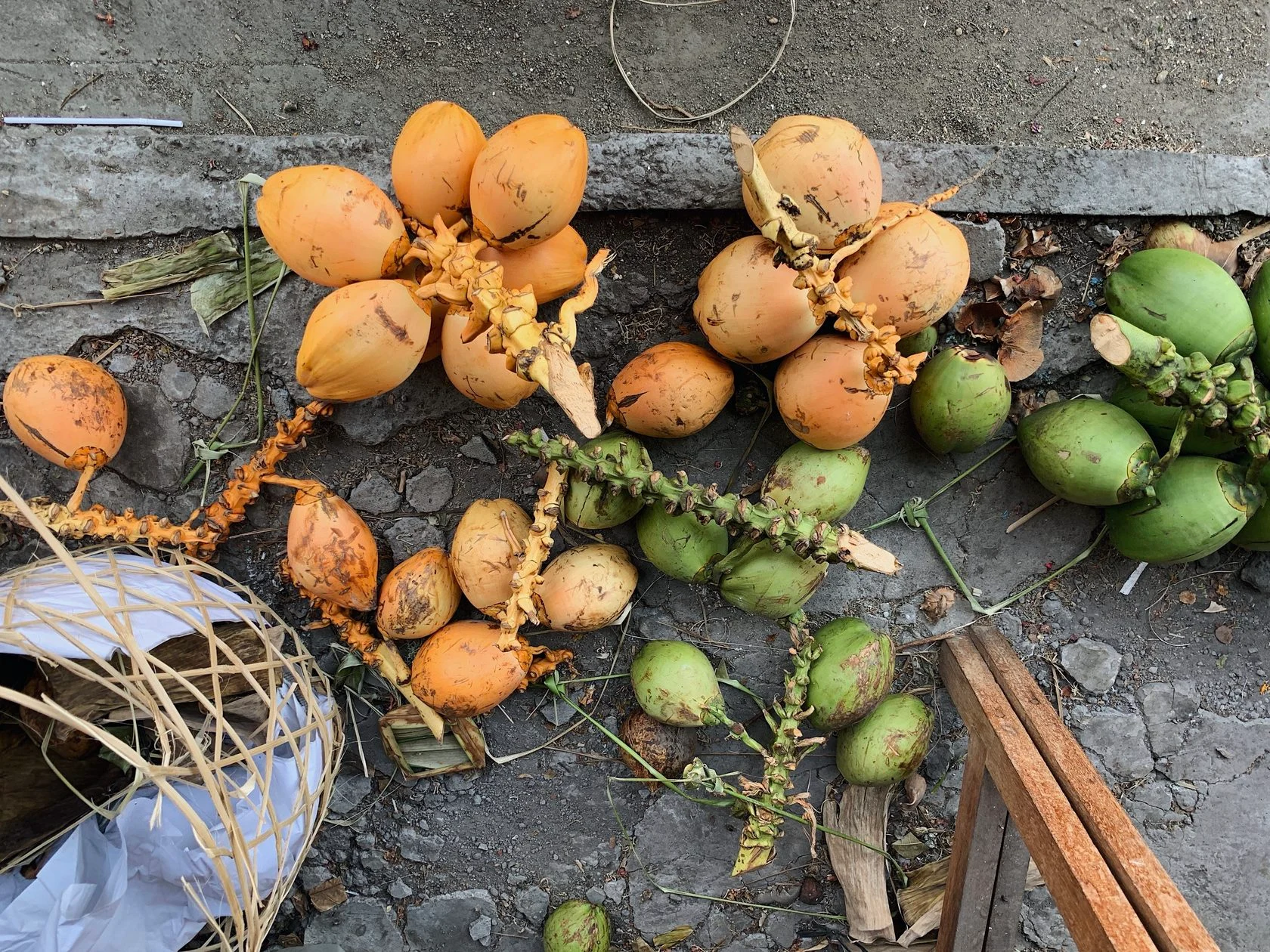
On every corner you see small coconuts, mostly used for ceremonies.
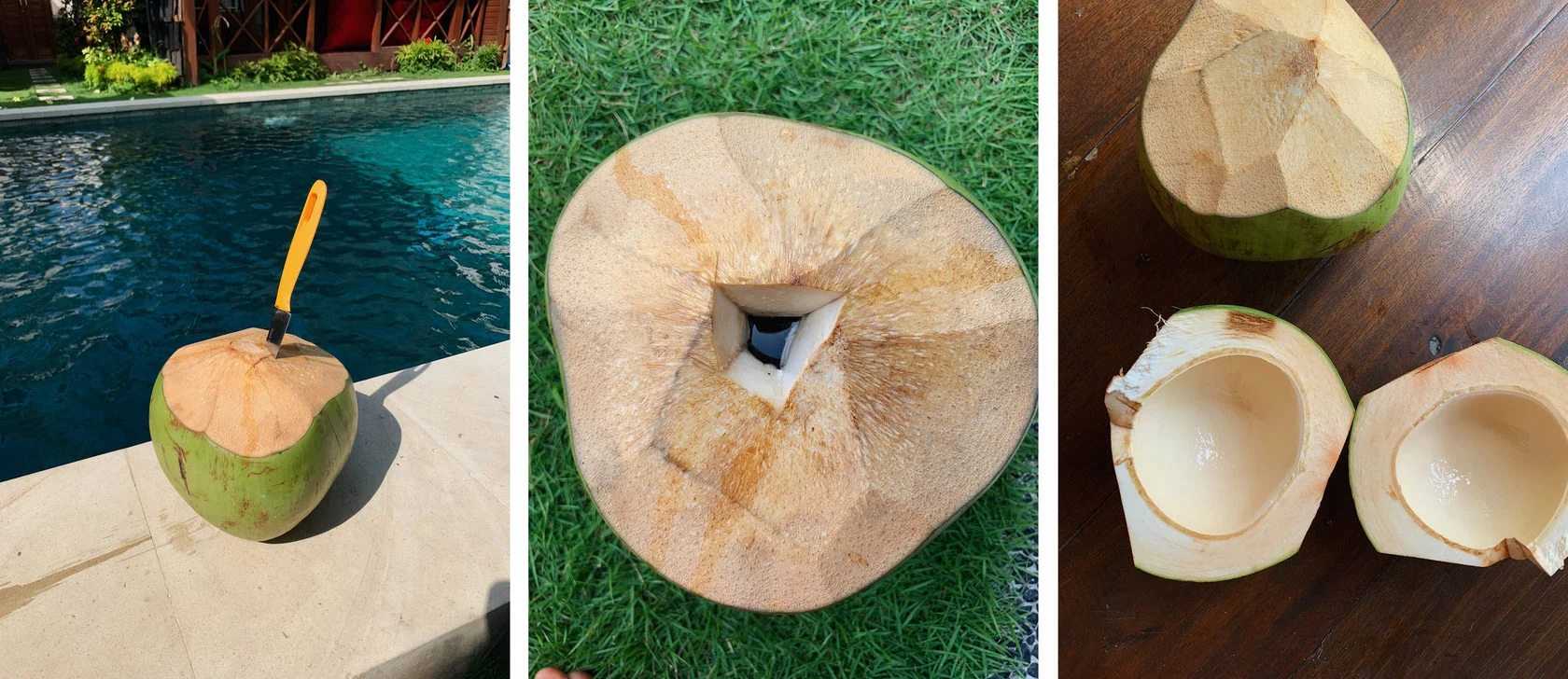
Young coconuts in Indonesia are less sweet and rich than in Thailand; the taste is unusual, lighter, with one part in ten of bitterness.
Price: 7,000 to 15,000 rupiah each (30 to 50 rubles).
Price: 7,000 to 15,000 rupiah each (30 to 50 rubles).
and all sorts of other things…
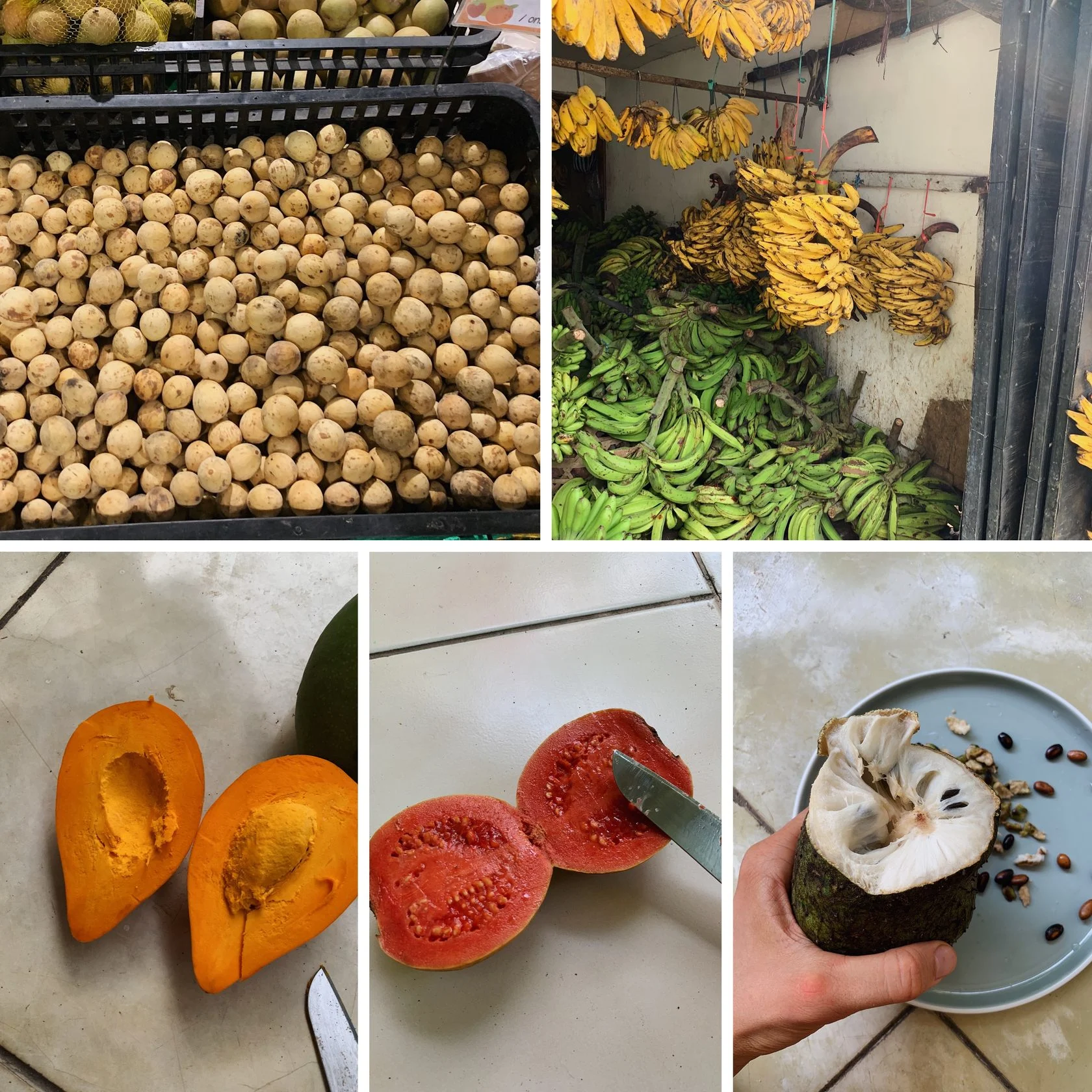
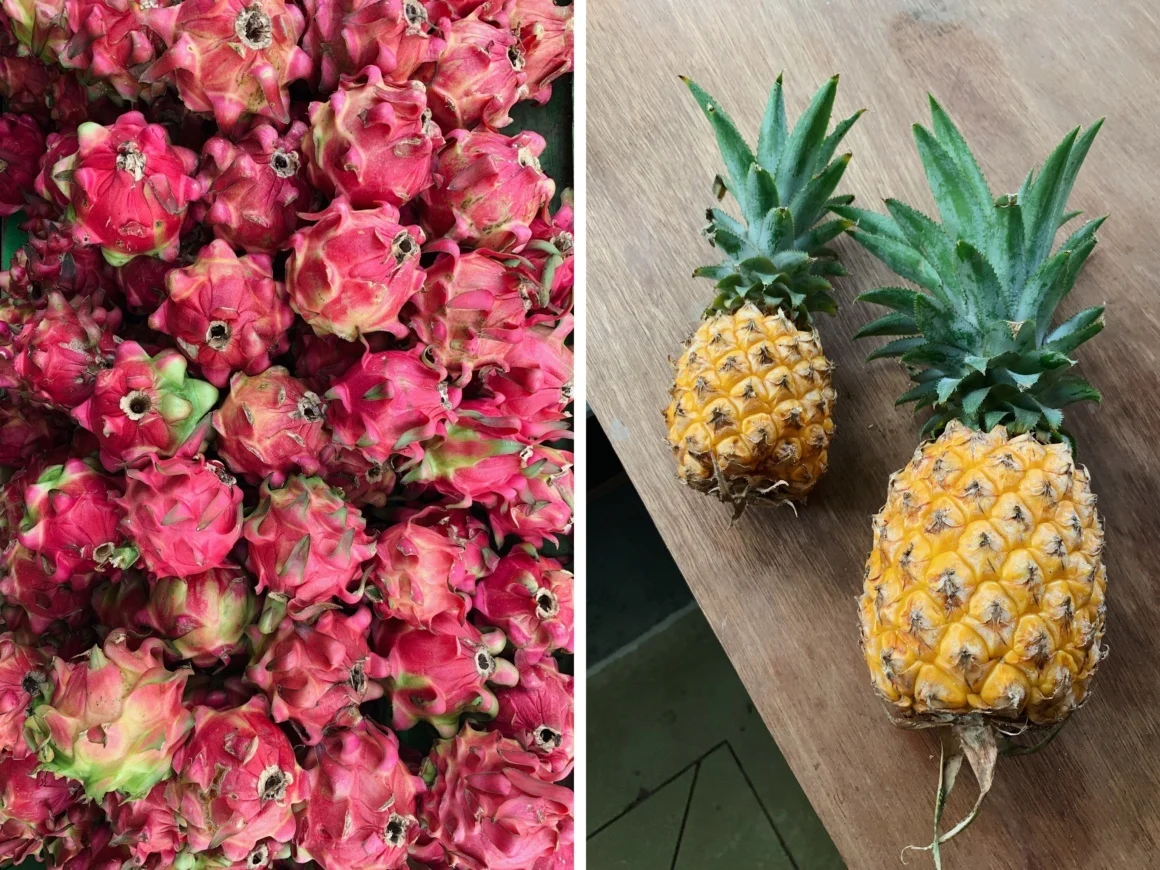
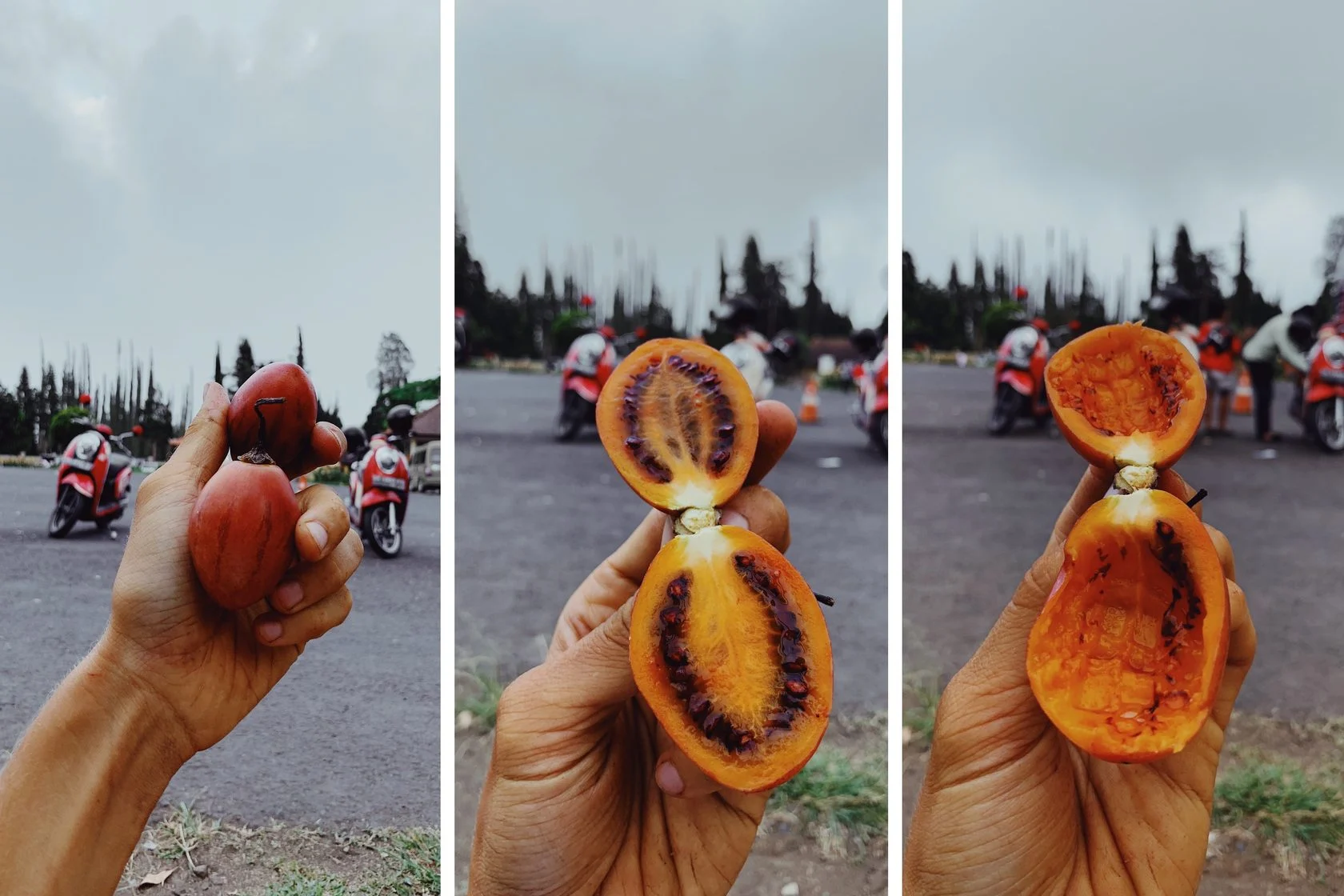
Langsat (40,000 rupiah a kilo), bananas, sapote, guava, soursop, dragon fruit (10,000 to 20,000 rupiah a kilo), pineapples and tamarillo (in that order): all of these are in any shop too…
Where to buy?
There are two main places to stock up on fruit: fruit stalls and markets, and supermarkets.
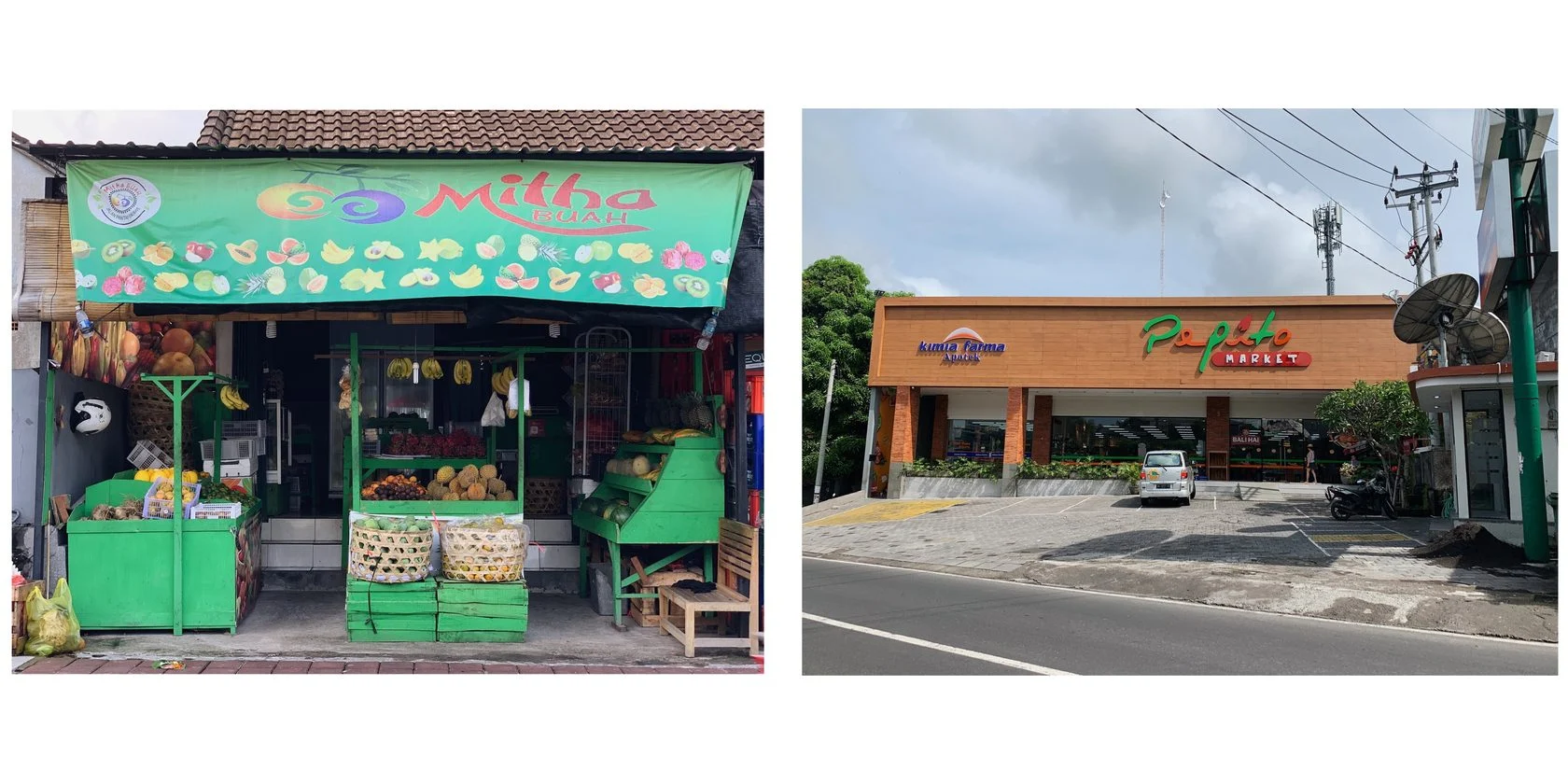
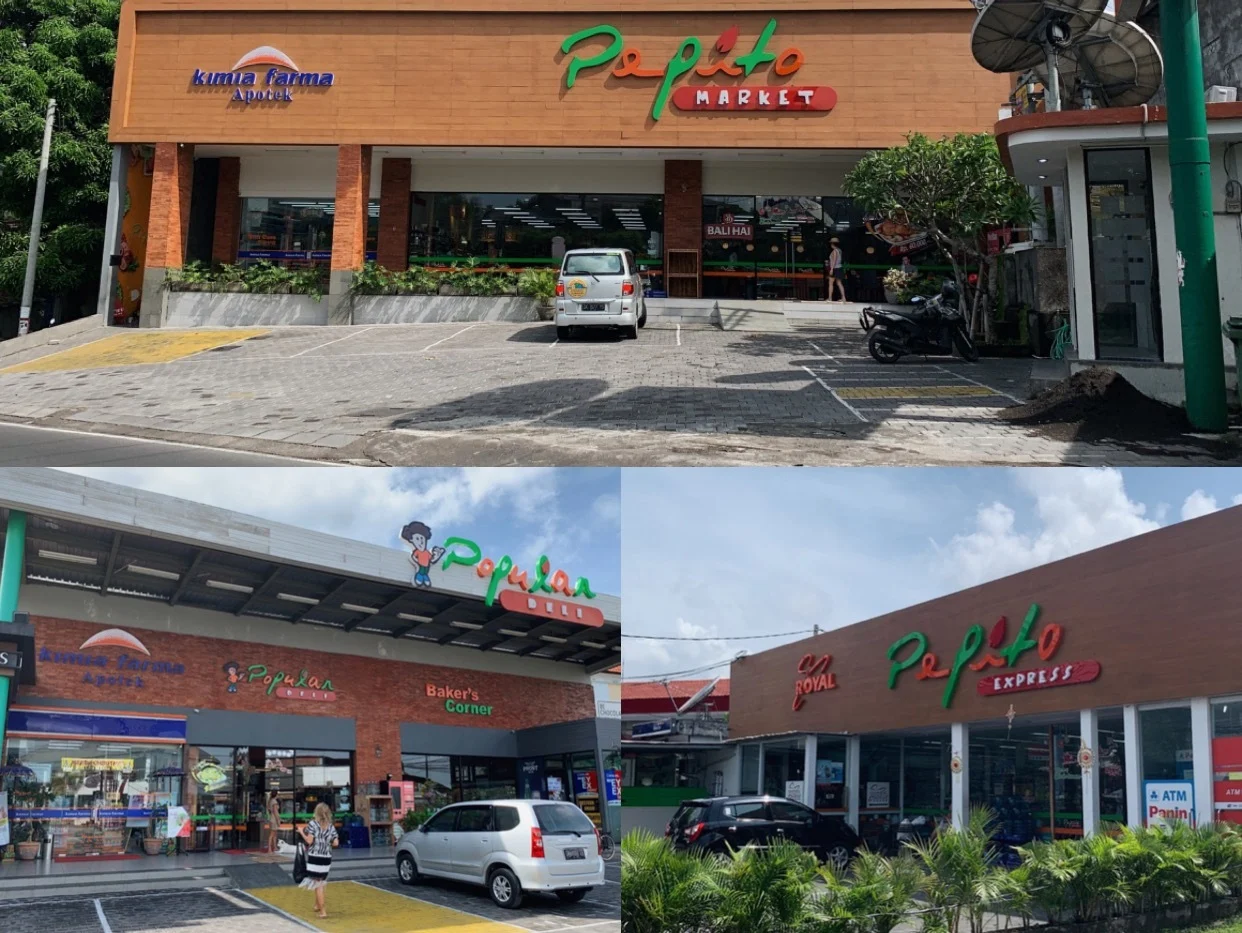
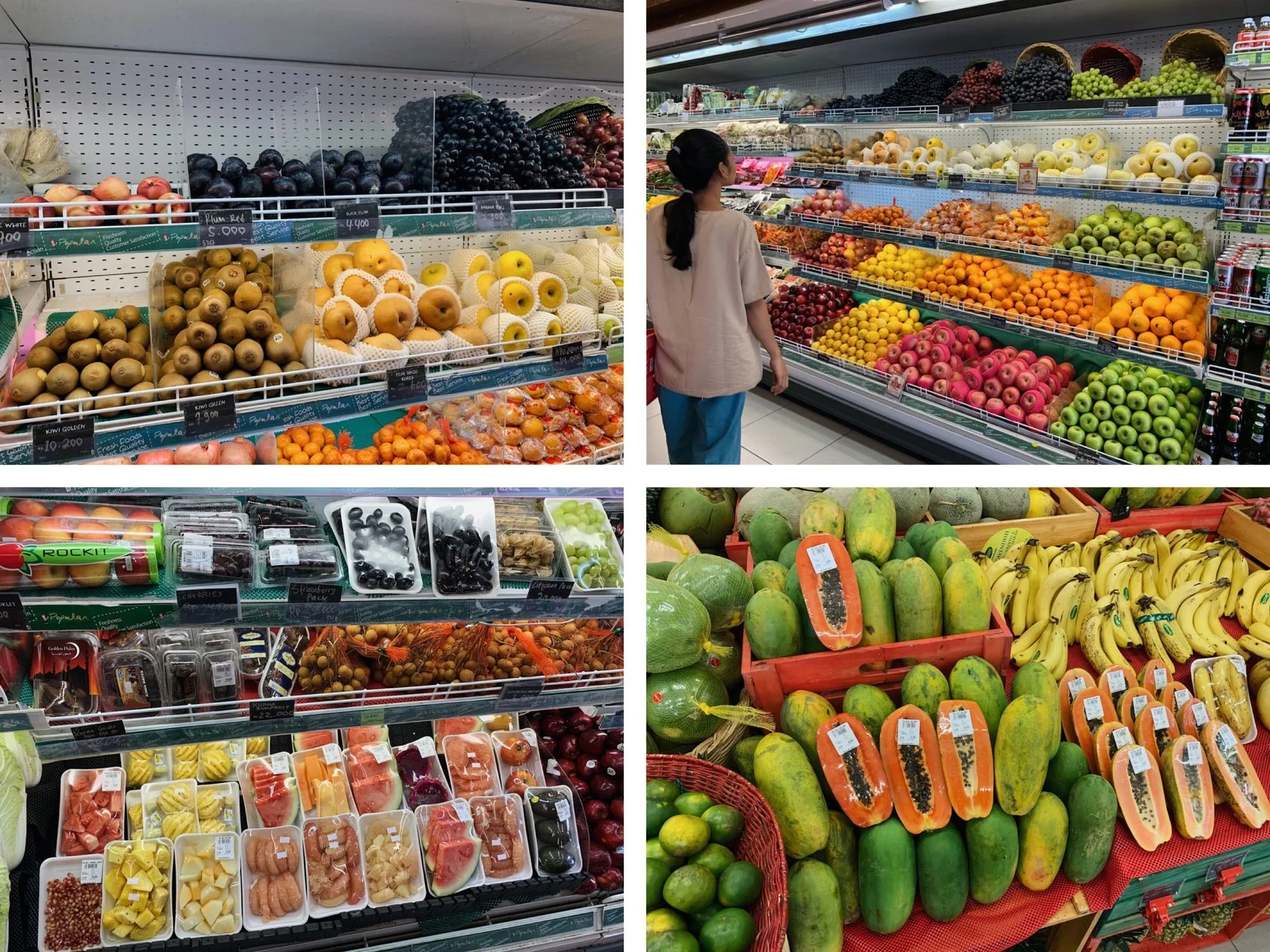
Pepito or Popular Deli
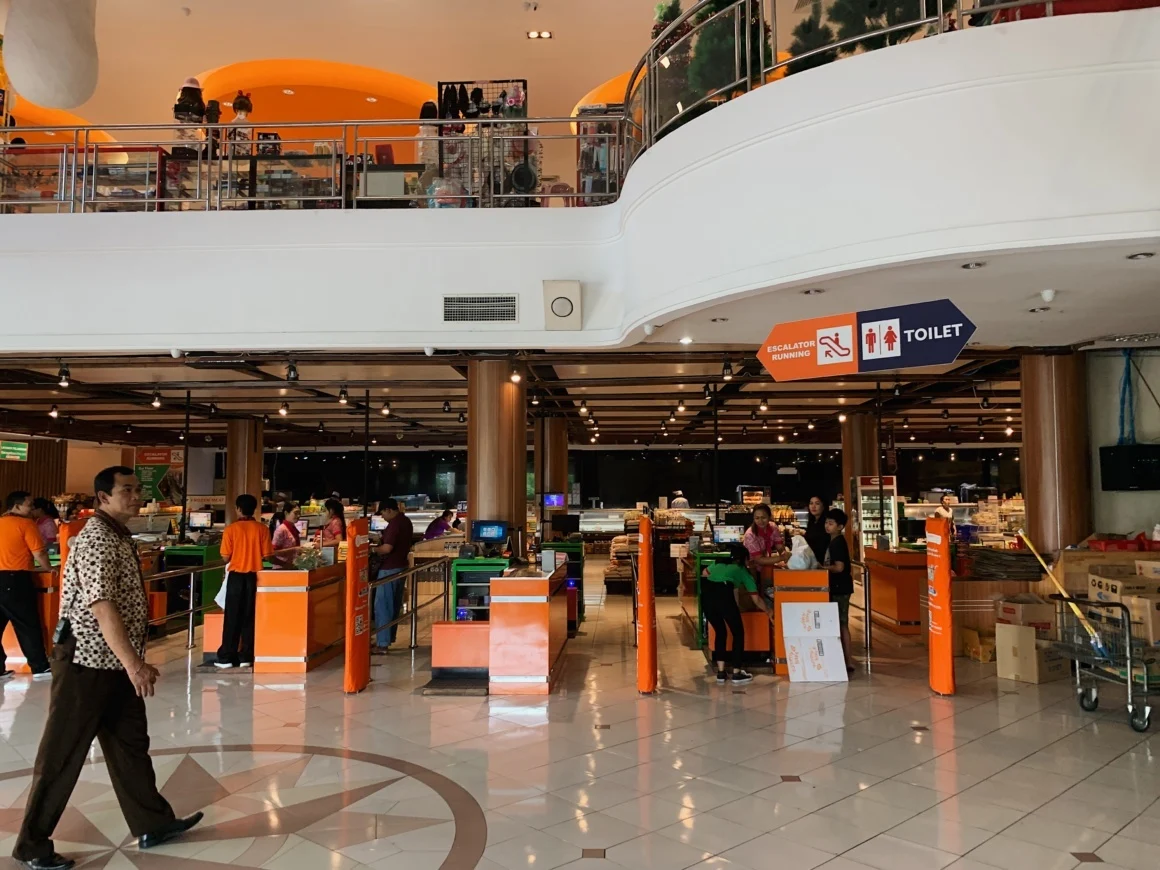
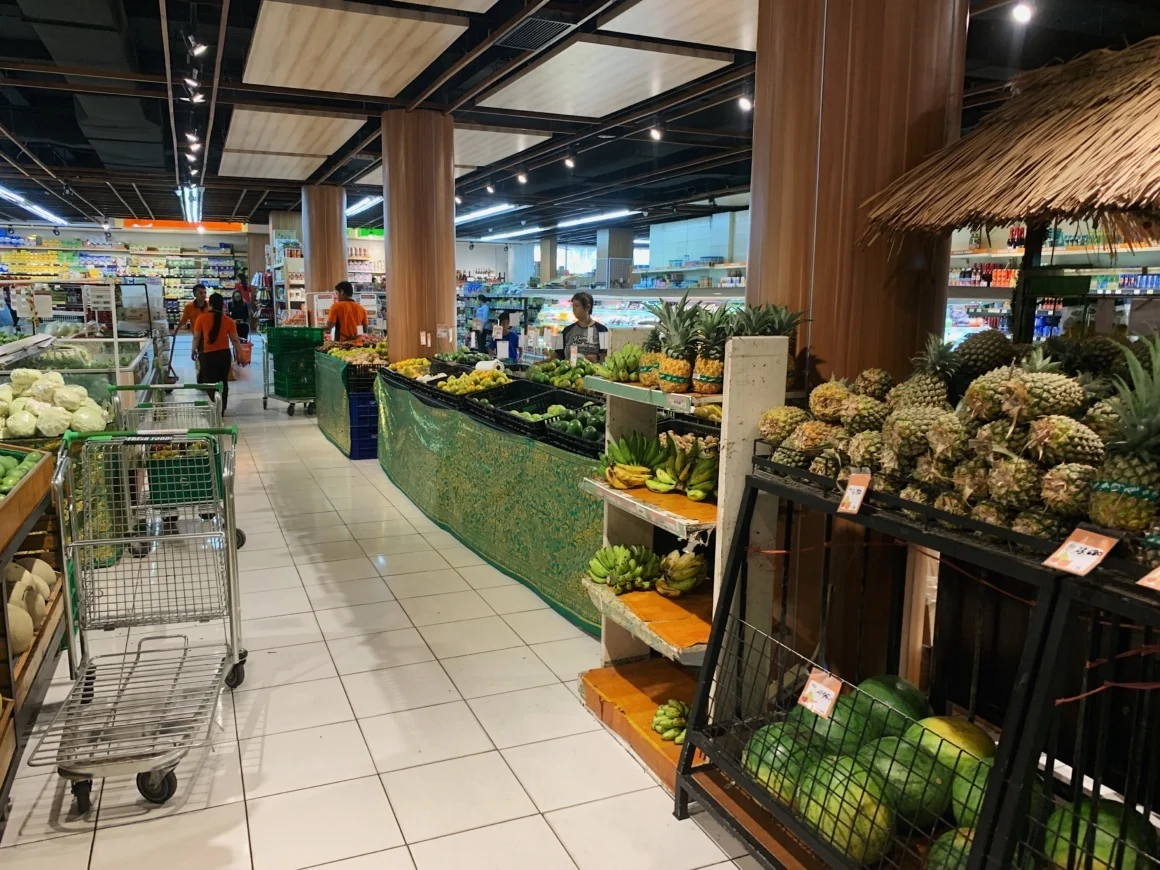
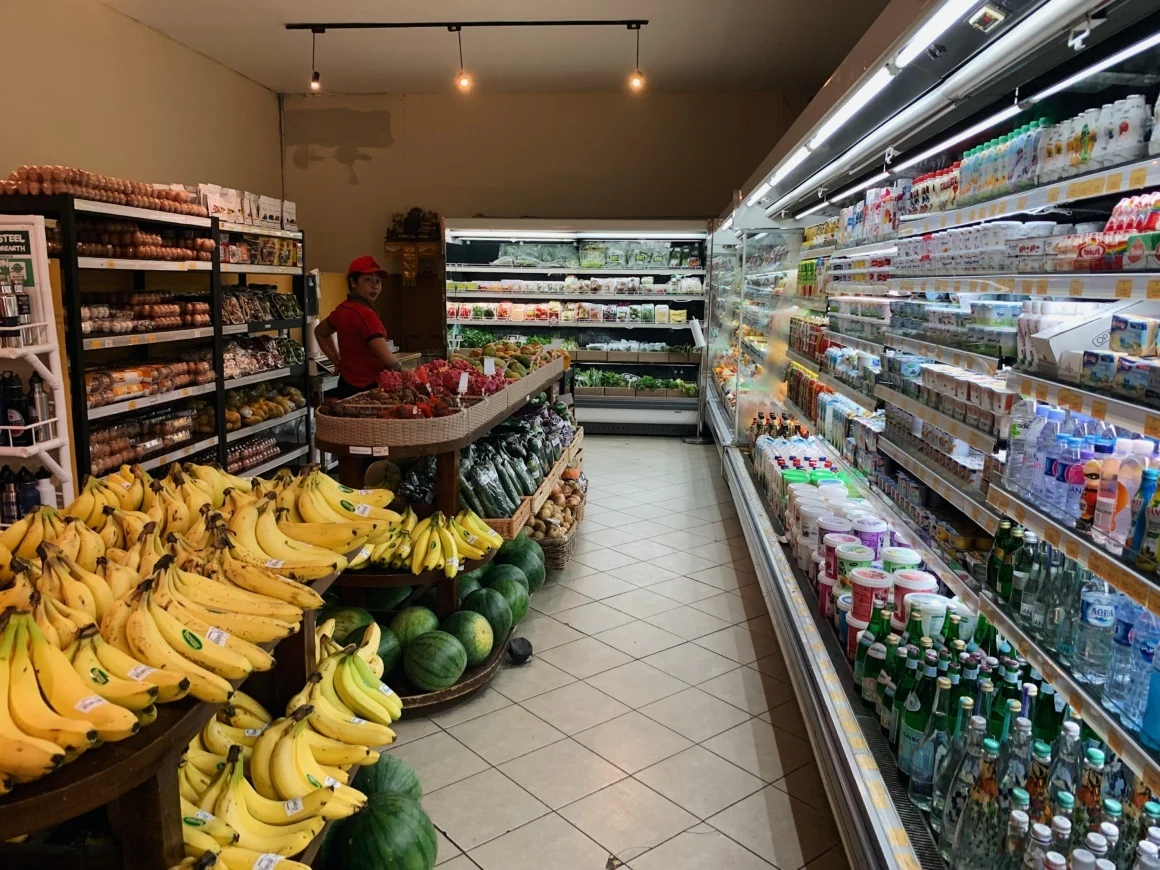
The most expensive supermarket chain, with shops all over the island. The only locals you meet there are staff. Good durians and decent mangoes turn up often; papayas are always green.
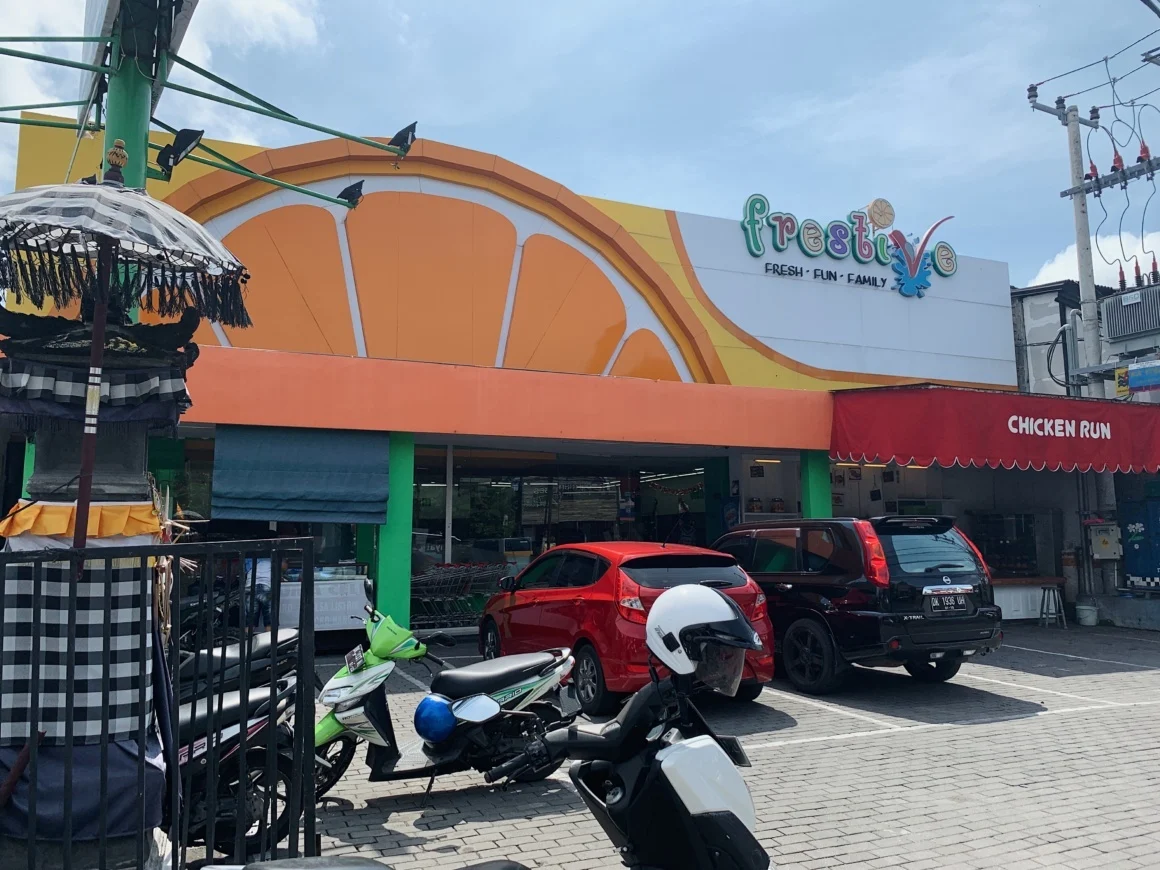
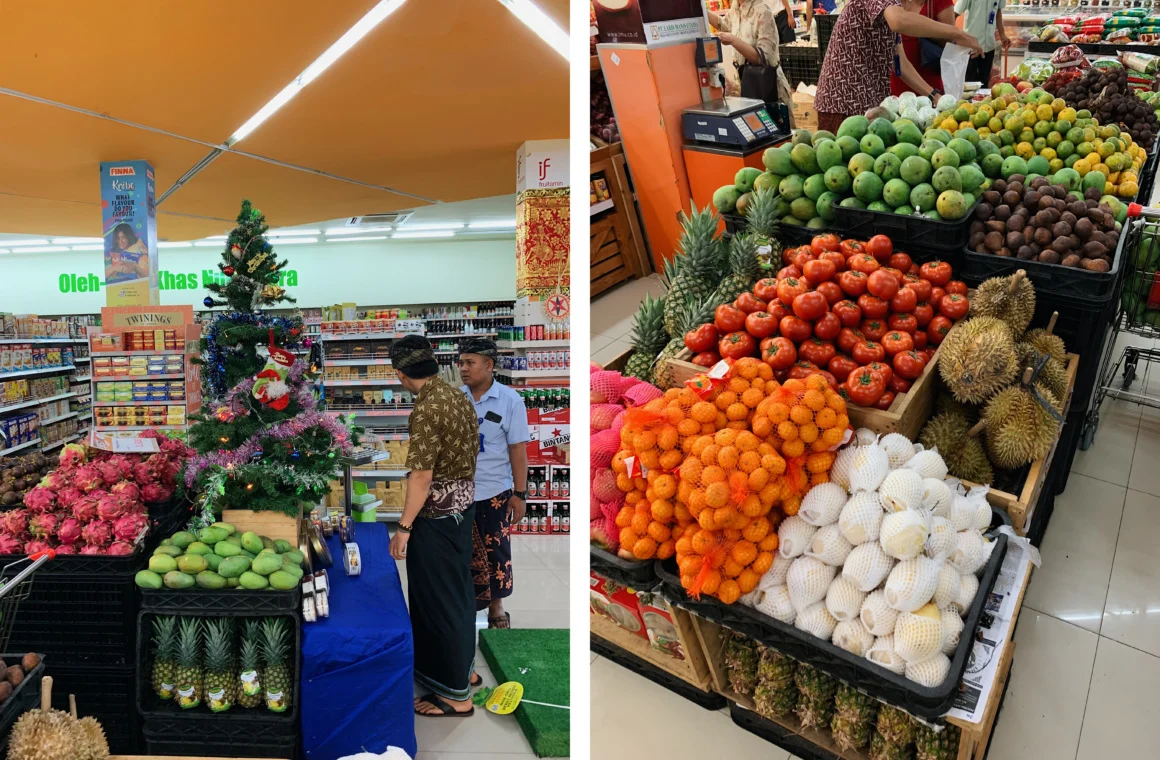
Frestive
A cheaper supermarket chain with more or less the same range as Pepito. The shop marked on the map below had decent durians for a while, and “Exotic” papayas too.
Tiara Gatzu
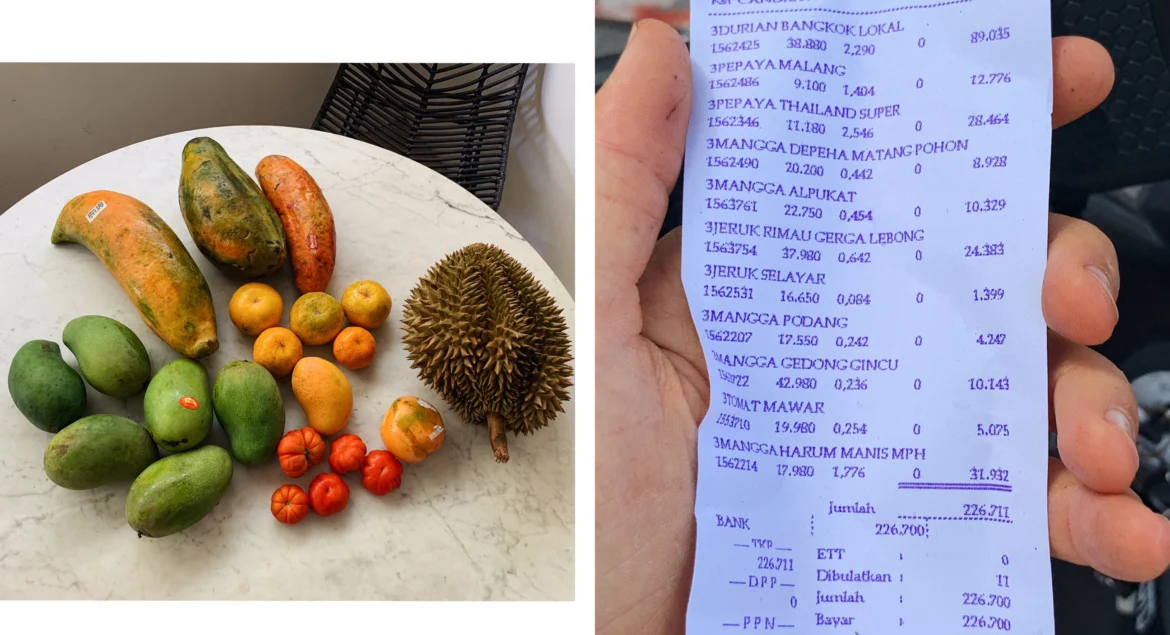
My favourite: while I lived in Canggu this was where all my shopping was done. Excellent mangoes, the best papayas and you can pay by card. In December it also had “Bangkoks” at 38,000 rupiah a kilo.
Canggu Station
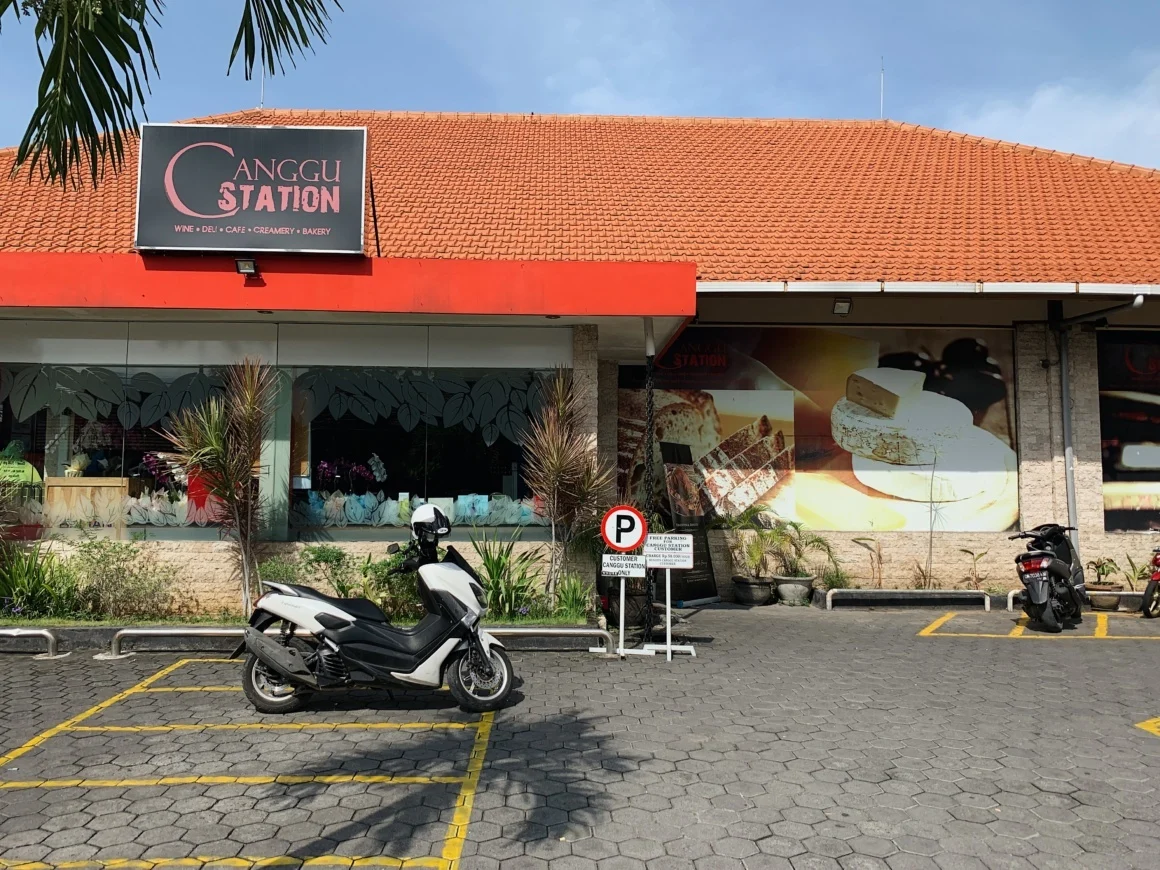
Here I found some of the best “Bangkok” durians on the island, tender and fragrant. There are gazebos next to the shop where you can open one right away, and if something is wrong with it the shop will swap it or give the money back without a fuss.
Delta Dewata
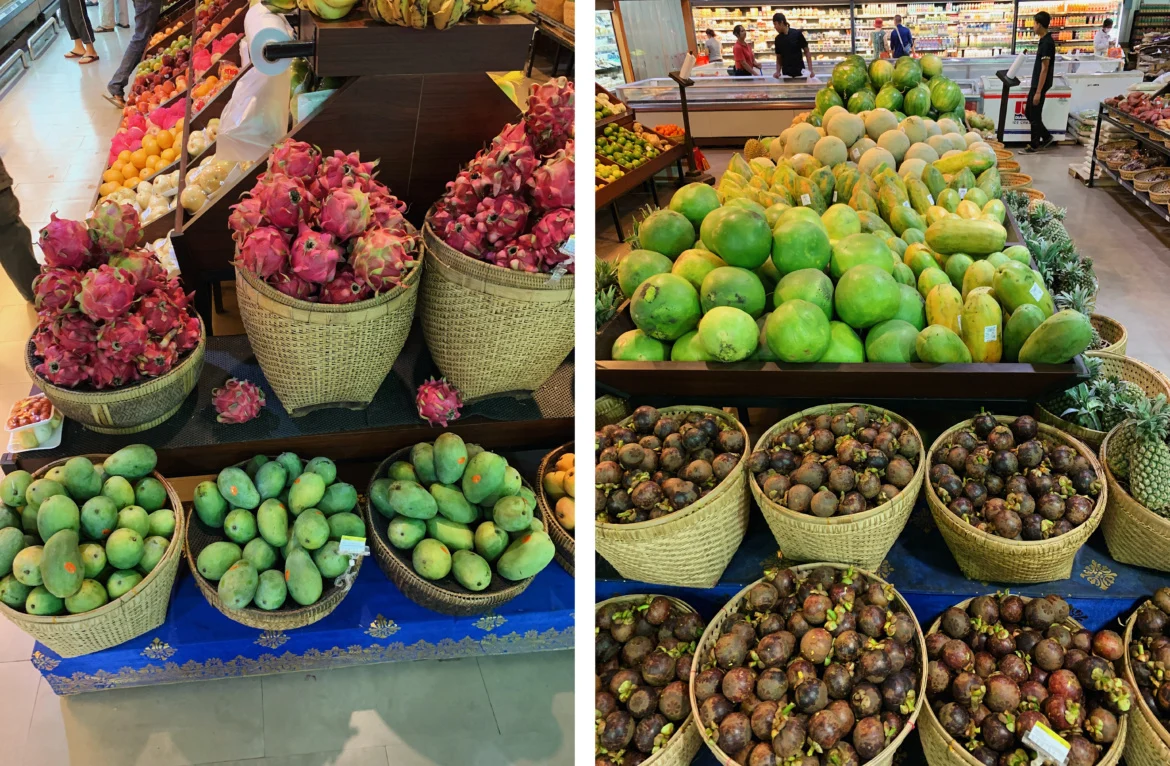
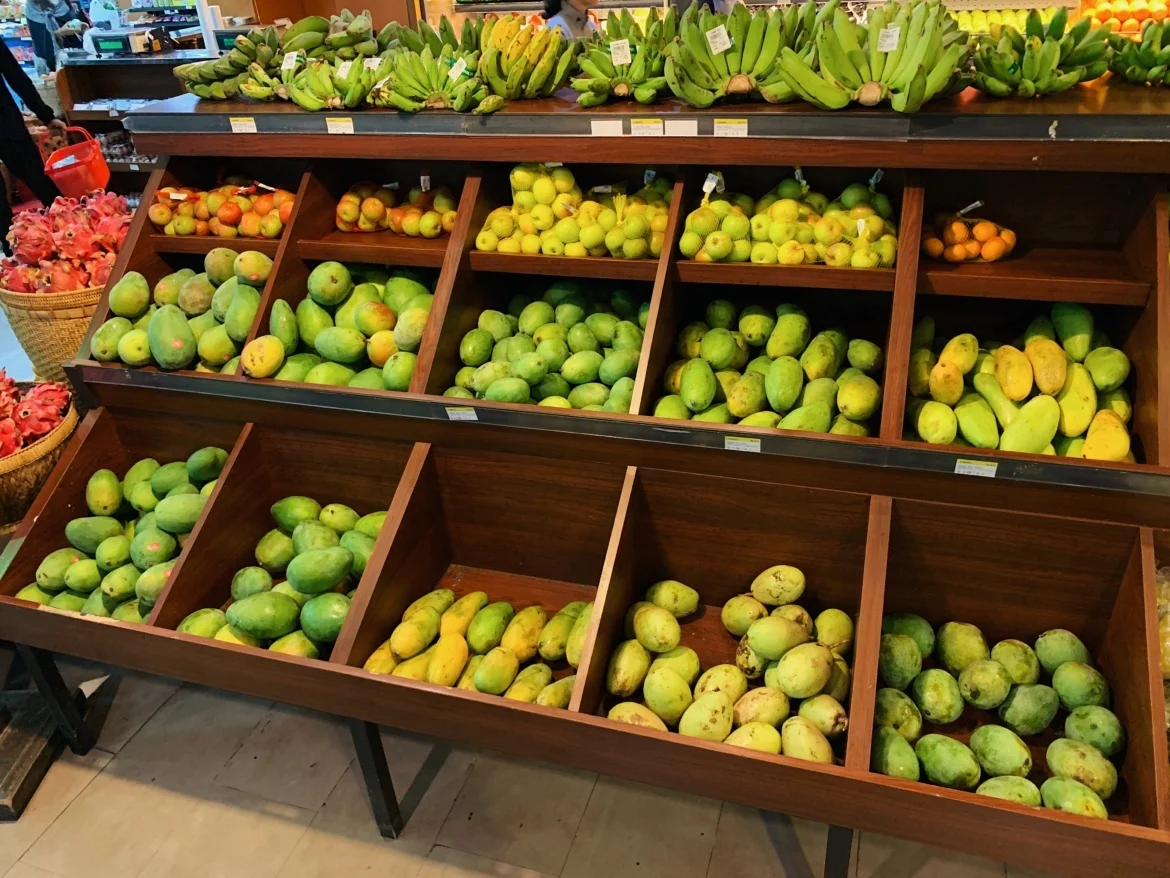
A supermarket in Ubud of the same class as Tiera Gatzu. An excellent choice of mangoes, sensible prices, and good durians often.
Fruit stalls / markets
My favourite way to buy fruit, and the most popular one in Bali, is fruit stalls like these. At the end of the post I left the coordinates of the ones I buy from most. Sensible prices, and if you come to the same stall every day they remember you, give discounts or add something as a gift.
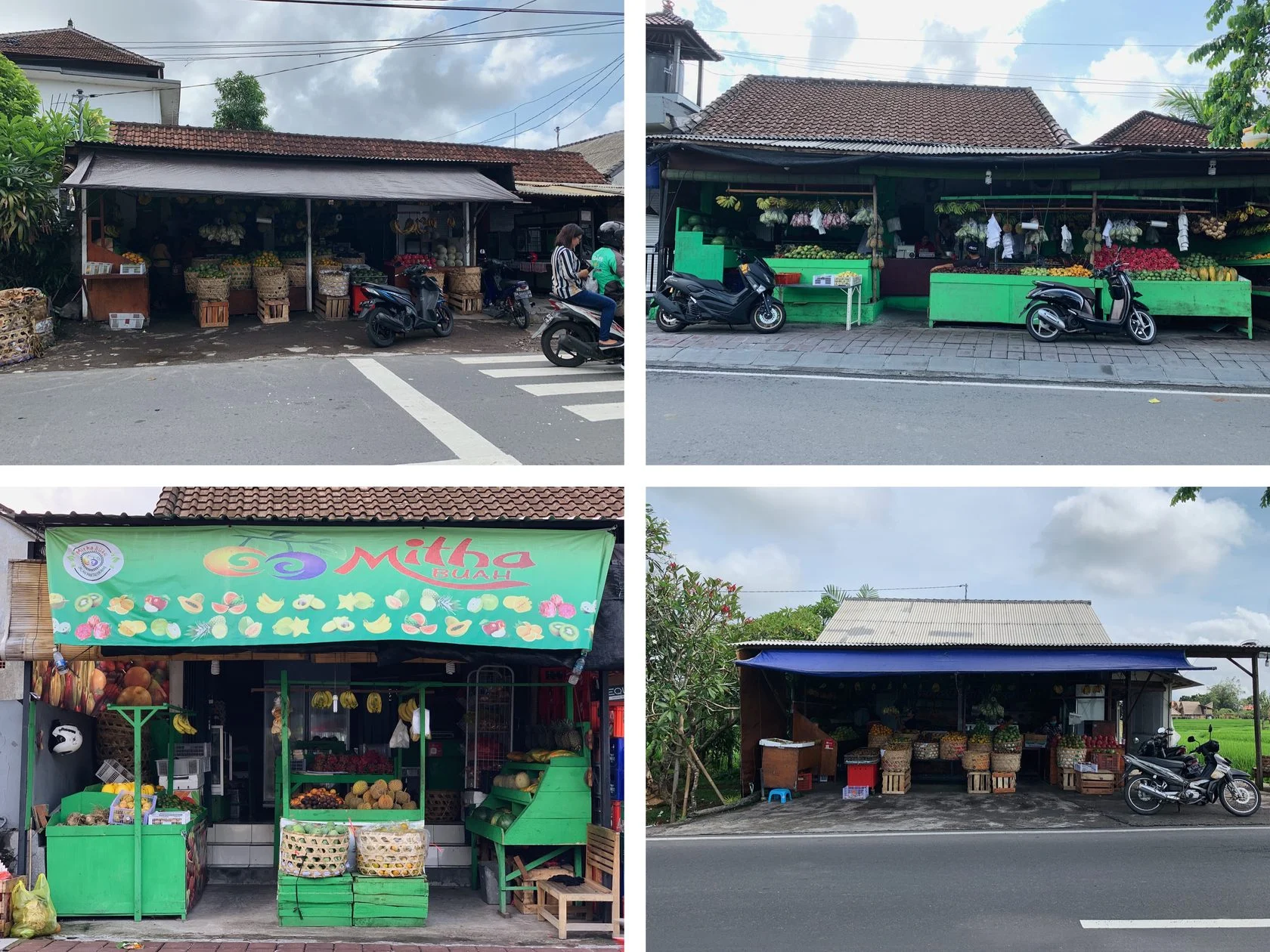
Some stalls are more about mangoes, some about bananas, some have better avocados, and it keeps changing.
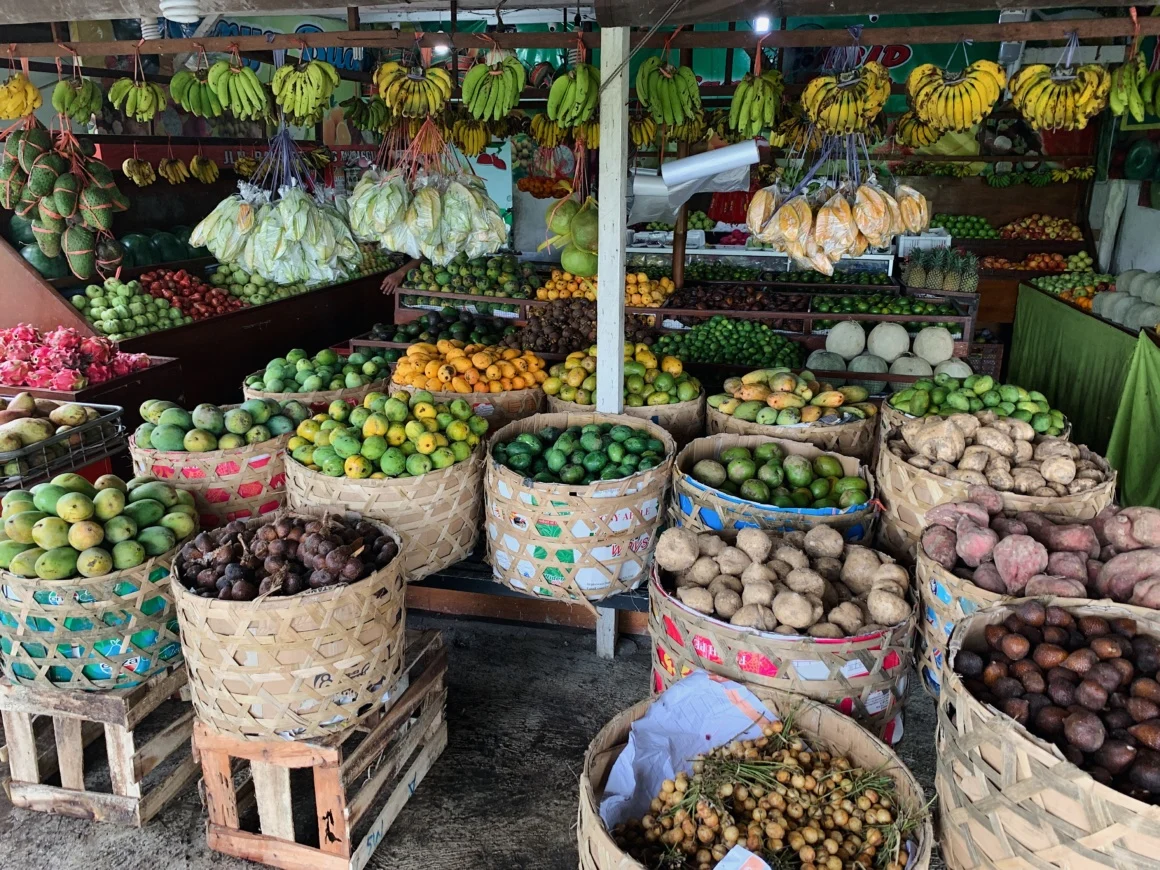
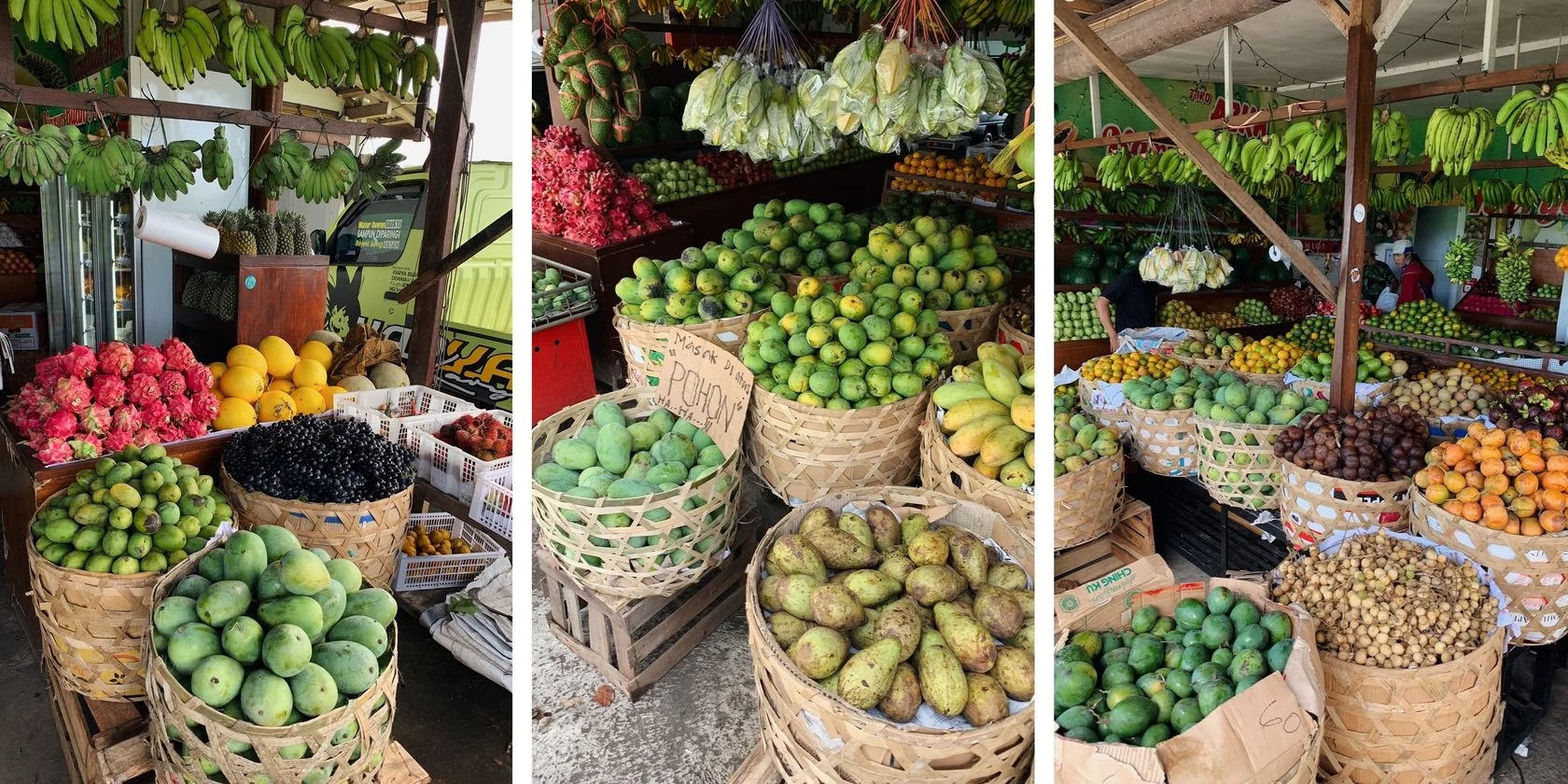
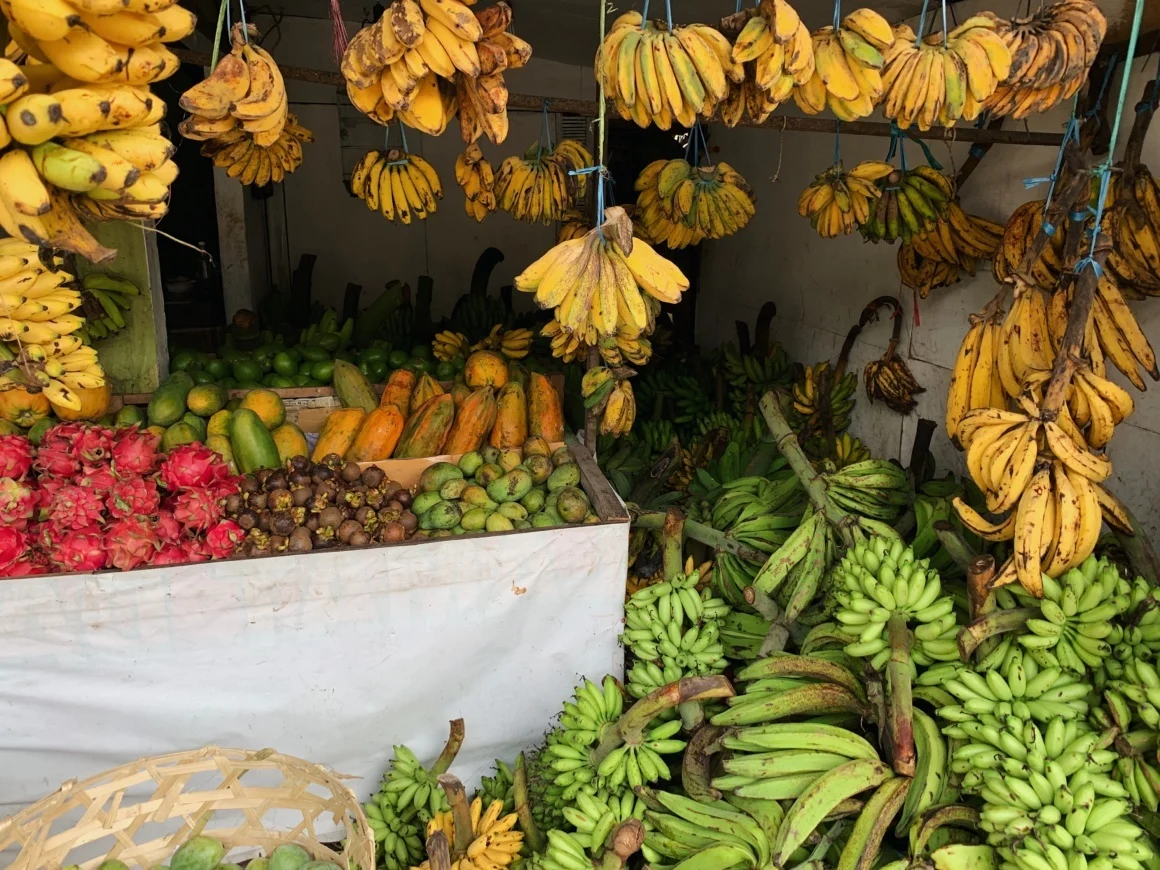
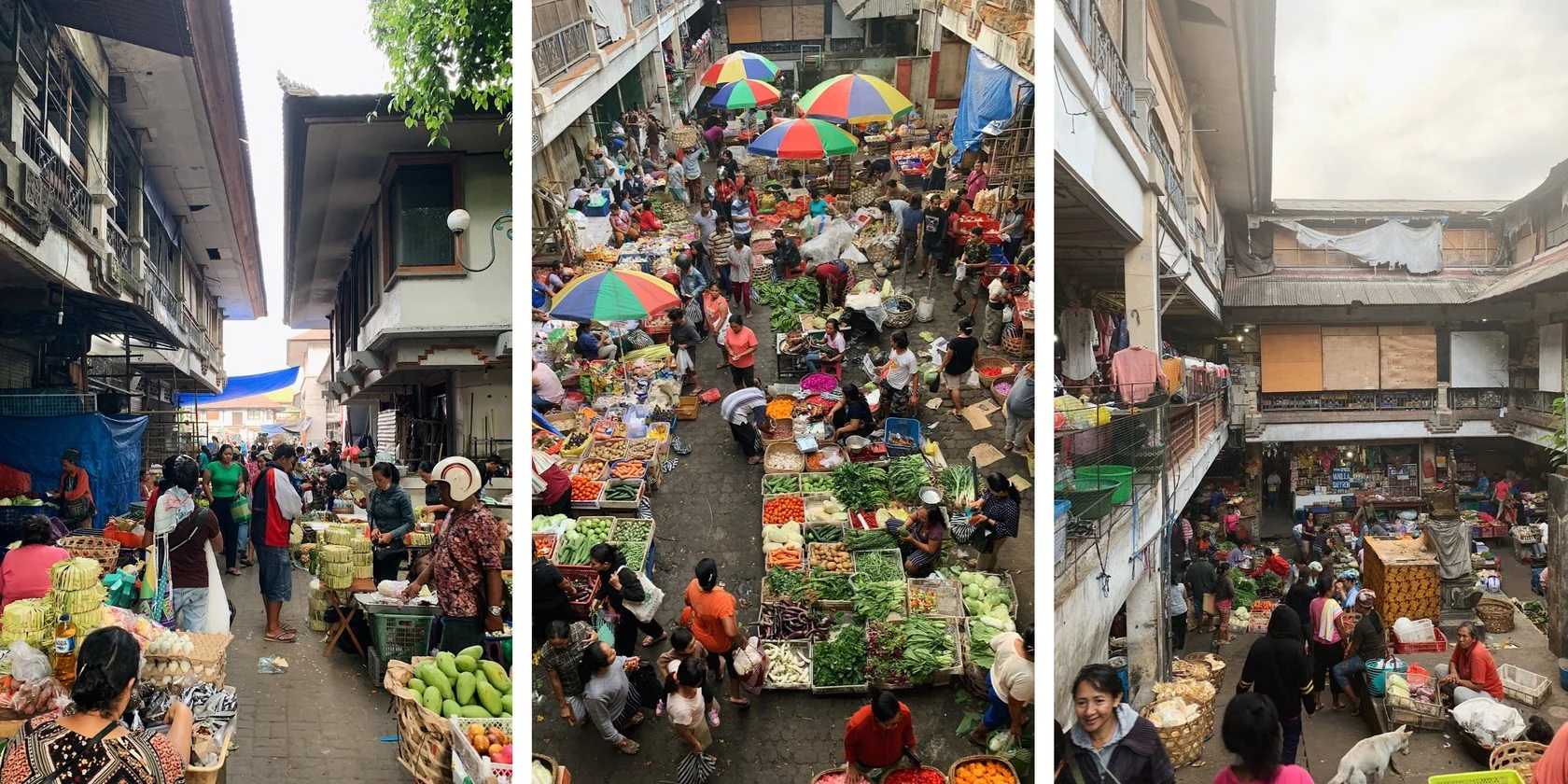
All over the island there are also local, traditional markets, but I can recommend only one: the morning market in Ubud (location at the end of the post), where you can find absolutely any fruit at the lowest prices. Every other market has a very thin choice of fruit, put together for the people who live there.
Map
This map has the coordinates of every shop and stall mentioned above. To add it to your Google Maps, just tap here and it will always be on your phone : )
Do not forget to share this with friends who may find it useful, and to save the map. Ripe, juicy, sweet fruit to everyone!!